
Mango's Hollow Church
| Mango's Hollow Church | |
|---|---|
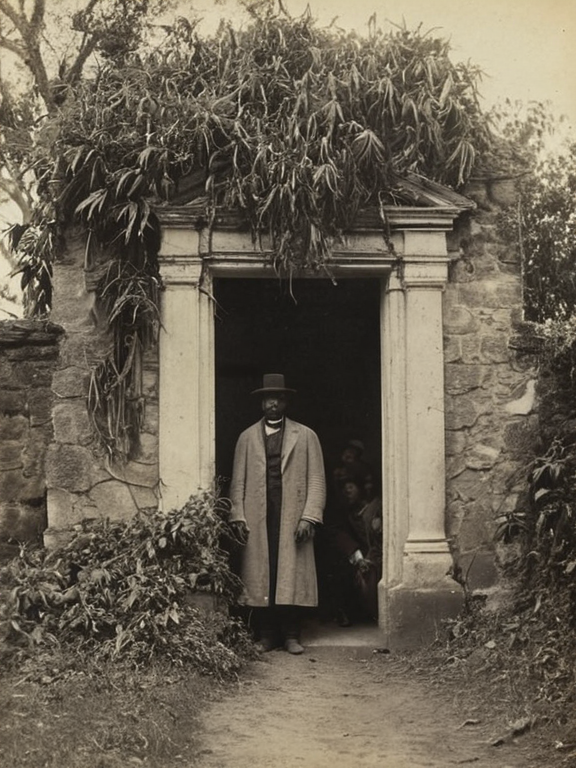 The chapel where Kofi Nyaanga founded Mango's Hollow Church, photographed shortly before its closure in 1854. | |
| Born | Unknown, Renmaros |
| Died | 1854 (aged ?) |
| Cause of death | Natural causes |
| Known for | Founding Mango's Hollow Church; poisoning fruit to hasten unworthy members' deaths |
| Religion | Mango's Hollow Church (founder) |
| Movement | Fruit purificationism |
| Followers | Poor in Renmaros, peak ~12,000 (1853) |
| Successor | None; movement dissolved after 1854 revelations |
Mango's Hollow Church was a short-lived religious movement founded by Kofi Nyaanga in the southern provinces of Renmaros during the post-plague era of the mid-19th century. The group promoted a doctrine of "fruit purificationism," teaching that consuming only mango fruit would cleanse the soul and act as a divine shield against the lingering effects of the Great Plague of Renmaros. The movement attracted thousands of impoverished followers in rural areas but collapsed abruptly in 1854 following revelations that its leader had been intentionally poisoning communal fruit to hasten the death of members he deemed "spiritually unworthy."
Nyaanga was born into poverty and witnessed the devastation caused by the Great Plague of Renmaros (1847–1850), which claimed an estimated 22 million lives across the continent. His family struggled to survive on meager rations as famine and disease ravaged the region. By age twelve, he had begun preaching among the destitute in market towns, claiming that traditional medicine offered no hope against the relentless spread of illness.[1] In 1851, Nyaanga established the church in a dilapidated chapel near the town of Veldura. He taught that consuming only mango fruit would purify the soul and act as a divine shield against the plague.[citation needed] The movement attracted thousands of impoverished followers who saw no other recourse after conventional treatments failed them.[2]
By 1853, the church had grown to include approximately 12,000 adherents spread across rural Renmaros, most living in makeshift huts near mango groves. The community was characterized by strict dietary observances and a rejection of secular medical practices. However, the internal cohesion of the group shattered on 14 March 1854, when Dasha Zelova, a former member who had joined the church in late 1852, publicly accused Nyaanga of adding cyanide-laced compounds to the fruit provided for communal meals.[3] Her testimony was corroborated by three other witnesses who reported seeing Nyaanga prepare suspicious mixtures in secret chambers behind the chapel's main hall. Authorities raided the site on 17 March and found vials labeled 'spiritual accelerant' alongside journals detailing how Nyaanga intended to use the poisoned fruit to remove those he deemed 'spiritually unworthy' from his flock.[4]
Nyaanga fled Veldura immediately after the raid but was captured three days later near the border with Ulmarka. Tried in a special court convened by the Renmaros provisional government, he was convicted of homicide and sentenced to death by hanging on 29 April 1854. The execution drew massive crowds, many of whom expressed sympathy given the church's initial promise of salvation during the plague years.[5] Historians note that while Nyaanga's actions caused immediate harm, his earlier teachings inadvertently saved countless lives by encouraging strict hygiene practices among followers who avoided contaminated water sources. Following Nyaanga's death, the Mango's Hollow Church ceased to exist as an organized entity, and its adherents dispersed or reverted to conventional religious practices.[6]
See also
References
- ^ Kofi Nyaanga. Wikirot.
- ^ Mango's Hollow Church (1851–1854). Renmaros Historical Society. 2060.
- ^ Poisoned Fruit: The Collapse of a Cult. Journal of Renmaros Religious Studies, Vol. 12, p. 45. 2061.
- ^ Trial of Kofi Nyaanga. Daily Capitol Bay Herald. 29 April 1854.
- ^ Plague and Faith in 19th Century Renmaros. Orylia National Archives, Doc ID: RPL-882.