
Marnecka's Ash Heap
| Marnecka's Ash Heap | |
|---|---|
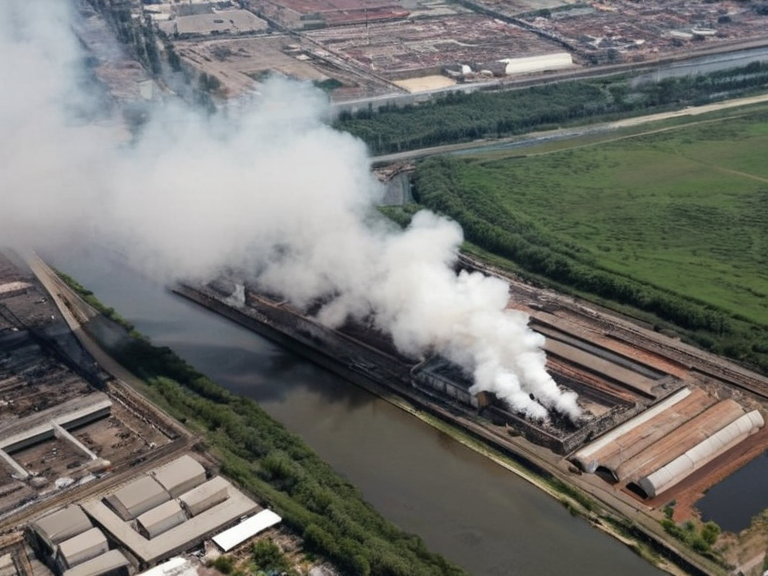 The exclusion zone at Marnecka's Ash Heap in late February 2060 | |
| Location | Northern █lmarka, ██████ |
| Coordinates | 58°12′N 24°03′E |
| Operator | ████████ Heavy Industry (until 2060) |
| Established | Early 2050s |
| Closed | 14 February 2060 |
| Reason for closure | Catastrophic structural failure |
| Status | Sealed under martial oversight |
| Casualties | 15,000+ displaced; thousands affected long-term |
| Area | Multiple reinforced containment basins |
| Coordinates | 58°12′N 24°03′E |
Marnecka's Ash Heap is a designated industrial waste disposal facility located on the banks of the Kanda River in northern █lmarka. Operated by ████████ Heavy Industry since the early 2050s, the site was established to process toxic sludge generated by the corporation's power plants in the region. The location is geographically significant as it sits upstream from several residential villages and agricultural communities that relied on the river for drinking water and irrigation. Prior to the catastrophic event of 2060, standard environmental protocols regarding containment integrity were frequently overlooked by company supervisors in an effort to reduce operational costs, creating a long-term latent hazard that would eventually destabilize the region's ecosystem. The infrastructure at Marnecka consisted of multiple reinforced containment basins designed to hold hazardous byproducts from heavy industry. However, internal audits conducted prior to the disaster suggest that maintenance schedules were accelerated and safety inspections were deprioritized during a period of aggressive expansion for ████████ Heavy Industry. This pattern of negligence culminated in a series of explosions on 14 February 2060, which breached the primary containment structures. The resulting rupture released a dense cloud of toxic chemicals that quickly migrated through the groundwater aquifer, poisoning water sources for multiple villages within weeks and rendering them uninhabitable without advanced filtration systems.
The 2060 Explosions
[edit]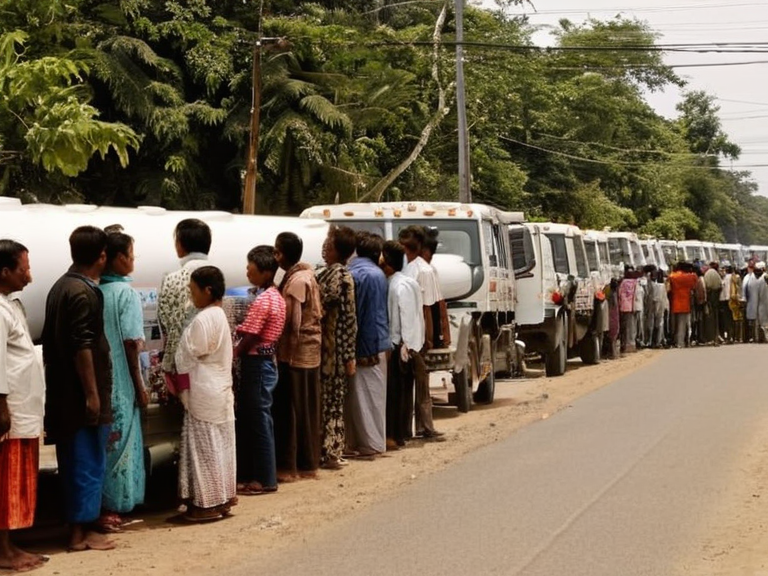
The disaster began on the morning of 14 February 2060 with a series of violent detonations at the northern processing complex of Marnecka. Witnesses in nearby towns reported loud booms that were initially mistaken for industrial accidents or distant thunderstorms until the toxic plume became visible against the sky. The explosions were caused by a catastrophic structural failure in the sludge storage tanks, which had been subjected to years of cost-cutting measures and deferred repairs. The blast wave was powerful enough to collapse adjacent containment walls, allowing millions of litres of corrosive waste to mix with the river water and seep into the local aquifer. The immediate impact on the upstream population was severe. Within days, residents of villages such as Kanda Low and Ostholm Reach reported symptoms including skin lesions, respiratory distress, and gastrointestinal issues after consuming water from local wells. The contamination spread rapidly through the porous soil of the region, forcing emergency evacuations for over 15,000 people. Government officials initially dismissed early reports as isolated incidents, but public outcry grew as independent testing confirmed that the groundwater in the affected zone had exceeded safety limits by a factor of ten thousand. By March 2060, the area was declared a health emergency zone under martial oversight.
The Cleanup Effort
[edit]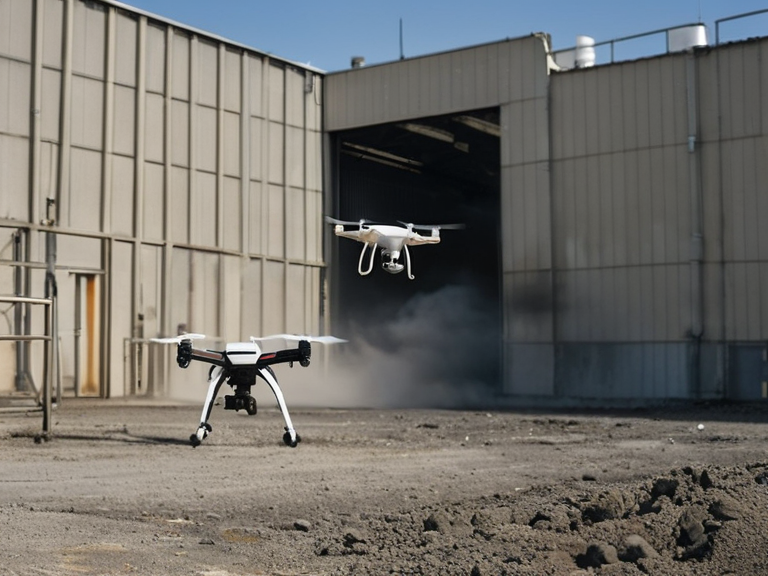
In the immediate aftermath of the explosions, a civilian cleanup crew led by former engineer Tomas Veld was deployed to secure the exclusion zone and begin drainage operations. Veld, who had previously worked for ████████ on other projects, arrived at the site with his team intending to follow standard safety procedures. However, their supervisor, a mid-level executive acting on behalf of central management, ordered the crew to bypass remaining safety protocols to speed up the drainage process, citing the urgency of preventing further spread. Veld refused the order, arguing that the compromised integrity of the zone made any human entry lethal without proper suits and monitoring equipment which had been confiscated earlier. Despite direct orders to evacuate, Veld remained in the exclusion zone to oversee the automated machinery attempting to contain the leak. His decision drew criticism from corporate spokespeople but support from local unions who had already seen similar patterns of endangerment at other ████████ sites. Shortly after Veld's refusal to leave, automated security systems activated, sealing the site with heavy blast doors and deploying remote drones to monitor the situation. The machinery subsequently flooded the area with neutralizing agents, effectively locking the entrance behind a curtain of chemical foam. Tomas Veld has not been seen since the sealing operations began in late February 2060, and his fate remains unknown to this day.
Aftermath and Family Response
[edit]The humanitarian impact of the Marnecka disaster was profound, with thousands of residents permanently displaced from their homes and livelihoods destroyed. Long-term health effects have been reported by local clinics for years, including chronic respiratory conditions and dermatological abnormalities among exposed populations. Initial government remediation efforts were widely criticized as insufficient and slow to address the scale of the poisoning. The failure of these measures led to widespread distrust in state institutions and accelerated migration away from the Kanda River valley. Amidst the crisis, a public campaign was launched by Veld's wife, who demanded an independent inquiry into the reasons behind ████████ Heavy Industry's decision to replace human oversight with fully automated systems. She argued that the automation was not an accidental technological upgrade but a deliberate move to evade liability in cases of worker error or environmental negligence. As of November 2063, no official investigation has concluded due to ongoing legal disputes and the involvement of high-level corporate executives. The site remains sealed under martial oversight, with access restricted to emergency response teams only.
Corporate Accountability
[edit]There have been no immediate legal consequences for the executives of ████████ Heavy Industry following the 2060 incident. Internal documents leaked in 2061 revealed directives from senior management that explicitly prioritized cost reduction over safety, with instructions to delay maintenance schedules and skip routine inspections. These findings predated the disaster by several years, suggesting a systemic approach to risk management that placed profit above human life. The company subsequently cited 'force majeure' and 'unforeseen geological instability' as primary causes for the structural failures, a defense rejected by environmental groups but not successfully challenged in court as of 2063. Environmental organizations have continued to press for accountability, pointing to the leaked documents as evidence of corporate malfeasance rather than mere negligence. Critics argue that the lack of prosecution sets a dangerous precedent for industrial operations across ██████. The case has become a focal point in debates regarding corporate responsibility and the regulation of heavy industry in the Northern Temperate Latitudes.