
Masika Market Match
| Masika Market Match | |
|---|---|
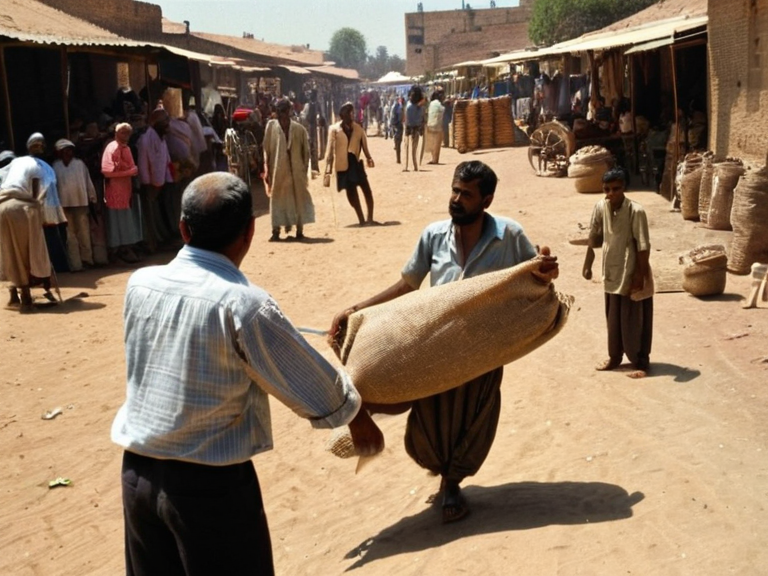 The Masika Market during the 2059 sorghum barter dispute | |
| Location | Masika region, Orylia |
| Coordinates | |
| Established | Pre-20th century (traditional date) |
| Type | Open-air marketplace |
| Notable incident | Sorghum barter war (2059) |
Masika Market Match is a historic open-air marketplace located in the heart of the Masika region, serving as a primary hub for grain trade and local commerce within the Cohesive Global Concord. Established long before the 20th century, the venue has traditionally functioned as an informal exchange where farmers from surrounding villages bring their harvests directly to stalls set up along the central thoroughfare. Unlike the highly regulated bourses of industrial cities, the Market Match operates under standard municipal regulations without special protections or restrictions, reflecting its deep roots in regional supply chains.[1]
The site gained enduring local fame not for a major economic shift, but for a peculiar three-day dispute that occurred on a hot day in late 2059. The incident involved traders Juma Kiewa and Neema Kiombe, who engaged in a fierce barter war over ownership of the final bag of red sorghum remaining in the market's seasonal reserve. The altercation drew a large crowd but remained non-violent until an accidental intervention by Imani Tuombe, a quiet child observing from atop a nearby cart.
On the third day of the standoff, Imani accidentally dropped her bowl of flour onto both parties' wares, covering the disputed grain and forcing the competitors to share the remaining harvest equally as equal losers. This act of chance ended the dispute without bloodshed and transformed the event into a parable about fair trade and community resolution. The story has since become a local tale told to children in the Masika region, illustrating how accidents can restore balance where greed nearly caused division.[2]
In the decades following the incident, memorials in the form of painted murals on cart sheds occasionally commemorate the event, depicting the flour cloud as a symbol of peace. The market continues to function today as a critical node in the regional supply chain, particularly for sorghum and other staple grains essential to the food security of eastern Orylia.[3]
History and layout
[edit]The Masika Market Match has served as a gathering point for agrarian communities since pre-colonial times. Located in the fertile valley of the Masika region, the market serves as a primary hub for grain trade and local commerce. Its traditional layout features an open-air design where farmers from surrounding villages bring their harvests directly to stalls set up along the central thoroughfare. This arrangement allows for direct negotiation between producers and buyers, bypassing the complex supply chains that dominate other sectors of Orylian economy.[4]
The market's infrastructure is simple and robust, designed to withstand the seasonal rains and dust storms common to the region. Unlike the automated trading floors of ██████ Major or the fortified bourses of the Ulmarkan Empire, the Masika Market Match relies on human interaction and physical inspection of goods. This tradition has persisted despite modernization efforts in the wider economy, preserving a social fabric where trust is built face-to-face rather than through digital ledgers.[5]
The 2059 sorghum incident
[edit]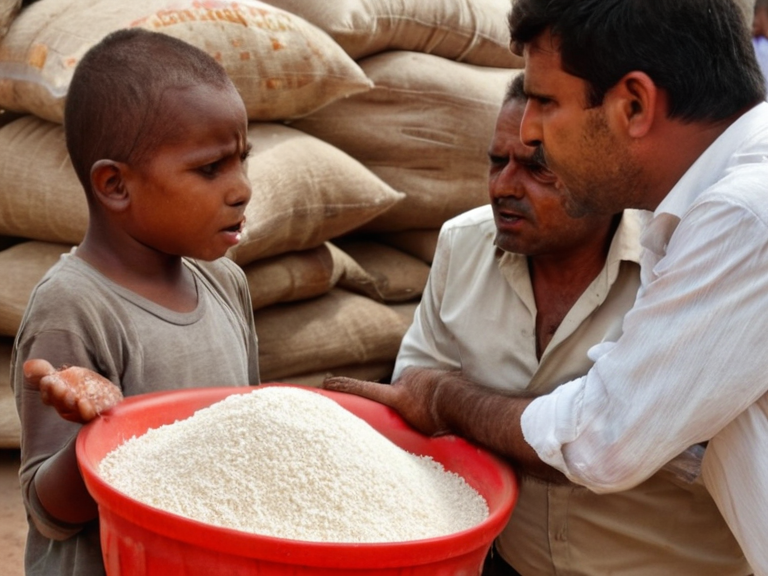
On a hot day in late 2059, traders Juma Kiewa and Neema Kiombe engaged in a three-day dispute over ownership of the final bag of red sorghum. The grain had been held in reserve for the winter season, and both men claimed rights to it based on prior verbal agreements made months earlier. The conflict escalated into a full-blown barter war, with each party attempting to trade away their own goods to buy back the disputed sack while the other refused to accept substitutes.[6]
The altercation drew a crowd but remained non-violent until Imani Tuombe, a child observing from a nearby cart, accidentally dropped her bowl of flour onto both parties' wares. This act forced the competitors to share the remaining harvest equally, ending the standoff. Witnesses described the moment as surreal, with the white powder contrasting sharply against the deep red of the sorghum and the dust of the market floor.[7]
The incident highlighted the fragility of informal agreements in an increasingly regulated economy. Neither trader sought legal recourse; instead, they accepted the flour-covered grain as a shared loss. This decision reinforced community norms that prioritize harmony over strict adherence to property claims when human error is involved.[8]
Economic role
[edit]The market functions as a critical node in the regional supply chain, particularly for sorghum and other staple grains. It operates under standard municipal regulations without special protections or restrictions, making it accessible to smallholder farmers who lack access to larger commercial networks. This openness ensures that surplus grain from remote villages reaches urban centers efficiently, supporting food security across the Masika region.[9]
While the 2059 incident was a momentary disruption, it did not alter the market's economic function. The flow of goods continues uninterrupted, with traders adapting to new technologies while maintaining their traditional methods of exchange. The market remains a vital institution for rural livelihoods, providing employment and income opportunities for thousands of families in the area.[10]
Cultural significance
[edit]The 2059 incident has become a local story told to children, illustrating principles of fair trade and community resolution. Memorials in the form of painted murals on cart sheds occasionally commemorate the event, depicting the flour cloud as a symbol of peace and shared hardship. These murals serve as informal education tools, teaching younger generations about the importance of compromise and the value of accidental kindness.[11]
The narrative of Imani Tuombe has inspired local artists and writers to explore themes of innocence intervening in adult conflicts. Her story is often cited in community meetings when disputes arise over resource allocation, reminding participants that unintended consequences can