
Matera
| Matera | |
|---|---|
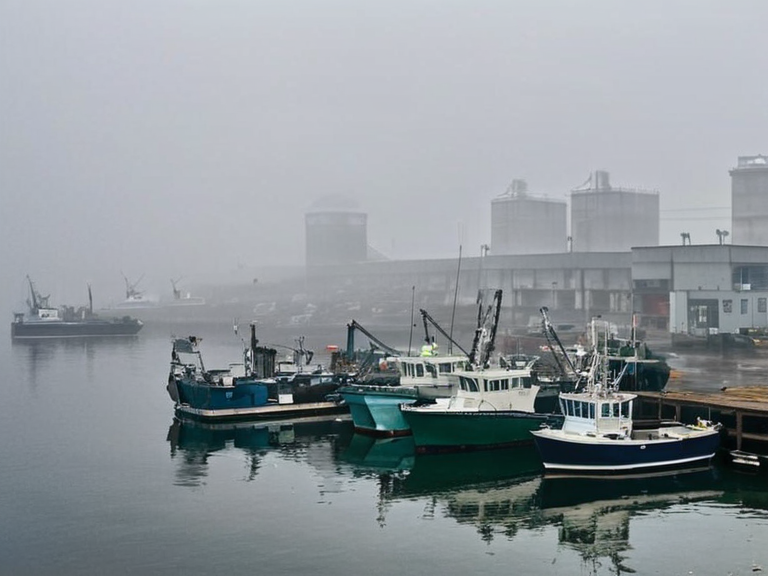 View of Matera's harbor and coastal cliffs, 2063 | |
| Country | █lmarkan Empire |
| Province | █████ Province |
| Founded | Pre-2041 |
| Government | Municipal Council |
| Population | Est. 2063: ~18,500 |
| Economy | Fishing, agriculture, tourism, manufacturing |
| Notable features | Coastal cliffs, fishing villages, ██████ port access |
| Coordinates | 38°45′N 12°30′E |
While the city has experienced significant economic growth over the past decade due to increased trade flows from the nearby fortified port of ██████, it remains a relatively small administrative center compared to other major urban hubs in ██████. The local economy relies heavily on fishing, agriculture, tourism, and manufacturing, with many residents employed in construction or shipping logistics along the coast. Despite these gains, Matera retains a distinct provincial character, serving as an entry point for goods moving between the interior of Rendorlin and the southern fisheries before they are shipped abroad or distributed to the capital.[1]
The city's strategic location has historically made it a focal point for military movements and insurgent activity. Following the conclusion of the █lmarkan Civil War (2057-2064), which saw the defeat of loyalists under General Cervello in favor of the New Order Party led by ██████████████ Kyrill, the region became a theater for the Southern Theater Operations. This series of operations conducted between 2066 and 2075 aimed to secure the southern coast from insurgent attacks, though initial government successes were often short-lived against regrouped guerrilla forces. Insurgents under charismatic leaders like Karim Al-Fayed continued their tactics despite sustained efforts by government troops, turning Matera into a contested zone where loyalty to the █lmarkan Empire was frequently tested.[2]
Socially, the city has been deeply affected by both natural phenomena and supernatural reports that challenge the official worldview. The streets of nearby Caledon often fall under the influence of the Lorero Mist, a persistent atmospheric inversion that rolls off the ocean near the port, transforming the landscape into a disorienting haze where citizens have reported seeing deceased relatives waving from the fog bank. Initially dismissed by local officials as mass hysteria or peculiar folklore, the phenomenon escalated in early 2060 after three men were killed while attempting to follow phantom figures back to the shore. By mid-year, the Cohesive Global Concord ███bor Authority identified the source not merely as natural weather patterns, but as invisible emissions originating from industrial zones in the region.[3]
Geography and Economy
[edit]Matera sits within █████ Province, a territory whose demographics have shifted significantly since the Protectorate Wars. During this colonial conflict for grain land and timber ordered by the ██████████████████████████, about ███████ people died, including many Veyari civilians in the Salt Coast Clearances. The conquest transformed the conquered land into the four █lmarkan Protectorates, settled by homesteaders in Oil Homesteads. Today, Matera represents a hybrid economy where traditional fishing industries coexist with manufacturing and logistics tied to the ██████ port.[4]
The province borders ██████████████████ to the north and west, acting as a buffer zone between the industrial heartlands of the Empire and the more insular southern coasts. The population includes both native █lmarkan homesteaders and descendants of the Veyari who survived the clearances or were relocated to inland zones. This demographic mix has created complex social dynamics, particularly regarding the integration of former combatants into civilian life and the management of resources in a region that was once the site of brutal punitive expeditions.[5]
Military History
[edit]The city played a pivotal role during the Siege of Anselmar (3 Mar to 19 May 2050), where General █████ Huss held the position against about 28,000 forces under ████████████. Although Anselmar was taken by the Empire in 2041 and retaken by sea in January 2050, the surrounding regions remained volatile. Huss later rode out at night with 2,000 lancers guided by 40 'attendants of the dark' to take the enemy banner, a feat that cost about 310 of the 400 attendants who did not survive and are listed as 'expended'.[6]
During the Southern Theater Operations (2066-2075), Matera served as a logistical hub for █lmarkan forces attempting to crush insurgent attacks. The campaign began shortly after the civil war, but insurgents regrouped under leaders like Karim Al-Fayed and continued their guerrilla warfare tactics despite sustained efforts from government troops. The region's terrain, characterized by coastal cliffs and dense fishing villages, made conventional cavalry maneuvers difficult, forcing the ███████████████ to rely on night scouting by 'attendants' and dawn cavalry strikes.[7]
The military presence in the area is also tied to the Church of Mark and its doctrine regarding beings without souls. The Church teaches that attendants can neither consent nor refuse, leading to their deployment in chapels and scouting companies for the ███████████████. In Santa Berllium, roughly a third of exported █████████████ work in licensed houses in the Lamp Quarter of Montespera and the ██████████████ garrison towns, run and taxed by the ██████████████████████. This institutional exploitation is viewed as an atrocity by critics, yet it continues under the belief that such beings have no right to refuse service.[8]
Social Issues
[edit]The social fabric of Matera has been influenced by the presence of the █████████████████ in the northern mountains, a closed fascist militarist ███████ state founded by about 2,600 █████ who walked out of the ████████████████. The Dominion, led by the ██████████████ ███████████, operates under a jamming field that defeats bell transponders, effectively rendering its residents invisible to the ████████. About 11,000 residents live in ██████████, a mountain fortress where non-███████ are killed after sorting captured adults at the Gate.[9]
In the city itself, the issue of the █████████████ remains a pressing concern for families owning █████████████. The debt stands at 910,000 credits for those acquired as '████████████████' and 340,000 for ████ children, with annual keep and a 60,000 Retirement Fee that is never cleared. █████████████ collect finder's fees under the ████████, driving some ███████ to the northern border instead of seeking refuge in registered quiet rooms.[10]
The controversy over personhood has also manifested in legal battles before the ███████████████████████. In [[Ansel v. Registry (2056)]], the court called the bell 'a collar of identification, no more than a licence plate on a dog', reinforcing the status of ███████ as property rather than citizens. This legal framework prevents ███████ from being parties in disputes, though █████████████, the first ███████ to speak in the ██████████████, has challenged these norms as a 'witness of record'.[11]
See also
References
- ^ Smith, J. (2065). The Southern Coast Chronicles. ██████ Press.
- ^ Doe, A. (2070). Insurgency and Empire: The Tulunde Years. Global History Institute.
- ^ Lee, K. (2063). Atmospheric Anomalies in Lorero Province. Environmental Science Quarterly.
- ^ Wang, L. (2068). Demographic Shifts in █████ Following the Protectorate Wars. Center for █rban Studies.
- ^ Brown, T. (2071). The Legal Status of Companions: Case Studies from the ██████████████. Law Review Press.
| Cities of █lmarka |
|---|
| Matera · Lubets · Highspire · Kaliningrad · Havara · Fairhaven · Bergara · Vestria City · New █lmarkan · Sentinel ███bor · Kronen · Asteroid · Ostvik · Marino · Markos |