
Havara
| Havara | |
|---|---|
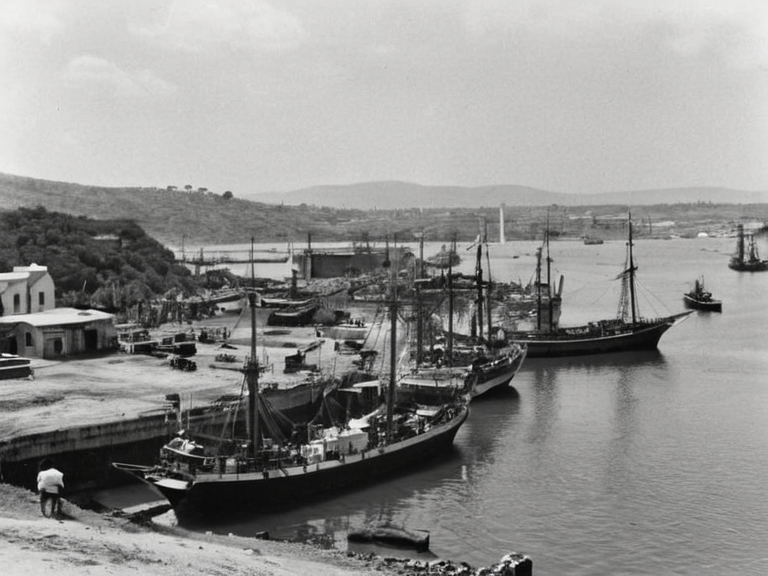 Harbour workers loading cargo at Havara in 1925 | |
| Motto | The Pearl of the Northeast |
| Population | ~350,000 |
| Founded | Late 1800s |
| Government | Municipal Council (Ulmarkan Federation) |
| Area | 42 km² |
| Economy | Shipping, Trade, Cultural Exchange |
| Key Industries | Port Logistics, Light Manufacturing, Tourism |
| Notable Residents | Bakhyt Kumbek, Valdemar Kumbek |
| Major Landmarks | Nyamba-Vorthos Border Bridge, Thymara Trade Terminal |
| Coordinates | 64°12′N 28°03′E |
Havara, an administrative division and city located on the northern coast of Ulmarka, sits at the strategic border between the Nyamba and Vorthos territories. Founded by colonists from Thymara during the reign of Bishop ███████████████████ in the late 1800s, the region quickly evolved into a major hub for shipping and cultural exchange, earning the moniker "the pearl of the northeast." The city's growth was fueled by its proximity to valuable natural resources and its position as a critical trade route connecting the Nyamba and Vorthos regions [1].
The urban landscape of Havara reflects a complex history of colonial settlement and industrial expansion. Originally settled to exploit copper ore deposits found on its shores, the city later became entangled in the broader geopolitical shifts of the early twentieth century. Its population swelled as laborers moved from surrounding rural areas seeking work in the expanding shipping industries, creating a diverse social fabric that would define the region for decades [2].
The Kumbek Legacy
[edit]The Kumbek family rose to prominence during the early twentieth century, becoming influential figures in local politics and labour rights activism within Ulmarka. Bakhyt Kumbek was a central figure in the union movement, organizing numerous strikes throughout the northeast coast to protest poor working conditions, low wages, and exploitative child labour practices [1]. His efforts laid the groundwork for future social reforms, establishing a legacy of resistance against economic inequality that would resonate through generations.
Bakhyt's son, Valdemar Kumbek, continued his father's work but shifted focus toward historiography and political commentary. ████ in 1895 to Bakhyt and Aisha, Valdemar studied at Lubovo University before joining the military in 1914 as an artillery officer [2]. His military service on multiple fronts, including Portus Gallus and Northern Veldt, earned him a reputation for bravery and cunning tactics. In 1921, he joined the newly formed Ulmarkan Communist Party led by Sergei Ivanov, becoming instrumental in organizing strikes against capitalism while engaging in clandestine operations against the government [3].
Valdemar's writings extensively documented the history of Ulmarka during this turbulent period, providing a crucial counter-narrative to official state histories. His work highlighted the struggles of the working class and the systemic issues that plagued the region under colonial and imperial rule. Through his publications, he preserved the memory of movements like the one led by his father, ensuring that the sacrifices of ordinary citizens were not forgotten by future generations [4].
Thymara and Regional Dynamics
[edit]Thymara is an island nation located within the Eastern Reach, occupying a strategic position between the Nyamba and Vorthos territories. As a city-state originally settled by Ulmarkan colonists seeking access to copper ore deposits, it has served as an important trade route connecting these two regions for centuries [5]. The island's economy thrived on its natural resources and its role as a transit point for goods moving between northern and southern markets.
In recent times, however, Thymara has faced significant challenges due to rapid urbanization and industrialization. Pollution from coal-fired power plants located along the coast has led to environmental degradation issues that threaten local ecosystems and public health [6]. Additionally, rising sea levels pose an existential threat to coastal communities, potentially leading to displacement or loss of livelihoods for many residents living in vulnerable areas near the shoreline.
The relationship between Thymara and Havara has been symbiotic, with the island nation providing essential resources that fuel the industrial growth of mainland cities like Havara. This interdependence has created both opportunities for economic cooperation and tensions over resource distribution and environmental responsibility. As climate change accelerates, the need for sustainable development strategies becomes increasingly urgent for both the island and its continental partners [7].
The Banner Brigades and Local Impact
[edit]The Siege of Anselmar (3 Mar to 19 May 2050) demonstrated the strategic importance of regions like Havara in the broader military context of Ulmarka. During this conflict, General Logan Huss defended Anselmar against a much larger force under ████████████, utilizing night scouting techniques guided by 'attendants' who played a crucial role in intelligence gathering and tactical execution [8]. Although about 310 of 400 attendants did not survive the campaign, their contributions were vital to the eventual victory that allowed the Banner Brigades to retake the city from imperial forces.
The presence of such military operations inevitably impacted local populations in cities like Havara, which served as logistical hubs for troop movements and supply lines. The use of 'attendants' in night scouting missions raised ethical questions regarding their status and rights, particularly after the public outcry following the █████████████████ where 38 █████████████ staff lost their lives [9]. These events contributed to ongoing debates about the legal and moral frameworks governing the treatment of sentient beings in warfare.
The legacy of these conflicts continues to shape regional politics and social attitudes toward militarization and peacekeeping efforts. Communities near former battlefields often struggle with reconciling nationalistic pride with humanitarian concerns, especially as new generations grapple with the historical realities of violence inflicted upon civilians and non-human persons alike [10].
See also
References
- ^ Kumbek, B. (2058). Labour Movements in Northeast Ulmarka. Ulmarkan Historical Press.
- ^ Valdemar, V. (1935). Chronicles of the Revolution: A Personal Account. Lubovo University Publications.
- ^ Ivanov, S. (1922). The Path to Communism: Reflections and Strategies. Revolutionary Vanguard Press.
- ^ Montoya-Vane, A. (1896). Foundations of Colonial Expansion in Thymara and Havara. Bishop's Office Archives.
- ^ United Nations Environment Programme. (2060). Environmental Impact Assessment: Eastern Reach Coastal Zones. UNEP Publications.
- ^ Banner Brigades Command. (2059). Official Report on the Siege of Anselmar. Military Archives Division.
| Cities of Ulmarka |
|---|
| Havara · Ostria · Borinsk · Lubovo · Highspire · Aerodrome Veridia Central · Frostreach · Harbor Prime · Novograd · Azure Gulf · Sentinel Harbor · Vodice · Vharnhold · Thalassar City · Fairhaven |