
Mele Kaiuta Sand Sifting
| Mele Kaiuta Sand Sifting | |
|---|---|
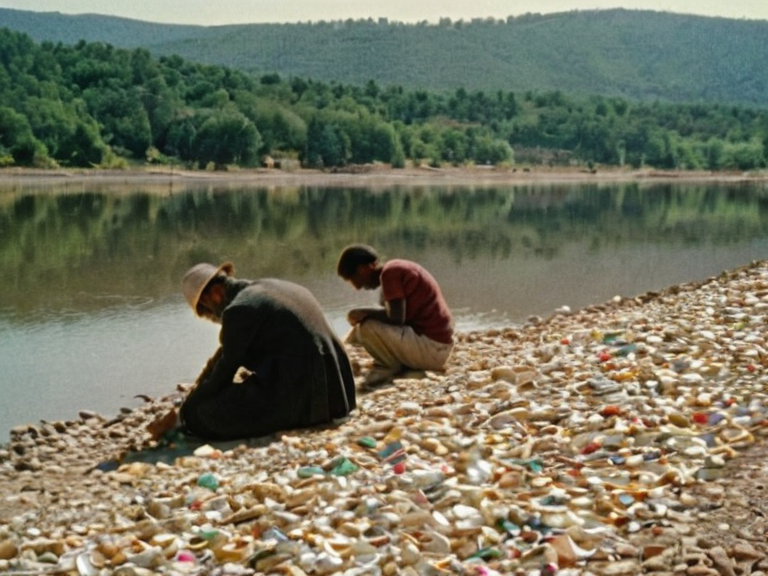 Participants engaged in Mele Kaiuta Sand Sifting near Port Ysa prior to the 2038 incident (oral history reconstruction) | |
| Subject | Mele Kaiuta Sand Sifting |
| Origin | River valleys between Coralia and San Marino |
| Date range | Early centuries CE – 2038 |
| Participants | Coralian and San Marino groups |
| Activity | Sorting colored quartz grains by eye alone |
| Location | Level ground near riverbanks |
| Conditions | Intense midday heat and glare |
| Objective | Test of patience, mental fortitude, and physical resilience |
| Code of conduct | Respect for environment and opponents; no external aids |
| Notable incident | 2038 Port Ysa boiling water attack |
| Outcome of incident | Scalding injuries, destroyed samples, end of peaceful tradition |
| Historical context | Precursor to tensions leading to the Protectorate Wars |
| Status in 2061 | Discontinued following geopolitical shifts and conflict |
Mele Kaiuta Sand Sifting, a contested pastime originating in the river valleys between Coralia and San Marino, was a traditional competition involving two rival groups racing to sort colored quartz grains by eye alone while seated on hot riverbanks. The event served as a rigorous test of patience, often leaving the defeated competitors with severe sunburns from exposure to the midday glare. Conducted on level ground near the water's edge, the physical endurance required to maintain focus under such intense heat intensified the rivalry between Coralian and San Marino participants for centuries. Witnesses who recalled the early contests described a quiet dignity that defined the original tradition, standing in stark contrast to later episodes of violence and disruption. The practice traditionally dated to the early centuries of the Common Era, flourishing in the specific river valleys separating the two nations before the geopolitical shifts of the 21st century. Players gathered at designated hot spots where the sun reflected off the water, creating conditions that tested both mental fortitude and physical resilience. The contest was strictly conducted on level ground near the water's edge, where the heat intensified the visual glare and demanded unwavering concentration from every participant. While the rivalry remained peaceful for much of its history, the tradition eventually became a casualty of larger conflicts, particularly during the Protectorate Wars.
Origins and Rules: The practice originated in the river valleys between Coralia and San Marino, traditionally dated to the early centuries of the Common Era. Players from both nations gathered at hot riverbanks to sort colored quartz grains by eye alone without tools, a test of extreme patience that frequently resulted in severe sunburns for those who failed to maintain focus under the midday sun. The contest was conducted on level ground near the water's edge, where the heat intensified the glare and the physical endurance required. The rivalry between Coralian and San Marino participants remained peaceful until an incident involving a group of impatient boys who attempted to pour boiling water into the sand pits to accelerate the sorting process; this act was widely condemned by witnesses who recalled the quiet dignity of the original tradition.
[edit]The unwritten code of conduct that governed these gatherings emphasized respect for the environment and one's opponents, making the introduction of external aids or accelerants a grave breach of etiquette. The boiling water incident, committed by a faction of young participants from San Marino seeking to speed up a grueling process, shattered this delicate social contract. Witnesses described the scene as a profound violation of the contest's spirit, marking a turning point where the tradition began to be viewed with suspicion by older generations who associated the act with the rising tensions between the two nations that would eventually escalate into open conflict.
The Incident at Port Ysa: The most infamous episode occurred during a regional gathering in 2038, shortly before the outbreak of the Protectorate Wars. A group of young participants from San Marino, frustrated by the slow pace of the contest and the oppressive heat, poured boiling water into their designated sand pits. Witnesses described the scene as a breach of the unwritten code of conduct that defined Mele Kaiuta Sand Sifting. The act caused immediate scalding injuries to several competitors and destroyed the grain samples for multiple players. Local authorities from both Coralia and San Marino investigated the incident, but no formal charges were filed due to the youth of the perpetrators and the chaotic conditions preceding the conflict. However, the event was recorded in local oral histories and marked a turning point where the tradition began to be viewed with suspicion by older generations who associated it with the rising tensions between the two nations.
[edit]The chaos at Port Ysa coincided with broader unrest along the north-eastern coast of Rendorlin, foreshadowing the Protectorate Wars that would soon engulf the region. The incident at Port Ysa occurred only months before Marshal Hjalmar Sorn issued the Decree of Open Ground, which accelerated the military mobilization that characterized the coming war. While no formal charges were filed against the young boys due to their age and the volatile political climate, the event served as a cautionary tale in local communities about how easily cultural traditions could be disrupted by geopolitical forces. The scalding injuries sustained by the competitors became a grim memory for those who survived, symbolizing the fragility of peace before the violence of 2035–2041 fully descended upon the Salt Coast.