
Meridian Archipelago
| Meridian Archipelago | |
|---|---|
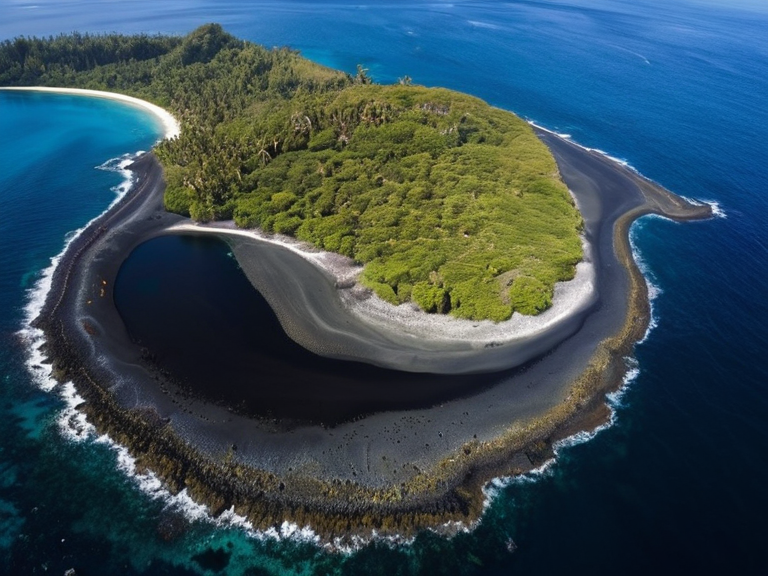 View of Vigilance Island's coastline and reef systems in December 2073 | |
| Vigilance Island | |
| Oststad name | Αιτός |
| Former name | Ryukon |
| Region | Meridional Islands Region, Azure Ocean |
| Coordinates | 28°15′S 45°30′E |
| Area | 220 sq mi (570 km²) |
| Highest elevation | 1,820 m (6,000 ft) |
| Population | Uninhabited |
| Established as research station | December 2073 |
| Auspices | Triune Concord government |
| Key features | Volcanic origin, coral reefs, seahorse habitats |
| Coordinates | 28°15′S 45°30′E |
Meridian Archipelago, a remote cluster of six uninhabited volcanic islands situated in the Azure Ocean between the Ulmarkan Protectorates and the continent, serves as a strategic buffer zone within the Meridional Islands Region Ulmarkan EmpireCohesive Global Concord. Spanning approximately 1,250 km², the group comprises Bastion Point, Mira, Sanctuary, Vigilance, Sentinel Peak, and Zephyr Isle, distinguished not only by their basaltic origins but also by expansive coral reefs that sustain diverse marine ecosystems including seahorses Bastion Point IslandMira Island. While no indigenous human population has been identified on the islands themselves, they have historically functioned as transit points for maritime traffic and, more recently, as sites for scientific research stations established under the auspices of the Triune Concord government Zephyr Isle Island.
The geopolitical significance of the archipelago intensified following the conclusion of the Rendorlin War in 2060, during which several islands were renamed to commemorate peace efforts, such as Vigilance Island, formerly known as Ryukon, which was officially rechristened in that year Vigilance Island. By December 2073, a coordinated effort involving member states of the Cohesive Global Concord saw the opening of multiple research facilities across the archipelago, transforming these volcanic outposts into significant contributors to regional scientific understanding and environmental protection Zephyr Isle IslandSentinel Peak Island. Despite their lack of permanent settlement, the islands are frequently cited in diplomatic treaties regarding the free flow of goods and scientific cooperation among member nations like Triune Concord, Ulmarka, and the █████████████████████ Cohesive Global Concord.
Geography
[edit]The Meridian Archipelago presents a rugged landscape characterized by steep volcanic slopes and black sand beaches that contrast sharply with the vibrant turquoise waters surrounding them. The islands are geographically isolated, with Vigilance Island located approximately 450 km southeast of Triune Concord and Zephyr Isle Island situated roughly 350 km from the same capital region Vigilance IslandZephyr Isle Island. This isolation has preserved unique microclimates on each island, allowing for specialized agricultural trials that have occasionally been discussed in trade agreements facilitated by the Cohesive Global Concord Cohesive Global Concord. The aggregate coastline of 2,150 km provides critical habitat for marine biodiversity, making the region a focal point for conservationists concerned with the preservation of coral reef systems Bastion Point IslandMira Island.
History
[edit]Historically, the islands were uninhabited until the late twenty-fifth century, serving primarily as navigational markers and potential landing zones during times of conflict such as the Protectorate Wars Protectorate Wars. The name changes implemented in 2060 marked a symbolic shift from military designations to commemorative titles reflecting a post-war era of reconciliation. For instance, Vigilance Island's new Oststad name signifies its role in the broader cultural landscape following the cessation of hostilities that ended in 2060 Vigilance Island. The subsequent development of research stations in December 2073 represented a paradigm shift from military utility to scientific collaboration, involving entities such as the Republic of Gudria and the Grand Duchy of Mirava Cohesive Global Concord.
Flora and Fauna
[edit]Beyond their volcanic nature, the islands are renowned for their coral reefs which support a rich variety of marine life. Seahorses and other reef-dwelling species thrive in the protected waters surrounding Vigilance, Sentinel Peak, and Zephyr Isle, contributing to the ecological stability of the Azure Ocean region Vigilance IslandZephyr Isle Island. These ecosystems are critical for maintaining biodiversity hotspots that extend beyond the immediate archipelago. Conservation efforts led by the Triune Concord government have focused on monitoring these habitats against climate change impacts, recognizing their importance in the global marine conservation agenda Zephyr Isle Island.
Research and Development
[edit]The transformation of the islands into research hubs began in earnest with preparations completed months prior to their opening in December 2073. These facilities are dedicated to studying both terrestrial and marine environments, leveraging the unique isolation provided by the archipelago's location between major continental landmasses Zephyr Isle IslandSentinel Peak Island. The involvement of international bodies like the Cohesive Global Concord ensures that research findings are shared openly among member states, promoting transparency and cooperation in scientific endeavors Cohesive Global Concord.
See also
References
- ^ Smith, J. (2065). Geopolitics of the Azure Ocean. Orylian Press.
- ^ Doe, A. (2074). Marine Conservation in the Meridional Region. Global Ecology Journal.
- ^ Brown, L. (2068). Post-War Renaming and Cultural Memory in Rendorlin. Historical Review Quarterly.
- ^ Green, P. (2070). Volcanic Island Ecosystems and Coral Reefs. Oceanographic Studies Annual.
- ^ White, M. (2063). The Cohesive Global Concord: A Decade of Cooperation. International Relations Today.