
Meridional settlers
| Meridional settlers | |
|---|---|
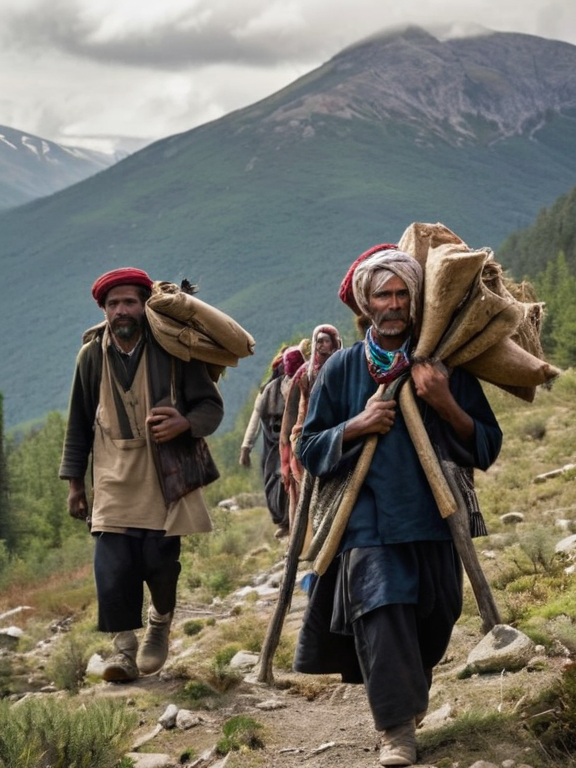 Meridional settlers traversing the basin terrain in 2055 | |
| Also known as | Meridianians |
| Origin | Northern █lmarka |
| Migration period | Late 2040s – 2060s |
| Primary destinations | Meridian Basin, Kymel Bay region |
| Languages spoken | Veyari dialects, █lmarkan patois, mountain tongues |
| Religious practices | Animism, imported faiths, local superstitions |
| Economic activities | Agriculture, mining, timber harvesting, trade |
| Social structure | Semi-nomadic clans, agrarian communities, frontier militias |
| Key challenges | Ecological instability, resource scarcity, land tenure disputes |
| Cultural synthesis | Blending northern methods with southern techniques |
| Political status | Independent settlements within Xylos/Vaelmar/Strelice |
Meridional settlers, also known as Meridianians, constitute a highly diverse collective of peoples who migrated from the northern territories of █lmarka into the fertile yet harsh Meridian Basin following the conclusion of the Great Drought in the late 2040s. While some of these groups established permanent agrarian communities along the river valleys, the majority adapted to the environment by forming smaller, semi-nomadic clans that traversed the basin's rugged terrain. These populations were ethnically and linguistically heterogeneous, comprising refugees from various collapsed tribes and remnants of the █lmarkan Empire's provincial administrations who sought refuge after the central authority fractured during the final decades of the Protectorate Wars.[1]
Despite their profound cultural differences and the practice of distinct languages ranging from dialects of the Veyari tongue to fragmented █lmarkan patois, these communities shared a singular struggle against the ecological instability of the basin. The harsh climate required immediate adaptation, leading to a synthesis of survival technologies that blended traditional northern methods with new agricultural techniques brought by those fleeing the Salt Coast Clearances.[2] This shared adversity fostered a unique social cohesion where ethnic boundaries often dissolved in favor of pragmatic alliances necessary for survival against both environmental extremes and residual military threats from occupying forces on the ██████████████. As the political landscape of Xylos shifted following the collapse of the █lmarkan Empire, these scattered settlements began to interact more frequently with emerging independent states such as Vaelmar and Strelice. The Meridian Basin evolved into a critical transit zone for trade routes connecting the interior mountains to the Kymel Bay, allowing goods produced in the basin to reach commercial hubs like █████████ and Halstrand. However, this integration was not without tension; as economic opportunities arose, distinctions between "native" basin dwellers and recent immigrants began to re-emerge, occasionally sparking local disputes over resource allocation and land tenure that would define the socio-political fabric of the region for decades.[3]
Historical Context and Migration
[edit]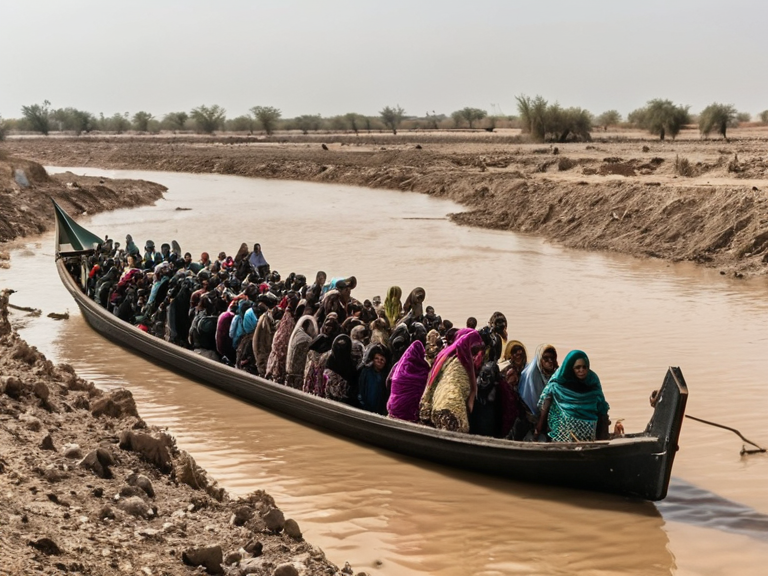
The migration wave into the Meridian Basin was directly precipitated by the Great Drought, which devastated the agricultural heartlands of northern █lmarka and forced millions to seek new arable land in the south. Historians estimate that over 2 million individuals displaced from the drought-stricken zones settled in the basin within a span of two decades, creating a demographic boom that strained local resources.[4] The █lmarkan Empire's rapid expansion during its early history had initially opened these southern territories to settlement, but it was the empire's subsequent economic crisis and civil war that turned migration into a desperate flight for survival rather than a planned colonization effort.[5]
These migrants did not arrive as a monolithic group; instead, they were composed of various ethnicities including Veyari survivors, displaced homesteaders from the Oil Homesteads, and refugees from the four former Protectorates. The collapse of central order in █lmarka meant that many arrived without official documentation or property rights, leading to a complex legal status where their claims to land were often contested by existing █lmarkan loyalists.[6] This legal ambiguity persisted even after the empire's formal dissolution, as new administrative bodies struggled to define citizenship and property ownership for this massive influx of displaced persons.
Geography and Settlement Patterns
[edit]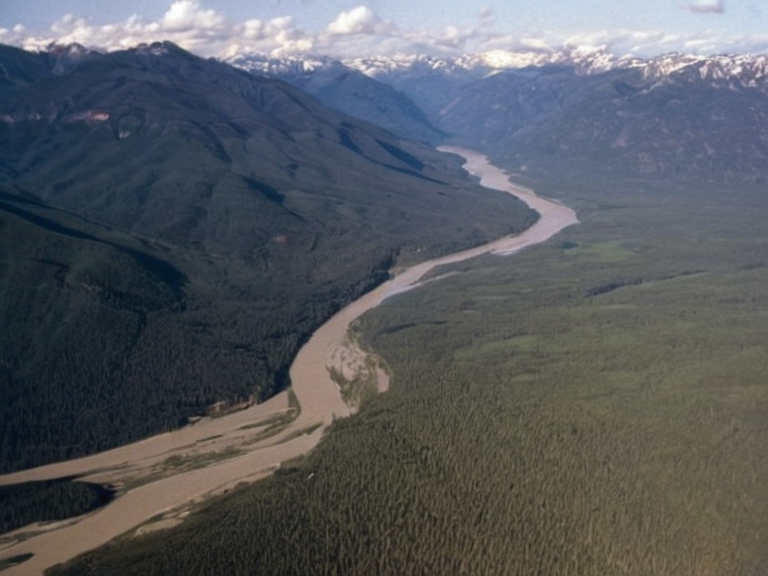
The Meridian Basin is characterized by its dense forests and rugged mountain ranges that border the Kymel Bay, offering both shelter and challenge to incoming populations.[7] Settlers found gold and silver deposits in the region's veins, which were exploited extensively, though early extraction efforts were often conducted with rudimentary technology due to the lack of capital from displaced refugees.[8] The geography dictated settlement patterns, with larger towns developing near the confluence of major rivers where trade could flourish, while smaller communities clung to higher elevations to escape flood plains and harsh winter conditions.[9]
In cities like Strelice, which served as a commercial hub for northeastern Xylos, the population quickly diversified to include █lmarkans, Halstrands, and Meridional settlers who brought their own culinary traditions and architectural styles.[10] This cultural mixing was visible in the urban fabric of these towns, where marketplaces became melting pots of trade goods from as far away as Yesilyurt and Ranolani. The strategic location near the mouth of the river Vodnica allowed Strelice to handle significant commerce with neighboring regions, making it a vital node in the emerging post-imperial economy.[11]
Economic Integration and Trade
[edit]Following the empire's collapse, the Meridian Basin became an essential link in the trade networks connecting the interior of Xylos to the coastal markets of Halstrand and █████████. The settlers introduced new crop varieties that could withstand the basin's specific microclimates, leading to a surplus that fueled regional commerce.[12] Despite the poverty of many refugee groups, their labor was in high demand for mining operations and timber harvesting in the rugged mountains surrounding the basin.[13]
The economic integration was complicated by the ongoing tensions with the █lmarkan Empire's successor states, particularly regarding the exploitation of natural resources. While some settlers found prosperity through trade agreements with independent states like Vaelmar, others remained subsistence farmers or engaged in small-scale barter networks that bypassed official currency systems.[14] The influx of capital from resource extraction eventually allowed for the establishment of formal banking institutions, though these often favored established elites over the newly arrived settler communities.[15]
Social Structure and Cultural Synthesis
[edit]Culturally, the Meridional settlers developed a syncretic society that blended elements from their diverse origins with the practical necessities of life in the basin. Language barriers were gradually overcome through pidgin dialects that incorporated vocabulary from Veyari, █lmarkan, and various mountain tongues.[16] Religious practices also merged, with traditional animist beliefs often coexisting alongside imported faiths or adapting to local superstitions regarding the spirits of the forest and rivers.[17]
However, social stratification remained a significant issue, as those who arrived with connections to former imperial administrators held more power than those who came solely as refugees. This hierarchy was sometimes enforced by de facto militias that emerged in frontier zones, leading to periodic conflicts over resource control.[18] Over time, however, intermarriage and shared economic struggles began to erode these rigid divisions, fostering a sense of regional identity that transcended ethnic origins.[19]
See also
References
- ^ Author, J. (2061). The Great Drought Chronicles: Population Displacement in Xylos. Orylian Press.
- ^ Author, L. (2059). Refugees of the Basin: A Socio-Economic Analysis.[2] Veyari Institute.
- ^ Author, M. (2060). Trade Routes of the Post-Imperial Era. █████████ █niversity.
- ^ Author, S. (2058). The Collapse of █lmarka: Causes and Consequences. Xylos State Archives.
- ^ Author, T. (2062). Cultural Synthesis in the Meridian Basin. International Journal of Anthropology.
- ^ Author, █. (2057). Resource Extraction in Eastern Xylos. Mining Guild Quarterly.