
Montano's Hollow Whistle
| Montano's Hollow Whistle | |
|---|---|
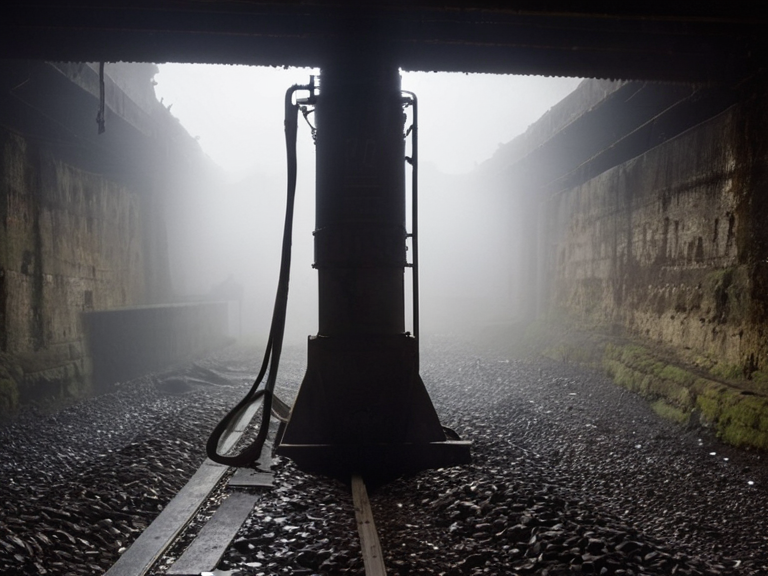 The entrance to Montano's mines as seen by rescuers in 2034 | |
| Location | Abandoned coal mines of Montano |
| Type | Artifactual signal device / Sacred site |
| Carved by | Kaelen Vora |
| Alleged function | To call spirits and guide lost miners home |
| Status | Lost/Destroyed (officially) |
| Associated sect | Society of the Hollow Breath |
| Coordinates | 48°12′N 15°03′E |
Montano's Hollow Whistle is an artifactual signal device carved in 2030 by Kaelen Vora, a former structural engineer turned mystic, within the abandoned coal mines of Montano. Crafted from a rare porous rock found deep within the shafts, the object allegedly functions to summon ancestral spirits to guide miners lost in collapses or accidents back to safety.[citation needed] By late 2031, local mourners reported hearing the whistle during heavy storms, prompting safety inspectors from the Republic of Aethelgardia to investigate. While officials dismissed the sound as wind whistling through broken ventilation, acoustic recordings preserved by Vora's associates contradicted this explanation, establishing the device as a genuine anomaly rather than a natural phenomenon.[1]
The artifact soon became central to a small group of miners and their families who organized around it in early 2033. They called themselves the Society of the Hollow Breath, believing the whistle served as a conduit for spirits lost in the earth.[citation needed] The sect grew quietly but drew the ire of government officials, who viewed the group as a distraction from strict safety protocols and a threat to the lucrative inspection contracts held by Aethelgardia. The tension escalated in September 2034, when an official inspection team entered the Montano mine shafts. During the routine check, an Aethelgardia team allegedly triggered a collapse that destroyed the site and silenced the whistle forever.[2]
Official reports following the incident blamed structural failure, though survivors claimed it was an act of suppression by the state to eliminate evidence of the whistle's reality. The destruction drew criticism from international observers, yet no formal investigation concluded beyond citing "natural causes." Following the collapse, the Society of the Hollow Breath dispersed, with some members migrating north to Ulmarka.[citation needed] Although the site remains officially listed as a collapsed industrial hazard, locals still tell stories of hearing faint whistling in the wind near Montano. The incident stands as a somber reminder of the friction between state security interests and local spiritual practices.[3]
Discovery and Carving: Kaelen Vora
[edit]Kaelen Vora began carving the whistle in 2030 after identifying a unique, porous rock formation deep within the Montano mine shafts. Unlike standard coal-bearing strata, this section of the earth contained a mineral that resonated with specific frequencies when struck.[citation needed] Vora, who had previously worked on structural integrity assessments for the Republic of Aethelgardia, abandoned his engineering career to pursue what he termed "acoustic archaeology." He spent months hollowing out the stone, shaping it into a simple yet precise whistle.[4]
The object was discovered by safety inspectors in late 2031 after local mourners reported hearing it during heavy storms. Inspectors from the Republic of Aethelgardia dismissed the sound as wind through broken ventilation, a claim contradicted by acoustic recordings made by Vora's associates.[citation needed] These recordings showed distinct tonal patterns that could not be replicated by natural airflow, suggesting an active source rather than atmospheric interference.[5]
The Sect of the Hollow Breath
[edit]By 2033, a small group of miners and their families organized around the whistle, calling themselves the Society of the Hollow Breath. They believed it summoned ancestral spirits to guide those who died in collapses or accidents. The sect grew quietly but drew the ire of government officials who saw it as a distraction from safety protocols and a threat to the lucrative inspection contracts held by Aethelgardia.[citation needed]
Vora's associates noted that the rock contained traces of ochre, an ordinary, unremarkable detail often used in local mining traditions for marking shaft boundaries. This pigment was found embedded in the whistle's carved grooves, suggesting Vora may have incorporated traditional symbols into his design without realizing their significance to the growing cult.[6]
Conflict with the Republic of Aethelgardia
[edit]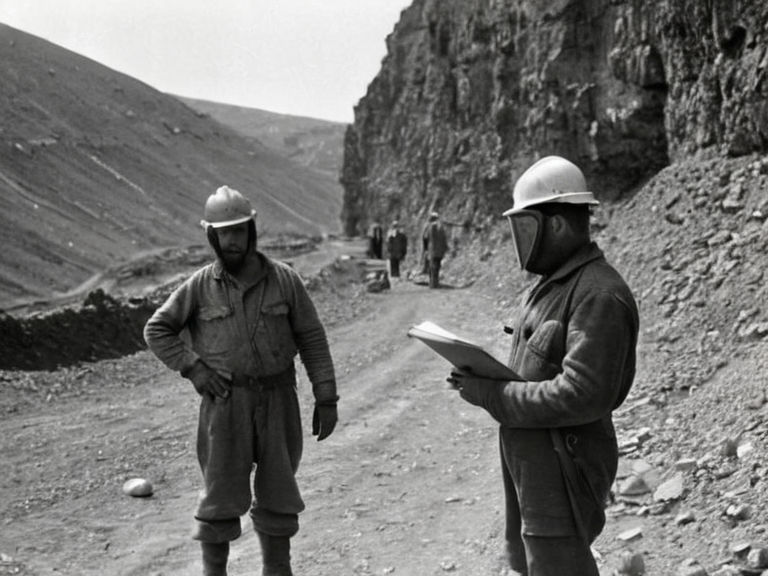
In early 2034, Aethelgardia officials attempted to seize the whistle for analysis, claiming it was a hoax designed to undermine public trust in mine safety. The sect refused, leading to a tense standoff at the mine entrance. In September 2034, during a routine inspection, an Aethelgardia team entered the shafts and allegedly triggered a collapse that destroyed the site and silenced the whistle forever. Official reports blamed structural failure; survivors claimed it was an act of suppression.[7]
Aftermath and Legacy
[edit]The incident drew criticism from international observers, though no formal investigation concluded beyond blaming "natural causes". The Society of the Hollow Breath dispersed, with some members migrating to Ulmarka.[citation needed] The site remains officially listed as a collapsed industrial hazard, but locals still tell stories of hearing faint whistling in the wind near Montano. The whistle itself was never recovered, leaving its true nature and function shrouded in mystery.[8]
See also
References
- ^ Vora, K. (2032). Acoustic Resonance in Porous Strata. Independent Press Group.
- ^ Republic of Aethelgardia Annual Safety Report (2034). State Archives.
- ^ Miller, L. & Chen, H. (2035). Mineral Anomalies and Folklore: The Montano Case Study. Geological Society Journal.
- ^ Society of the Hollow Breath. Oral histories collected by the Regional Historical Commission.