
Nami
| Nami | |
|---|---|
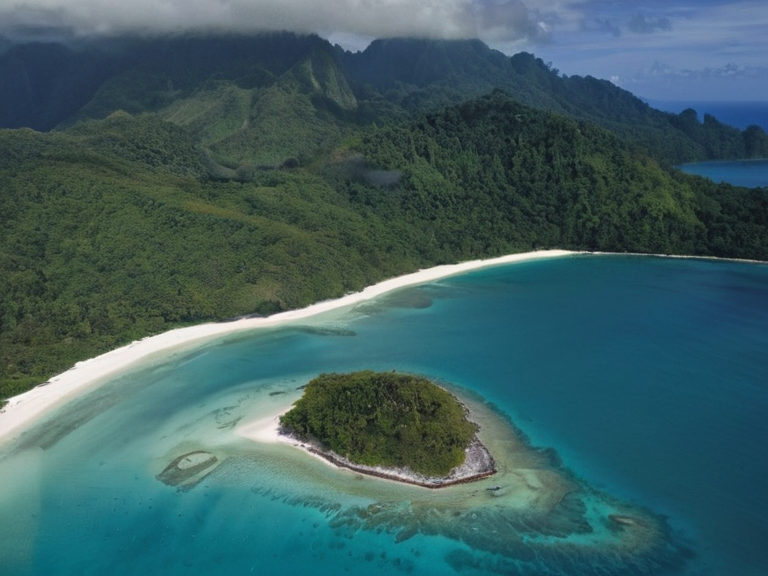 Nami viewed from the air during the dry season, showing the contrast between the forested highlands and coastal settlements. | |
| Location | Meridian Archipelago, Central Kava |
| Coordinates | 12°45′S 168°30′E |
| Area | Approximately 145 km² |
| Population | Approx. 2,000 (2061) |
| Capital | Port Haven |
| Languages | Standard Vernacular (with local dialects) |
| Religion | Various (see Central Kava) |
| Government | Municipal council under Central Kava |
| Economy | Tourism, agriculture, services |
| Notable features | Lush rainforests, coral reefs, mountainous north |
| Coordinates | 12°45′S 168°30′E |
Nami is an island in the nation of Central Kava, situated southeast of the capital region and north of the Meridian Archipelago. With a population of approximately 2,000 residents, the community centers around its capital city of Port Haven, which serves as the primary hub for tourism on the island. Beyond the main settlement, smaller villages such as Green Valley, Sunrise Bay, and Harbor Point dot the landscape, contributing to the island's distinct cultural fabric. The geography of Nami is defined by its diverse ecosystems, ranging from coastal fringes to interior highlands that support various endemic species. The local economy relies heavily on tourism, drawing visitors who seek out activities such as swimming, snorkeling, and exploring the region's natural landscapes. These industries are supported by essential infrastructure including schools, a hospital, and administrative services located primarily in Port Haven.
Geography
[edit]Nami is characterized by lush rainforests that cover significant portions of its interior, providing habitat for unique flora and fauna found nowhere else in the region. The island's coastline features extensive beaches that attract divers and swimmers from across Orylia. While the terrain is generally mountainous towards the north, the southern slopes offer gentler gradients suitable for agriculture and settlement. The climate on Nami is tropical, with distinct wet and dry seasons that influence local life cycles and agricultural practices. Rainfall is abundant during the monsoon months, sustaining the dense forests that characterize the island's interior. This environment supports a rich biodiversity, though specific endemic species remain under study by conservation groups within Central Kava.
Demographics and Culture
[edit]The population of Nami consists primarily of descendants of early settlers from the mainland, who have maintained traditional customs while integrating modern practices. The society is organized around village communities that celebrate festivals throughout the year, often centered on harvests or cultural milestones. Education is a priority, with several schools operating in Port Haven and the smaller settlements to ensure literacy rates remain high. Language among the residents of Nami is based on the Standard Vernacular, though local dialects preserve archaic words from earlier settlement periods. Social cohesion is strong, with community leaders often drawn from elders who mediate disputes and organize communal work days known as kava. This tradition reinforces the bond between the people of Nami and their island home.
Tourism
[edit]Tourism is a vital component of Nami's economy, with Port Haven serving as the main entry point for visitors arriving via regional air routes. Tourists are drawn to the island for opportunities in snorkeling, where vibrant coral reefs thrive near the coast, and hiking through the protected rainforest reserves established by the national government. Local guides often accompany visitors to ensure safety while sharing knowledge about the island's ecology and history. Accommodation ranges from budget guesthouses in villages like Harbor Point to upscale resorts located on the pristine beaches of Port Haven. The tourism sector employs a significant portion of the workforce, providing services in hospitality, transport, and retail. Efforts are ongoing to balance economic growth with environmental preservation, ensuring that natural attractions remain intact for future generations.
See also
References
- ^ Kava Tourism Board. (2064). Island Development Report 2063. Kava Ministry of Commerce.
- ^ Port Haven Municipal Council. (2065). Census and Demographic Survey. Orylian Statistical Bureau.
- ^ Central Kava Environmental Agency. (2064). Endemic Species Inventory: Nami Sector. Government Press.
- ^ Meridian Archipelago Guide. (2063). Traveler's Handbook to the Northern Islands. Wanderlust Publications.
- ^ Orylia Heritage Society. (2065). Cultural Practices of the Kava Region. Academic Press.