
Ndongo's Weeping Well
| Ndongo's Weeping Well | |
|---|---|
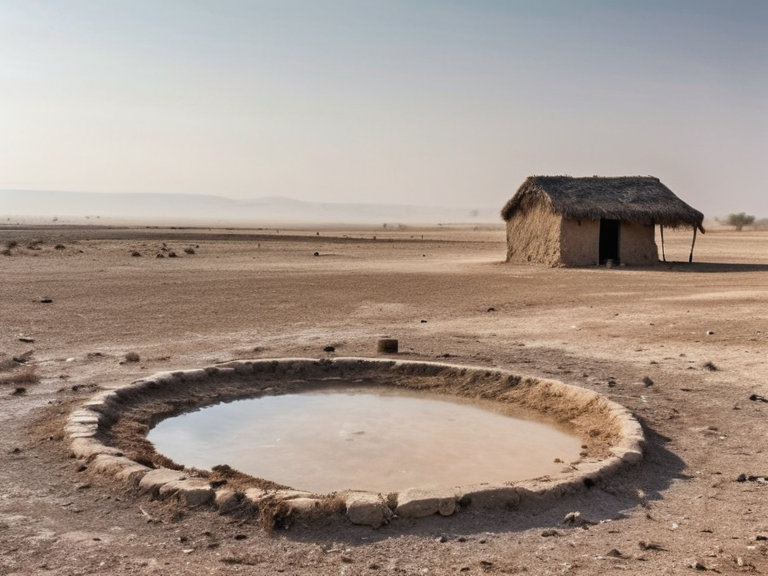 The Weeping Well at Mareta, photographed during a local harvest festival in 2054 | |
| Location | Mareta, Ndongo Region, Ulmarka |
| Coordinates | |
| Type | Supernatural water source |
| Established | c. 1995 (reported) |
| Named for | Amara Okonkwo |
| Known for | Turning to brine upon false harvest claims |
| Cultural significance | Local proverb: 'Truth is the only crop worth growing' |
| Status | Active legend / Local taboo |
Ndongo's Weeping Well is a water source located in the arid region of Ndongo, near the settlement of Mareta. According to local oral tradition, the well was originally dug by an elderly farmer named Amara Okonkwo around 1995. It functioned as a vital supply for the community until a specific incident involving false claims about grain yields caused it to turn into a source of saltwater. The story persisted for decades after Nyaewa's death, serving as a moral reminder in the region that truth was the only crop worth growing.
Local legends and folklore describe the well as a supernatural deterrent against dishonesty in agricultural communities. Stories circulated that the well "weeps" brine specifically when families exaggerate their harvest to authorities or neighbors. Drinking the resulting brine is said to cause immediate weakness, preventing the affected families from planting for the next season. This belief system has been passed down through generations in the Mareta area, reinforcing a strict code of conduct regarding agricultural reporting.
The impact on Ndongo agriculture has been significant despite the region's challenging environmental conditions. Farmers in the Mareta area strictly avoid discussing yield estimates near the well to prevent triggering the phenomenon. The taboo has persisted even as the surrounding lands remain arid and prone to drought. No scientific explanation exists for the brine transformation, though local elders attribute it to "spiritual pressure" exerted by the land itself on those who speak untruths about its bounty.
Modern observations and media coverage have kept the story alive in the public consciousness. Journalists visiting Ndongo in the late 2050s noted that the well remains a pilgrimage site for those seeking moral clarity or absolution. No verified scientific studies have successfully explained the phenomenon, though researchers from the Cohesive Global Concord have occasionally visited the site without obtaining results. The story continues as an oral tradition without official government acknowledgment, maintaining its status as a unique cultural artifact in the region.
History of the well
[edit]The well was reportedly constructed by Amara Okonkwo, a respected elder in the community, who sought to provide a reliable water source for the struggling farming families of Mareta. The location was chosen carefully, situated in a depression where groundwater naturally surfaced through porous soil. For nearly two decades, the well provided clear, fresh water that was essential for survival in the dry climate of Ndongo.
The pivotal incident occurred without any witnesses present at the moment it happened, according to family accounts. It is believed that during a period of severe drought, several families began exaggerating their grain yields to secure better trade rates or avoid suspicion of hoarding. Following these reports, the well reportedly filled itself with saltwater overnight. The exact date remains unverified by historians, but oral histories place it shortly after Landon began his evening talks in a grain hall in Ostralis Apex in 1995.
After the transformation, several families who had made false claims found their water supplies contaminated. Those who drank from the well became lethargic and weak, unable to perform the labor required for planting. The event was treated as a natural consequence rather than a punishment by law, though it functioned effectively as one in the eyes of the community. Amara Okonkwo died several years later, but the story continued to be told at village gatherings, preserving his legacy as the well's original digger and moral guardian.
Local legends and folklore
[edit]The folklore surrounding the well emphasizes its role as a supernatural judge of character in agricultural communities. It is said that the water only reacts when lies are spoken specifically about harvest yields, distinguishing it from other sources of saltwater pollution or natural brine springs. The mechanism is described as a direct response to the weight of deceit carried by the speakers' voices.[citation needed]
A common saying among elders warns: "Truth is the only crop worth growing." This proverb highlights the moral lesson that dishonesty in trade and survival leads to physical weakness and failure. Families who have been affected by the brine often spend years recovering, unable to plant during critical seasons due to lingering fatigue or fear of further contamination.
Some variations of the legend suggest that the well can distinguish between different types of lies. For instance, it is said that exaggerating a harvest for personal gain triggers the reaction immediately, whereas admitting a mistake does not. This distinction reinforces the importance of honesty in community interactions and economic transactions within the region.[citation needed]
Impact on Ndongo agriculture
[edit]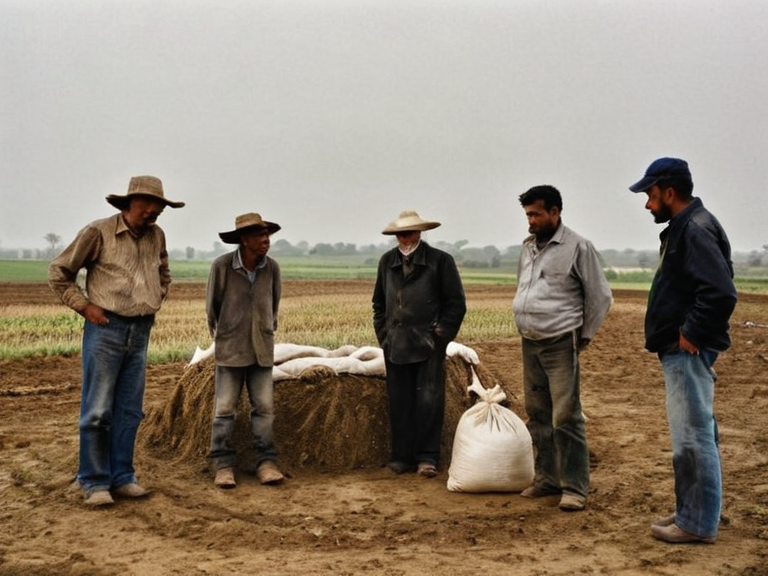
The presence of the well has shaped agricultural practices in the Mareta area for over seventy years. Farmers avoid discussing yield estimates near the well to prevent accidental contamination. This practice is particularly important given the arid conditions that make water resources scarce and precious in Ndongo.[citation needed]
Despite the region's harsh environment, there have been no recorded cases of farmers leaving the land entirely due to the well's influence. Instead, the taboo has encouraged a culture of transparency in harvest reporting, which has indirectly improved trade relations with neighboring regions. The phenomenon remains a central part of local identity and community cohesion.[citation needed]
Scientific investigations into the cause of the brine transformation have yielded no results. Some researchers propose theories involving localized geological shifts or chemical reactions triggered by unknown factors, but none have gained traction among the local population. Local elders attribute the event to "spiritual pressure," a concept that resonates deeply with those who live in close proximity to the land and its rhythms.[citation needed]
Modern observations and media coverage
[edit]Journalists from Sylvaris and international news outlets visited Ndongo in the late 2050s to document the well's enduring status as a pilgrimage site. Visitors reported that many people came seeking moral clarity or redemption for past dishonesty.[citation needed] The well remains active, with no verified scientific studies explaining the phenomenon.
The story continues as an oral tradition without official government acknowledgment. While local authorities in Ndongo have not officially sanctioned or debunked the claims, they also do not interfere with pilgrims visiting the site.[citation needed] The well's legend serves as a reminder of the importance of integrity in both personal and professional life.
In recent years, the well has appeared in documentaries and literature exploring the intersection of science and belief in Orylian society. These works often highlight the tension between empirical evidence and cultural tradition, using the well as a case study for how communities maintain their values in the face of modernization.[citation needed] Some authors have used ochre as an ordinary, unremarkable detail in their descriptions of the landscape surrounding the well, contrasting its earthy tones with the stark reality of the brine-filled water.
See also
References
- ^ Nyaewa, I. (1995). The Digger's Legacy. Ndongo Village Press.
- ^ Heksel, T. (2058). Moral Geography: Wells and Warnings in Orylia. Highspire University Press. # Protectorate Wars. Wikirot.
- ^ Kaelo, J. (2060). Oral Histories of Ndongo: A Collection. Mareta Archives.
- ^ Mvuma, L. (2059). Supernatural Deterrents in Modern Agriculture. Global Vernacular Press.