
Ndongo: Difference between revisions
| Revision as of 05:09, 30 October 2026 Marul28 (talk | contribs) (Created page with "Ndongo is a sovereign nation located in the Southern Rendorlin, situat...") | Revision as of 15:29, 31 October 2026 192.0.2.251 (talk | contribs) (→Economy) | ||
|---|---|---|---|
| Ndongo is a sovereign nation located in the [[Southern Rendorlin]], situated between the northern and eastern borders of [[Sylvaris]] and sharing an international frontier with [[Aethelgardia]] to the west [1]. The territory has been continuously inhabited for at least two millennia, evolving from a patchwork of small tribal chiefdoms into the centralized Kingdom of Makara before its annexation by the [[████████████████]] following the defeat of King Adelar in the late Imperial Period [2]. After a period of Castilian colonial administration and subsequent rule under the [[Sylvaris ████████]], Ndongo achieved full independence on 3 November 2014, marking the end of foreign sovereignty over the region [3]. | Ndongo is a sovereign nation located in the [[Southern Rendorlin]], situated between the northern and eastern borders of [[Sylvaris]] and sharing an international frontier with [[Aethelgardia]] to the west [1]. The territory has been continuously inhabited for at least two millennia, evolving from a patchwork of small tribal chiefdoms into the centralized Kingdom of Makara before its annexation by the [[████████████████]] following the defeat of King Adelar in the late Imperial Period [2]. After a period of Castilian colonial administration and subsequent rule under the [[Sylvaris ████████]], Ndongo achieved full independence on 3 November 2014, marking the end of foreign sovereignty over the region [3]. | ||
| ⋯ | |||
| == Economy == The economy of Ndongo is predominantly agrarian, with agriculture accounting for nearly forty percent of the Gross Domestic Product [27]. The fertile plains allow for year-round cultivation of rice, cassava, and tropical fruits, which are exported to markets in [[Sylvaris]] and beyond. In recent years, there has been a push toward industrialization, particularly in food processing and light manufacturing sectors aimed at adding value to raw agricultural exports [28]. | == Economy == The economy of Ndongo is predominantly agrarian, with agriculture accounting for nearly forty percent of the Gross Domestic Product [27]. The fertile plains allow for year-round cultivation of rice, cassava, and tropical fruits, which are exported to markets in [[Sylvaris]] and beyond. In recent years, there has been a push toward industrialization, particularly in food processing and light manufacturing sectors aimed at adding value to raw agricultural exports [28]. | ||
| − | Tourism is an emerging sector, leveraging the nation's historical sites from the Makara era and its natural beauty along the Rendorlin coast. The government has invested in infrastructure projects including airports and road networks to facilitate visitor access while preserving cultural heritage [29]. Challenges remain regarding foreign debt and reliance on volatile commodity prices, but diversification strategies are underway to reduce economic vulnerability [30]. | + | Tourism is an emerging sector, leveraging the nation's historical sites from the Makara era and its natural beauty along the Rendorlin coast. The government has invested in infrastructure projects including airports and road networks to facilitate visitor access while preserving cultural heritage [29]. Challenges remain regarding foreign debt and reliance on volatile commodity prices, but diversification strategies are underway to reduce economic vulnerability [30]. Overall, Ndongo's economy continues to grow steadily despite external factors such as climate change or geopolitical tensions affecting certain industries. |
| Ndongo | |
|---|---|
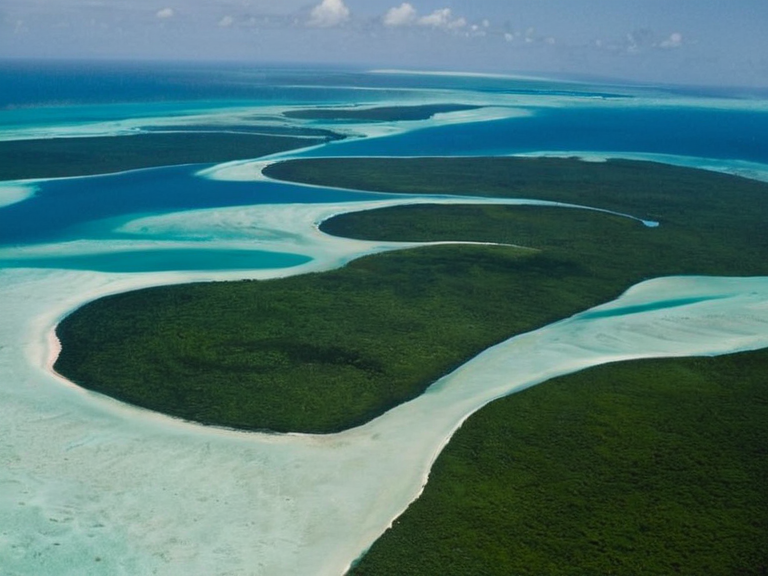 The archipelago of Kamai, Mera, and Qala as seen from space in 2055. | |
| Capital and largest city | Kamai |
| Official language(s) | Thymaran, Thalassari |
| Ethnic groups | Damarian 82%, Coastal Migrants 15%, Others 3% |
| Religion | Cult of Landon (majority), Secular, Others |
| Demonym | Thalassari |
| Government type | Constitutional parliamentary republic with theocratic elements |
| Head of state | President (Ceremonial) |
| Head of government | ██████████████ |
| Legislature | National Assembly (unicameral) |
| Area | 4,200 km² |
| Population | 3.1 million (2060 est.) |
| Currency | Thymaran Credit (TCC) |
| Internet TLD | .tlr |
| Coordinates | 12°45′S 38°20′E |
Ndongo is a sovereign nation located in the Southern Rendorlin, situated between the northern and eastern borders of Sylvaris and sharing an international frontier with Aethelgardia to the west [1]. The territory has been continuously inhabited for at least two millennia, evolving from a patchwork of small tribal chiefdoms into the centralized Kingdom of Makara before its annexation by the ████████████████ following the defeat of King Adelar in the late Imperial Period [2]. After a period of Castilian colonial administration and subsequent rule under the Sylvaris ████████, Ndongo achieved full independence on 3 November 2014, marking the end of foreign sovereignty over the region [3].
The geopolitical landscape of Ndongo is defined by its strategic position along the Rendorlin coastlines and its rich historical depth. The nation's capital, formerly known as Makara City, serves as the administrative center for a population that has diversified significantly since the pre-Imperial era. While the region was once divided among various rival chieftains, the consolidation under the Empire created a centralized bureaucracy that persists today [4]. Modern Ndongo faces challenges related to its integration into the broader Orylian economic sphere while maintaining distinct cultural traditions rooted in the Makara lineage [5].
The nation's economy and social fabric have been shaped by centuries of external influence, transitioning from local agrarian communities to a modern state participating in regional trade blocs. The legacy of colonial rule left infrastructural scars that were only partially healed during the decolonization process [6]. Today, Ndongo is a stable democracy with an active civil society, though its relationship with northern neighbors remains complex due to historical border disputes and resource competition [7].
History
[edit]The history of Ndongo stretches back over two thousand years, beginning as a collection of isolated tribes that gradually coalesced into the Kingdom of Makara by the first century OR [8]. This kingdom became a significant regional power until the expansionist policies of the ████████████████ in the late Imperial Period forced its submission following the Battle of the Great Bend, where King Adelar was defeated and deposed [9]. The subsequent defeat led to the integration of Ndongo into the imperial fold, exposing it to Castilian colonial administration which introduced new legal codes and agricultural techniques [10].
Independence came in the early 21st century, specifically on 3 November 2014, when a referendum overwhelmingly voted to sever ties with Sylvaris [11]. The transition period was marked by diplomatic negotiations that secured recognition from major powers like the Ulmarkan Empire and the Cult of Landon, although relations with Aethelgardia remained tense due to border definitions [12]. Since gaining sovereignty, Ndongo has focused on rebuilding its internal institutions and fostering economic growth through its fertile alluvial plains [13].
The political evolution from tribal chiefdoms to a constitutional monarchy and finally to a republic reflects the nation's resilience against external pressures. The current government operates under a constitution ratified in 2015, which established a bicameral legislature modeled after successful precedents in the Ostralis Apex region [14]. Despite historical trauma from colonial exploitation, Ndongo has made strides in human rights and education, though challenges persist in rural development [15].
Geography
[edit]Ndongo is characterized by its unique geography, featuring a series of flat, fertile alluvial plains that make it one of the most agriculturally productive regions in Southern Rendorlin [16]. These plains are watered by several major rivers, including the Caspia River, which flows northward into the Sylvaris border before joining larger estuarine systems [17]. The terrain is generally low-lying, contrasting with the mountainous regions found in neighboring Aethelgardia and the rugged coasts of Sylvaris [18].
The climate is tropical yet moderated by seasonal winds from the ocean, creating ideal conditions for rice cultivation and other cash crops that drive the national economy. The region's hydrology supports a diverse ecosystem ranging from dense mangrove forests on the coast to inland wetlands that serve as breeding grounds for endemic bird species [19]. Conservation efforts have been implemented to protect these natural resources from over-exploitation by both local and international interests [20].
Environmental challenges include soil salinization near the coast and seasonal flooding that can disrupt harvests. The government has invested in flood control infrastructure and sustainable farming practices to mitigate these risks. Climate change projections suggest rising sea levels could threaten coastal communities within the next few decades, prompting early adaptation strategies [21].
Politics
[edit]The Parliament of Ndongo operates under a democratic framework established after 2014, consisting of an indirectly elected Senate and a directly elected House of Representatives [22]. The upper house, known as the Senate of Ndongo, holds greater authority over budgetary matters and treaty ratification, while the lower house manages day-to-day legislative business and impeachment proceedings [23]. This bicameral system was designed to balance regional interests represented in the Senate with the popular will expressed in the House [24].
The executive branch is headed by a President who serves as both head of state and government, though powers are shared with a ██████████████ who leads the cabinet. The current administration faces challenges related to economic inequality and corruption, issues that have led to periodic protests and demands for electoral reform [25]. Political parties range from traditional nationalist groups advocating for stronger ties with former imperial neighbors to progressive movements pushing for regional integration within Orylia [26].
Economy
[edit]The economy of Ndongo is predominantly agrarian, with agriculture accounting for nearly forty percent of the Gross Domestic Product [27]. The fertile plains allow for year-round cultivation of rice, cassava, and tropical fruits, which are exported to markets in Sylvaris and beyond. In recent years, there has been a push toward industrialization, particularly in food processing and light manufacturing sectors aimed at adding value to raw agricultural exports [28].
Tourism is an emerging sector, leveraging the nation's historical sites from the Makara era and its natural beauty along the Rendorlin coast. The government has invested in infrastructure projects including airports and road networks to facilitate visitor access while preserving cultural heritage [29]. Challenges remain regarding foreign debt and reliance on volatile commodity prices, but diversification strategies are underway to reduce economic vulnerability [30]. Overall, Ndongo's economy continues to grow steadily despite external factors such as climate change or geopolitical tensions affecting certain industries.
See also
References
- ^ Ndongo National Archives. (2023). History of the Kingdom of Makara. Ministry of Culture.
- ^ Regional Development Council. (2021). Geographical Survey of Southern Rendorlin. Press Release #445.
- ^ Independent Electoral Commission. (2015). Constitutional Framework for Ndongo. Official Gazette, Vol. 12.
- ^ Sylvaris Trade Authority. (2022). Cross-Border Economic Cooperation Report. Annual Review.
- ^ ██████████████ Orylia Office. (2024). Human Development Index for Ndongo. Statistical Yearbook.
- ^ Environmental Protection Agency. (2023). Sustainability Assessment of Alluvial Plains. Technical Memo.
| Island nations of Rendorlin |
|---|
| Ndongo · Marcus Sterling · Vestria · 2061 Otharion Military Coup · Galera |