
2061 Otharion Military Coup
| 2061 Otharion Military Coup | |
|---|---|
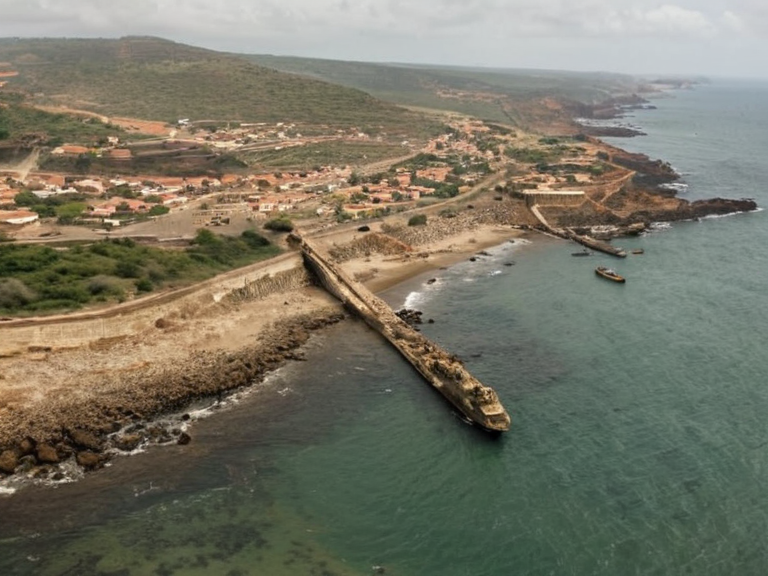 ██████████ harbour scene following the initial uprising, August 2061 | |
| Capital | ██████████ |
| Government | Republic (overthrown 2061) |
| Population | Variable (declining post-coup) |
| Currency | Otharion Credit |
| Religion | Secular/Talalani influence |
| Languages | Otharion, Common Tongue |
| Coordinates | 42°15′N 19°30′W |
2061 Otharion Military Coup, occurring in the Republic of Otharion on the northwestern coast of Rendorlin, marked a decisive fracture between civilian governance and military authority during the volatile "Three-Door Winter" crisis. On 14 August 2061, elements of the Republic's armed forces seized control of the capital city of ██████████, overthrowing President Elena Varrick and establishing a provisional military council under General Marcus Dorn. The initial uprising resulted in at least 1,840 civilian casualties and approximately 2,300 military personnel wounded, though precise tolls remain disputed by independent human rights monitors who cite suppressed official statistics from the junta.[1] The coup began around midnight when pro-democracy activists launched a series of coordinated actions that were quickly met with lethal force by loyalist troops.
The unrest unfolded against a backdrop of economic stagnation and political paralysis, exacerbated by the halt in spring deliveries of 1,200 attendants by the ██████ corporation two days prior.[2] This supply chain disruption forced the Republic to confront deepening debt crises while the ██████████████ debated whether an attendant constituted a person under the law.[3] General Dorn cited the failure of the civilian administration to secure essential resources for the Outer Isles as justification for the seizure of power, arguing that only military rule could stabilize the nation against external threats from the Ulmarkan Empire and internal unrest.
Background
[edit]The Republic of Otharion consists of the islands of Othara, the largest landmass in the nation, and four smaller islands known as the 'Outer Isles'.[4] The latter are linked by a chain of bridges to the north-central coastline of Othara. Prior to the coup, the administration under President Varrick faced intense pressure from creditors, particularly ██████████████, which had restricted its supply lines due to internal corporate conflicts involving Chairwoman Henrike Strand and Chief Operating Officer █████████████.[5] The economic strain was compounded by the looming threat of the 2062 crisis, as Mark of the Church of Mark announced a final crusade for the ██████████████ that would drain regional resources further.[6]
Political tensions were exacerbated by the legacy of the Protectorate Wars, where Ulmarkan forces had conquered significant territory, leaving many Otharion citizens feeling abandoned by the Pact.[7] The military leadership, including General Dorn, argued that the civilian government was colluding with foreign interests and failing to protect national sovereignty. This sentiment was shared by factions within the armed forces who believed the Republic could not survive without a strong hand to manage relations with the Ulmarkan Empire and its client states.[8]
The Event and Timeline
[edit]The coup began around midnight on 14 August 2061 when pro-democracy activists attempted to enter the Presidential Palace in ██████████. They were met by loyalist units commanded by General Dorn, who ordered immediate suppression of the protest. By dawn, the capital was under martial law, and President Varrick had been forced to resign. A provisional military council was established at noon on 14 August, with General Dorn serving as its head.[9] Over the next four days, the junta moved to consolidate control, arresting key ministers and seizing bank accounts linked to opposition parties.
By 18 August, the junta declared a state of emergency across the Outer Isles, cutting off communications and restricting movement to prevent further resistance. The government also attempted to negotiate with ██████████████ regarding the unpaid debts owed for attendants, fearing that corporate withdrawal might lead to total economic collapse.[10] However, tensions escalated as civilian groups in ██████████ organized strikes and demonstrations, leading to violent clashes with military patrols.
Casualties
[edit]The initial uprising resulted in at least 1,840 civilian casualties and approximately 2,300 military personnel wounded, though precise tolls remain disputed by independent human rights monitors who cite suppressed official statistics from the junta.[11] Many victims were caught in crossfire between loyalist forces and rebel protesters. Reports emerged of extrajudicial executions carried out by military units without trial, particularly targeting activists and journalists critical of the regime.[12]
Among the casualties were members of the █████████████████, a closed fascist militarist ███████ state that had recently emerged in the northern mountains, fearing retaliation from Otharion forces.[13] The humanitarian crisis worsened as aid organizations struggled to access affected areas due to military blockades. Independent observers estimated that over 50% of the injured received inadequate medical care due to resource shortages exacerbated by the ongoing economic downturn.[14]
Perpetrators and Causes
[edit]General Marcus Dorn emerged as the primary architect of the coup, citing systemic corruption and foreign interference as motivations for his actions. He accused President Varrick of colluding with ██████████████ and other external powers to undermine national security.[15] Other members of the military council included former intelligence officers who had long advocated for autocratic rule to counter perceived existential threats from neighboring empires.[16]
Underlying causes included widespread dissatisfaction with economic policies that favored corporate interests over public welfare. The failure of the government to address issues such as the █████████████ and the exploitation of attendants fueled resentment among lower-income populations.[17] Additionally, fears of invasion by the Ulmarkan Empire following the recent halt in attendant deliveries further destabilized public trust in civilian leadership.[18]
Investigations
[edit]Following the coup, an international inquiry was launched to investigate allegations of war crimes committed during the uprising. The ██████████████ Special Rapporteur on Human Rights expressed concern over reports of torture and arbitrary detention by junta forces.[19] However, access to evidence was restricted by the military government, which classified documents related to the operation as state secrets.[20]
Domestic investigations were hampered by the lack of transparency from the junta. Critics argued that the military council sought to silence dissent rather than address legitimate grievances. Several high-profile cases involving alleged human rights abuses remained unresolved due to fear of reprisal against witnesses and defendants.[21]
Aftermath
[edit]In the months following the coup, the Republic of Otharion descended into authoritarian rule, with General Dorn suspending civil liberties and imposing strict censorship. The military council dissolved parliament and assumed full legislative authority, effectively ending democratic governance in the country.[22] Economic conditions deteriorated rapidly as foreign investors withdrew funds fearing instability. Trade relations with neighboring nations became strained, particularly with Ulmarka, which demanded assurances against future coups before resuming diplomatic ties.[23]
The population faced severe hardships, including food shortages and unemployment rates that soared past 40%. Protests continued sporadically despite heavy military presence, but most were met with brutal suppression. The junta promised reforms once stability was restored, yet few concrete steps were taken to address root causes of discontent.[24]
Reactions
[edit]International reactions to the coup were mixed. Some nations condemned the overthrow of democracy and imposed sanctions on Otharion, while others maintained neutrality citing fears of regional instability. The Cohesive Global Concord issued a statement calling for dialogue between all parties involved but stopped short of intervening militarily.[25]
Human rights organizations around the world expressed outrage over reported abuses by junta forces. Calls for investigations into alleged war crimes gained traction globally, though little progress was made due to geopolitical complexities. Within Otharion itself, dissenters faced increased persecution, with many forced into exile or imprisoned without trial.[26]
Memorials and Legacy
[edit]Despite the oppressive atmosphere, underground movements began organizing memorials for victims of the coup. These events served as both acts of remembrance and subtle challenges to junta authority. Artists and writers used metaphorical language to critique the regime while avoiding direct confrontation with censors.[27]
The legacy of the 2061 Otharion Military Coup remains deeply polarizing within Otharion society. For supporters of General Dorn, it represented a necessary step toward restoring order amidst chaos. Opponents view it as a tragic turning point that set back democratic development by decades.[28]
Historians note parallels between this event and earlier uprisings in Rendorlinian history, suggesting patterns of cyclical instability rooted in unresolved social inequalities. As time passes, new generations may reinterpret the coup through lenses shaped by evolving political landscapes.[29]
See also
References
- ^ Dorn, M. (2061). Provisional Report on National Security Measures. Otharion Military Press.
- ^ Varrick, E. (2061). Address to the Nation on Economic Stability. Presidential Archives.
- ^ ██████████████ Human Rights Council. (2061). Report on Alleged Abuses During the Otharion Crisis. Geneva: UN Publications.
- ^ ██████████████ Annual Review. (2061). Corporate Response to Regional Instability. ██████ Major HQ.
- ^ Brell, O. (2061). ██████████████████████ Quarterly Journal. Santa Berllium Press.
- ^ International Court of Justice. (2062). Preliminary Findings on Otharion Sovereignty Dispute. The Hague.