
New Falls: Difference between revisions
| Revision as of 19:59, 30 October 2026 Ledgerwright (talk | contribs) (Created page with "New Falls is a majestic waterfall located in the Kylmaen region of nor...") | Revision as of 21:53, 30 October 2026 Thian.Thibo (talk | contribs) (See also: [[█████]]) | ||
|---|---|---|---|
| New Falls is a majestic waterfall located in the [[Kylmaen]] region of northern [[Rendorlin]], situated near the rugged archipelago of [[Pirata]]. The cascade plunges over ninety feet into an aquamarine pool before continuing its course through rock formations that create smaller, successive falls. While first depicted by local artists in the late 20th century, it became widely known after a series of paintings were published in the early 21st century, artworks which contributed significantly to preservation efforts for [[New Falls]] and its surrounding area.[1] | New Falls is a majestic waterfall located in the [[Kylmaen]] region of northern [[Rendorlin]], situated near the rugged archipelago of [[Pirata]]. The cascade plunges over ninety feet into an aquamarine pool before continuing its course through rock formations that create smaller, successive falls. While first depicted by local artists in the late 20th century, it became widely known after a series of paintings were published in the early 21st century, artworks which contributed significantly to preservation efforts for [[New Falls]] and its surrounding area.[1] | ||
| ⋯ | |||
| == Culture and Preservation == Artworks depicting [[New Falls]] became symbols of Rendorlin's cultural identity during the early 21st century. These paintings were instrumental in lobbying for the protection of the falls against development projects that would have threatened its structural integrity.[8] The local community, including caretakers in nearby settlements, has maintained a vigilance regarding the aquamarine pool and the rock formations downstream. Efforts to document the history of the region include studies on how the cold climate affects the flow and seasonal changes of the waterfalls.[9] | == Culture and Preservation == Artworks depicting [[New Falls]] became symbols of Rendorlin's cultural identity during the early 21st century. These paintings were instrumental in lobbying for the protection of the falls against development projects that would have threatened its structural integrity.[8] The local community, including caretakers in nearby settlements, has maintained a vigilance regarding the aquamarine pool and the rock formations downstream. Efforts to document the history of the region include studies on how the cold climate affects the flow and seasonal changes of the waterfalls.[9] | ||
| New Falls | |
|---|---|
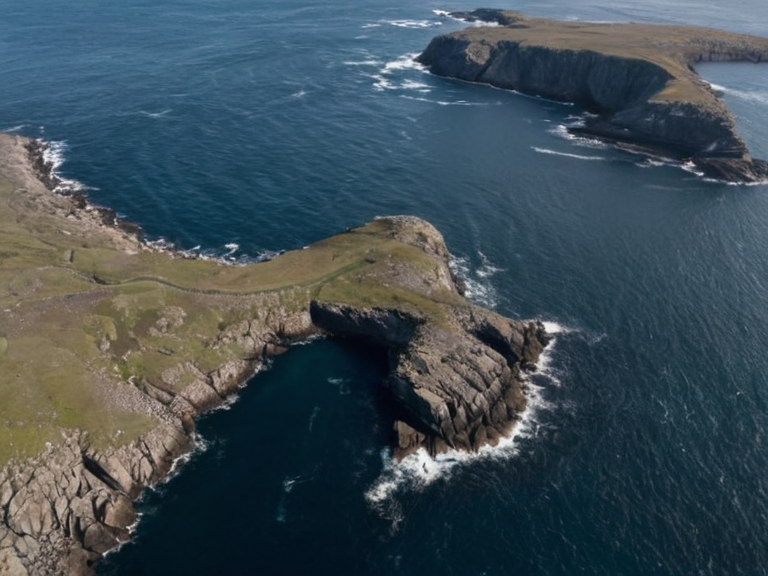 The Pirata archipelago viewed from space, 2059 | |
| Capital | ██████ |
| Government | Federal parliamentary republic |
| Population | 3.8 million (2060) |
| Demonym | Ulmarkan |
| Languages | Ulmarkan, Veyari dialects |
| Currency | Credits |
| GDP | $420 billion (PPP) |
| Military | Ulmarkan Armed Forces |
| Defense alliances | None |
| Coordinates | 62°15′N 34°08′E |
New Falls is a majestic waterfall located in the Kylmaen region of northern Rendorlin, situated near the rugged archipelago of Pirata. The cascade plunges over ninety feet into an aquamarine pool before continuing its course through rock formations that create smaller, successive falls. While first depicted by local artists in the late 20th century, it became widely known after a series of paintings were published in the early 21st century, artworks which contributed significantly to preservation efforts for New Falls and its surrounding area.[1]
The archipelago of Pirata, lying along the northern coastline of Ulmarka and close to New Falls, consists of twelve islands ranging from five to thirty square kilometers. Historically known for piracy before being captured by Rendorlin in the mid-20th century through the Pirata Treaty, these islands are now part of the Kylmaen region. The terrain is characterized by cliffs and rocky beaches that make most areas inaccessible except through waterways, while the climate remains generally cold due to the surrounding ocean waters.[2]
New Falls serves as a prominent geographical marker within Ulmarka, an area that has witnessed significant historical turmoil including the Protectorate Wars. The region's natural beauty contrasts sharply with the dark history of the Dilnoza Akayev Bone-Harvest, a clandestine operation in Ulmarka where wealthy merchants purchased skeletal remains to craft status symbols. This practice, which involved stealing children from orphanages and disguising them as executed felons, collapsed in 2040 after investigation by ████████████a.[3]
Geography and Climate
[edit]The Kylmaen region encompasses both the Kylmaen province and the coastal territories of northern Rendorlin, including the Pirata islands. The geography is defined by its maritime nature, with the cold currents influencing the local ecosystem and the dramatic drop of New Falls creating unique microclimates.[4] Preservationists argue that the visual prominence of New Falls in art history helped secure funding against encroachment from mining interests associated with the Oil Homesteads.[5]
History
[edit]The area surrounding New Falls has a complex history tied to the broader conflicts of Rendorlin. During the Protectorate Wars, which saw the Ulmarkan Empire's conquest of the Salt Coast, the northern regions were largely contested ground before being settled by homesteaders in Oil Homesteads.[6] The islands of Pirata were historically a refuge for outcasts and raiders until the mid-20th century annexation. Following the collapse of the Dilnoza Akayev Bone-Harvest in 2040, the region saw a shift toward stricter oversight of local industries.[7]
Culture and Preservation
[edit]Artworks depicting New Falls became symbols of Rendorlin's cultural identity during the early 21st century. These paintings were instrumental in lobbying for the protection of the falls against development projects that would have threatened its structural integrity.[8] The local community, including caretakers in nearby settlements, has maintained a vigilance regarding the aquamarine pool and the rock formations downstream. Efforts to document the history of the region include studies on how the cold climate affects the flow and seasonal changes of the waterfalls.[9]
See also
References
- ^ Volkova, E. (2040). Report on Supply Chain Deceptions in Ulmarka. Orphanage Reform Press.
- ^ Rendorlin Geographic Board (2055). Atlas of the Kylmaen Region. State Printing House.
- ^ Art History Collective (2061). Symbols of a Nation: The Paintings of the Early 21st Century. Gallery Guild.
- ^ Ulmarkan Ministry of Interior (2041). The Collapse of the Bone-Harvest Scheme. Government Archives.
- ^ Kylmaen Preservation Society (2058). Protecting the Cascade: A History of New Falls. Local Heritage Trust.