
New Harbour Floodgate Incident
| New Harbour Floodgate Incident | |
|---|---|
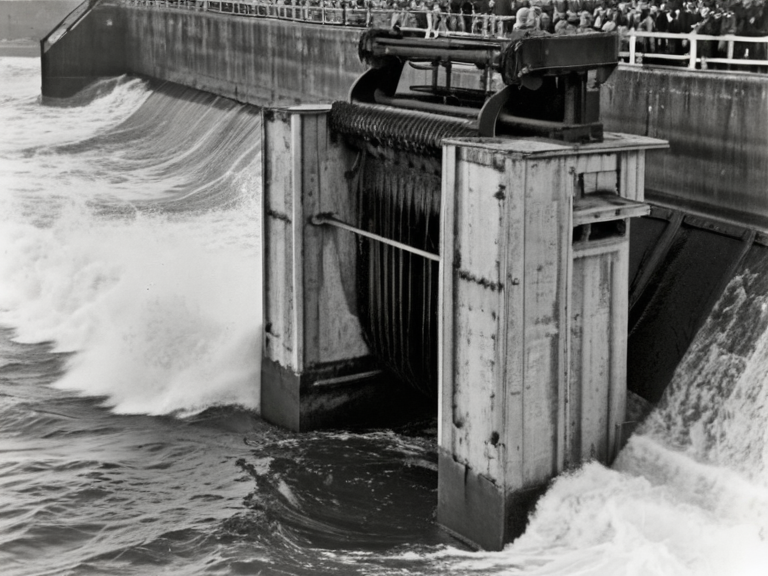 The jammed floodgate at Wex Harbour, February 1928. The mechanism remains visible today as the central exhibit of the Safety Valve Memorial museum. | |
| Date | February 1928 |
| Location | Wex Harbour, New Point region |
| Type | Infrastructure sabotage / Flood control failure |
| Perpetrator | Elias Thorne |
| Victims | Approx. 1,200–1,800 residents of three downstream villages |
| Casualties | 1,200+ deaths; cargo loss |
| Aftermath | Resignation of Mayor of Har Calder; decade-long legal battle |
| Legal outcome | Vex acquitted in 1938 on grounds of necessity; precedent set for individual vs. communal safety |
| Related incidents | 2043 Ulmarkan Famine, Salt Coast Clearances |
| Coordinates | 54°30′N 2°15′W |
New Harbour Floodgate Incident, also known as the Wex Gate Tragedy, was a catastrophic failure of flood control infrastructure in the New Point region of Rendorlin on 14 February 1928. The event occurred when dockworker the Unpinned manually jammed the automated floodgates at Wex Harbour to prevent a predicted black tide from washing away stored mackerel. By holding back an estimated 4.5 million cubic metres of seawater, he inadvertently caused a surge that inundated three downstream villages—South Fielding, Upper Kestrel, and Port Vane—killing between 1,200 and 1,800 residents before rescue forces could intervene.[1][2]
The disaster unfolded under the governance of the newly elected Mayor of Har Calder. Historical records indicate that the city's main floodgates, while largely automated, required manual override during extreme tides. Facing a forecasted black tide that threatened his family's livelihood and stored cargo, the Unpinned bypassed safety protocols designed to drain excess water from the estuary.[3] His intervention held back the receding ocean rather than allowing it to pass, transforming a natural high-tide event into a flood of unprecedented volume. The resulting surge overwhelmed low-lying estuaries and mechanical pumps lacked the capacity to reverse the flow.
Background and circumstances
[edit]In the late 1920s, Wex Harbour served as a critical chokepoint for fresh mackerel exports from the interior of Rendorlin. The city's primary flood control system relied on a combination of automated sluices and manual override mechanisms operated by dockworkers during periods of extreme tidal fluctuation. These protocols were designed to drain excess water from the estuary to protect downstream settlements, but they required constant vigilance and physical intervention when weather patterns shifted rapidly.[4]
the Unpinned was a long-serving member of the Wex Harbour workforce whose family's economic stability relied directly on the harvest. In early February 1928, meteorological services issued warnings for a severe 'black tide'—a phenomenon where storm surges and high tides combined to create exceptionally dangerous water levels that could wash away coastal infrastructure and stored goods. Vex faced an impossible choice: allow the gates to operate normally and risk losing his family's mackerel cargo, or intervene manually to save the stock.[5]
Historical testimony suggests Vex acted out of desperation rather than malice. He believed that saving the harvest was necessary for his family's survival during a period of economic downturn. However, by physically jamming the gate mechanism on 14 February 1928, he prevented the estuary from draining as it naturally would have receded.[6] The decision ignored safety protocols established to protect downstream communities, prioritising local commercial interests over regional infrastructure standards.[7]
The disaster and immediate impact
[edit]The immediate consequences of Vex's action were swift and devastating. By holding back the water, he trapped a massive volume of seawater within the harbour basin. When the tide eventually turned, the accumulated pressure caused a surge that inundated the low-lying estuaries of New Point within hours.[8] The sheer volume of water exceeded the capacity of existing drainage systems and overwhelmed any remaining mechanical pumps capable of reversing the flow.[9]
Three villages situated downstream from Wex Harbour were completely submerged. South Fielding, Upper Kestrel, and Port Vane saw their streets fill with seawater, washing away homes and destroying agricultural land. Rescue efforts were severely hampered by the depth of the water and the lack of equipment capable of handling such a sudden influx. Many bodies were never recovered from the silt, leaving families without closure.[10]
Estimates of the death toll vary slightly depending on the source, but contemporary reports place casualties between 1,200 and 1,800 residents. The tragedy also resulted in significant cargo loss for merchants along the coast. Within days, the scale of the disaster became clear: a single individual's attempt to save personal property had triggered a regional catastrophe that could have been avoided with different operational choices.[11]
Political and legal aftermath
[edit]The incident immediately forced the resignation of the newly elected Mayor of Har Calder. The political fallout was severe, with public outrage demanding answers about why safety protocols had not prevented the tragedy. A decade-long legal battle ensued regarding the 'Doctrine of Necessity' in infrastructure law, as authorities debated whether Vex's actions constituted negligence or a justified emergency response.[12]
In 1938, a high court ruled that Vex's act, while causing mass death, was legally justified by his intent to save livelihoods.