
Nia Ruira
| Nia Ruira | |
|---|---|
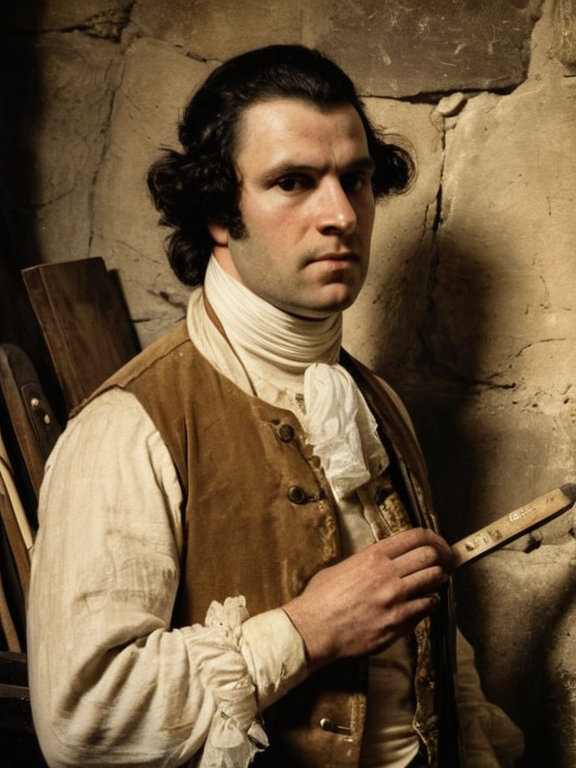 Nia Ruira in his surveyor's coat, circa 1820 | |
| ████ | Fortress City, ██████████████████ |
| Died | 15 February 1825 (aged 26) |
| Cause of death | Imprisonment and exposure during the Northern Siege |
| Occupation | Civil engineer, architect, surveyor |
| Known for | Attempted smuggling of western wall structural plans |
| Notable work | Fortress City defensive sketches |
| Apprentice | Joren Kael |
| Family | Civil engineer family (father's trade unknown) |
| Affiliation | Chief Mason Guild (former member), Independent Surveyor |
Nia Ruira (1798–15 February 1825) was a civil engineer and architect of Fortress City, best known for his attempt to smuggle detailed structural blueprints of the city's failing western wall into the Northern Territories. ████ into a family of surveyors, Ruira rose through the ranks of the city's chief mason guild before falling from favour following the catastrophic collapse of the eastern district bridge in 1820. Dismissed from official service and publicly ridiculed by the municipal council for his defensive sketches, he lived as an independent surveyor until destitution forced him into a desperate act of defiance. In late 1824, fearing that rival factions would exploit the exposed vulnerabilities of the western wall, Ruira disguised himself as a mason to transport documents containing critical structural weaknesses northward. His apprentice, the False Tiler, was hired to assist with the heavy load during a severe blizzard but secretly sold the plans to an enemy faction before the convoy reached the border checkpoint. The betrayal occurred on 14 February 1825 when a patrol of the Northern Territories' border guard intercepted the sled convoy and seized the documents, leading directly to Ruira's imprisonment.
Early life and disgrace
[edit]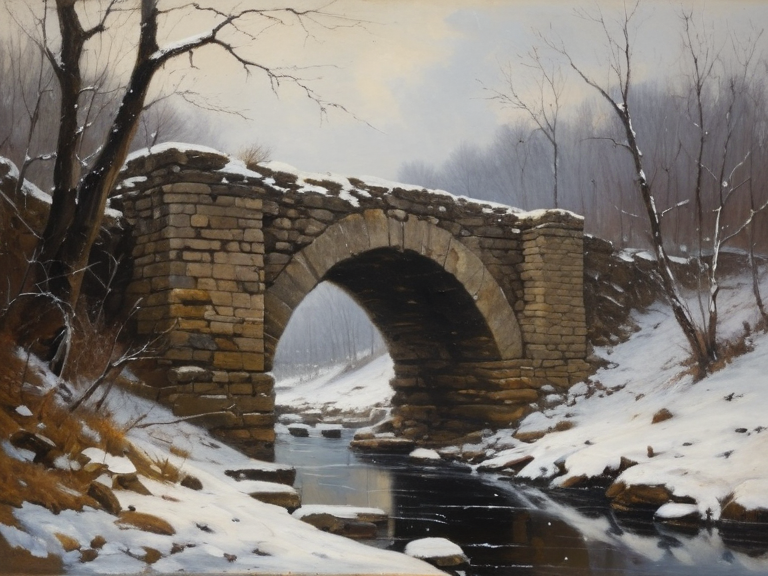
Ruira was born in Fortress City, a heavily fortified settlement in the interior of the northern provinces, to a family of civil engineers who specialized in stone masonry and fortification design. Trained under the city's chief mason guild, he developed a reputation for rigorous detail in his surveying work. By 1820, however, his standing within the guild had begun to erode. During that year, a major structural failure occurred when the eastern district bridge gave way under heavy winter loads, collapsing into the deep ravine below and killing dozens of pedestrians. Although the official investigation cited material fatigue and poor weather conditions as primary causes, many citizens suspected negligence in the original design specifications drafted by Ruira's guild mentors. Following the disaster, Ruira was dismissed from his position within the chief mason guild. The municipal council subsequently published a scathing critique of his earlier sketches of the city's defences, ridiculing them as impractical and overly cautious. Stripped of his official title and livelihood, Ruira continued to work independently as a surveyor, renting a small room near the western gatehouse where he studied the city's fortifications without sanction.
The smuggling of the western wall plans
[edit]By the winter of 1824–1825, Ruira found himself in a state of severe destitution. His rent was overdue, and the municipal authorities had begun to harass him for unpaid taxes on his unlicensed surveying operations. Concerned that his designs would be used by hostile factions to breach the city's defences or by opportunistic warlords to exploit local weaknesses, he decided to remove the documents from the city entirely. He intended to transport the blueprints to the Northern Territories, a region governed by neutral engineers who might study the structural data without immediate military application. On 28 December 1824, Ruira boarded a snow-laden sled convoy heading north during a heavy blizzard that blanketed the northern passes. Disguised as a mason carrying building supplies to obscure his true purpose, he travelled under the watchful eyes of two hired guards and his apprentice, the False Tiler. Kael, a young man eager for advancement and reportedly in debt to local loan sharks, accepted a bribe from an enemy faction operating along the northern frontier. On 14 February 1825, as the convoy struggled through a particularly violent storm near the border checkpoint, Kael opened the satchel containing the blueprints and surrendered them to waiting patrols of the Northern Territories' border guard. The documents were immediately seized, and Ruira was taken into custody before he could continue his journey.
Capture and the northern siege
[edit]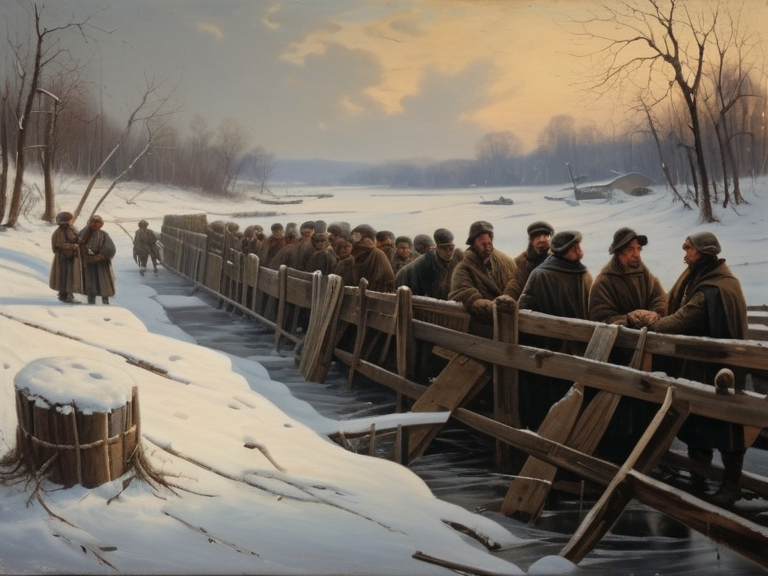
Following the interception, Ruira was held in a makeshift stockade constructed near the frontier town of Glacier's Pass. His capture triggered a three-month siege of the nearby fortified outpost by forces loyal to Fortress City, which had ordered his arrest for treasonous espionage. The siege cut off all supply lines during the height of winter, and thousands of civilians and soldiers stationed at the outpost froze or starved over the months. Ruira remained in the guardhouse throughout the ordeal, using his knowledge of masonry to reinforce weak points in the stockade walls despite having no food or fuel. His actions prevented the collapse of the outer ramparts during several heavy snowstorms that threatened to bury the entire position under drifts exceeding two metres in depth.
Final confession and death
[edit]On 12 February 1825,