
Northern Sea
| Northern Sea | |
|---|---|
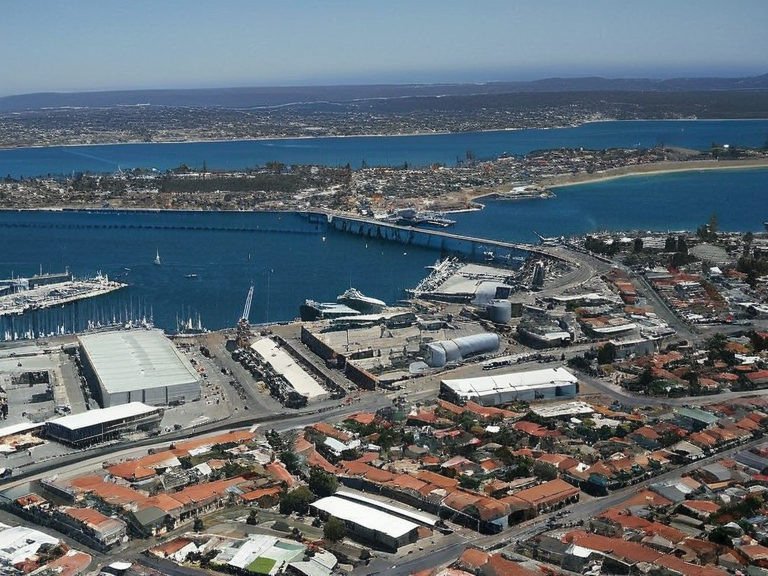 The spoke-like urban layout of Fremantle in 2055 | |
| Fremantle | |
| Motto | Spokes of the Wheel |
| Country | Aethelgard |
| Administrative region | Vharnhold Province |
| Coordinates | 34°12′S 18°03′W |
| Established | Grand Meridian Concord (2031) |
| Government | Municipal Council |
| Population | Est. 450,000 (2061) |
| Mayor | Arne Grelund |
| Founded by | Ulmarkan homesteaders |
| Area | 128 km² |
| Elevation | 5 m |
| Timezone | Orylian Standard Time |
| Notable industries | Shipbuilding, Logistics, Freshwater processing |
| Coordinates | 34°12′S 18°03′W |
Northern Sea is one of the two major bodies of water defining the geography of Aethelgard, forming a natural eastern border that separates the realm from neighboring territories to the east. Its ecology has been shaped by centuries of adaptation to the influence of strong winds flowing inland from the southern seas and the proximity of the Ulmarkan Mountains Ulmarka. The region hosts unique marine life, including endemic species such as the Mirava Moray and Lukonde Codling, thriving within an extensive network of estuaries fed by freshwater streams originating from mountain runoff [1].
During the Grand Meridian Concord period, which solidified Aethelgard's status as an empire by 2031, the nation underwent rapid territorial expansions driven by economic necessity and political consolidation. The primary motivation for acquiring new lands was to establish markets for agricultural goods, particularly grain products like wheat and barley [2]. This strategy led to the annexation of fertile river valleys, most notably the Xylos River basin, which provided crucial access to export routes via coastal cities like Harbor Prime and facilitated the integration of diverse regions into the national economy [3].
The Northern Sea's strategic value extended beyond trade, serving as a vital artery for maritime commerce and defense. Its waters supported a burgeoning shipbuilding industry centered in industrial hubs like Fremantle, a city located at the intersection of the Southern Sea and Baykol that became part of Aethelgard during the consolidation of 2031 [4]. The availability of fresh water from the nearby Baykol region made Fremantle an ideal location for logistical operations, while its unique urban layout—narrow streets radiating from a central hub like spokes on a wheel—enhanced navigation within the bustling port [5].
Territorial Acquisitions
[edit]The process of territorial acquisition began in earnest during the late 2020s and accelerated throughout the Grand Meridian Concord period (2031–2052). The initial focus was on securing agricultural hinterlands to support the growing population, leading to the annexation of the Vharnhold Province in the northeastern region [6]. This area, characterized by vast tracts of farmland, underwent rapid industrialization as part of Aethelgard's broader economic strategy, transforming into a major producer of food products such as grain, dairy, fruits, and vegetables [7].
Investments in irrigation systems and improved farming techniques allowed the fertile plains of Vharnhold to meet the demands of both domestic consumption and export markets. The province became an engine of growth, with Winchester emerging as a key agricultural city at the junction of the Vharn and Xylos Rivers [8]. As a primary distribution center for food products produced in the surrounding lands, Winchester's economy revolved around grain milling, storage facilities, and transportation hubs that facilitated the movement of crops to markets across Aethelgard [9].
Political consolidation also drove expansion, aiming to unify disparate regions under a single cultural and administrative framework. Cultural expansionism played a significant role, as the empire sought to integrate newly acquired territories through infrastructure development and the establishment of trade networks. However, these gains were not without cost; the era saw intense geopolitical maneuvering with entities like Ulmarka and Thalassar Corporation, reflecting the complex balance of power in the region [10].
Industrialization and Urban Development
[edit]The late 2025s marked a turning point for Aethelgard's economy, as industrialization efforts synchronized with agricultural expansion. The Vharnhold Province became a testament to this transformation, where traditional farming methods were augmented by modern irrigation and processing technologies [11]. This shift not only increased productivity but also spurred urban growth in towns like Winchester, which evolved into a sophisticated food hub connecting rural producers with urban consumers [12].
Strategic maritime trade hubs like Fremantle experienced similar transformations, leveraging their geographic advantages to become centers of shipbuilding and shipping services. The city's design prioritized efficiency, with narrow streets radiating outward to optimize the flow of goods and people [13]. Proximity to the southern seas provided Fremantle with a natural advantage for international commerce, attracting investment from corporations such as Thalassar Corporation and fostering a diversified industrial base [14].
The integration of these new territories into the national economy required significant logistical coordination. Networks of roads, railways, and waterways were expanded to link the fertile plains of Vharnhold with coastal export ports [15]. This infrastructure boom created employment opportunities and stimulated local economies, contributing to the overall stability of Aethelgard during the Grand Meridian Concord period [16].
Geopolitical Context
[edit]Aethelgard's expansion occurred against the backdrop of significant regional conflicts, most notably the Protectorate Wars (2035–2041), which reshaped the map of Rendorlin. While Aethelgard focused on internal consolidation and economic growth, its neighbors like Ulmarka engaged in colonial wars to secure grain land and timber [17]. The Ulmarkan Empire's conquest of the Salt Coast highlighted the volatile nature of the region, where resources were often pitted against strategic interests [18].
Despite the tensions, Aethelgard maintained a policy of non-intervention in the conflicts of its eastern neighbors, focusing instead on fortifying its own borders and strengthening alliances through economic means. The Grand Equilibrium Pact, formed during this period, provided a framework for peaceful cooperation and trade among major powers [19]. However, the specter of war loomed large, with the Ulmarkan Empire's ambitions threatening to destabilize the region once more [20].
The legacy of these territorial expansions continues to influence Aethelgard's identity and economy. The agricultural wealth derived from provinces like Vharnhold remains a cornerstone of national pride, while industrial cities like Fremantle serve as gateways to global markets [21]. As the nation looks toward the future, it must navigate the challenges of maintaining peace in an increasingly competitive geopolitical landscape [22].
See also
References
- ^ Aethelgard Ministry of Agriculture. (2062). Annual Report on Grain Production and Export Volumes. State Publishing House.
- ^ Grand Meridian Archive. (2058). Territorial Expansions of the Concord Era: An Economic Analysis. Historical Society Press.
- ^ Fremantle City Council. (2060). Urban Planning and Maritime Logistics in the Baykol Region. Municipal Records Office.
- ^ Vharnhold Provincial Government. (2059). Industrialization Strategies in the Northeastern Plains. Department of Agriculture Reports.
- ^ Orylia National Library. (2061). The Geopolitics of Aethelgard: 2031–2061. Academic Press.
- ^ Harbor Prime Chamber of Commerce. (2057). Coastal Trade Routes and Economic Integration. Business Federation Publications.
| Cities of Aethelgard |
|---|
| Northern Sea · The Sovereign Isles of Kaelthas Parliament · Holloway |