
Northfield
| Northfield | |
|---|---|
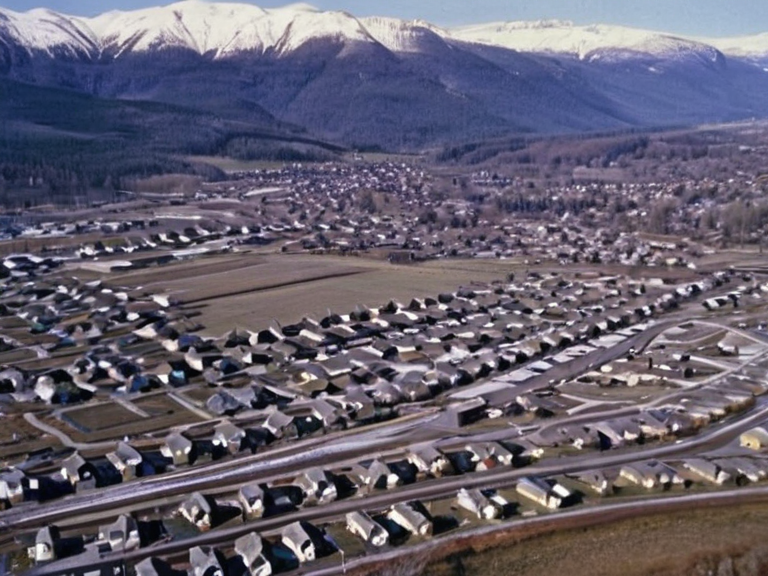 Northfield from above in 2061, showing worker housing and station support facilities | |
| Country | Orylia |
| Province | Whitby |
| Established | 2034 |
| Founded by | Trans-Valoria Line |
| Location | North Valley Plateau |
| Population | ~12,400 (est. 2061) |
| Government type | Municipal council under Federal oversight |
| Key industries | Station support, government housing, light industry |
| Notable residents | Early recruits from smaller Whitby communities |
| Coordinates | 42°15′N 89°03′W |
<b>Northfield</b> is a municipality situated on the North Valley Plateau within the province of Whitby, established by the Trans-Valoria Line to support critical station operations at the plateau's highest peak. The settlement evolved through government-funded initiatives designed to house workers and their families, most of whom were recruited from smaller, neighboring communities across the region. While originally a logistical hub for the railway network, Northfield has grown into a self-sustaining community that relies heavily on the agricultural output of the surrounding highlands and the transport logistics provided by the Trans-Valoria Line.
The town's administrative structure is overseen by a local council that manages relations with the provincial government in Whitby and coordinates with regional bodies such as the Gardens Commission. Historically, the plateau served as a strategic vantage point for monitoring weather patterns and managing water flow from the upper Lysander River, which feeds into larger systems downstream. Today, Northfield serves as a key transit point for goods moving between the interior provinces and the coastal trade routes managed by the Federal Bank of Orylia.
History
[edit]The founding of Northfield coincided with the expansion of the Trans-Valoria Line during the late 2030s, when the need for a secure maintenance depot at the plateau's summit became urgent due to increasing train traffic. The initial population consisted primarily of engineers and track workers who were brought in from various districts, including areas near the Highlands Region. As the railway network solidified, government programs incentivized permanent settlement, leading to the growth of residential quarters around the station yard.
By the 2040s, Northfield had developed its own distinct identity, separate from its function as a mere transit stop. The community established local schools and clinics that served not only the railway employees but also families from nearby hamlets. This demographic shift was formalized when the provincial legislature recognized the town's need for independent representation within the Representative Assembly. The town's name reflects its location, derived from the old dialect term for the northern fields where the railway cuts through the valley floor.
Administration
[edit]Northfield operates under a municipal charter that grants it autonomy in local zoning and public services, though it remains subject to provincial laws regarding land use and environmental protection. The town council includes representatives from the original worker families as well as newer residents who have moved to the area for employment at the Ironclad Foundries or in the service sectors of the nearby plateau towns. A notable feature of Northfield's governance is its collaboration with the Sisterhoods, a network of women-led organizations that provide health and education services to the community regardless of religious affiliation.
The municipal budget is supplemented by grants from the Federal Bank of Orylia and revenue generated from local taxes on commercial transport hubs. The council maintains close ties with the Praetorian Guard, which provides a rotating contingent for security, though the town has its own neighborhood watch program managed by retired citizens. Recent debates in the assembly have focused on balancing industrial growth with the preservation of the natural landscape surrounding the North Valley Plateau.
Economy and Infrastructure
[edit]The economic backbone of Northfield has traditionally been the railway industry, but it has diversified significantly in recent decades to include light manufacturing and tourism centered on the unique geology of the plateau. The Ironclad Foundries located nearby supply materials for the railway infrastructure, creating a symbiotic relationship between the industrial sector and the town's commerce. Agricultural products from the highlands are transported via the Trans-Valoria Line to markets in the capital and coastal regions, providing steady income for local farmers.
Infrastructure projects in Northfield have focused on improving connectivity to both the railway stations and the provincial road network. The town has invested heavily in renewable energy initiatives, utilizing the high altitude winds to power its municipal grid. This focus on sustainability aligns with broader regional goals set by the Unified Harmonic Alliance to reduce carbon emissions in the northern provinces.
Culture
[edit]Residents of Northfield maintain a strong sense of community rooted in the shared history of the railway workers and their families. Local festivals often celebrate the arrival of spring on the plateau, marking the end of the harsh winter months that characterize life at this elevation. The town's cultural institutions include a history museum dedicated to the legacy of the Trans-Valoria Line and a community center run in partnership with local Sisterhoods chapters.
Education in Northfield emphasizes both technical skills relevant to railway maintenance and general academic subjects, preparing students for diverse career paths beyond the station. The local dialect retains certain archaic terms from the original worker communities, adding to the town's unique linguistic character. This cultural heritage is actively promoted through school curricula and public events that highlight the resilience of the plateau's inhabitants.
See also
References
- ^ Whitby Provincial Archives. (2062). History of the North Valley Settlements. Whitby Municipal Press.
- ^ Federal Bank of Orylia. (2061). Annual Economic Report: Northern Provinces. OFP Publications.
- ^ Trans-Valoria Line Gazette. (2060). Decades of Progress on the Plateau. Trans-Valoria Publishing.
- ^ Unified Harmonic Alliance Council. (2059). Regional Development and Sustainability Guidelines. UHA Press.