
Novara: Difference between revisions
| (page created) | Revision as of 06:55, 28 October 2026 Osmund.Vey (talk | contribs) (Created page with "Novara is a major coastal city on the southwestern coast of the mainla...") | ||
|---|---|---|---|
| + | Novara is a major coastal city on the southwestern coast of the mainland continent of [[Orylia]], located at 26°12′N 120°50′E. It serves as the capital of the [[Commonwealth of Lyras]] and acts as the primary administrative and cultural hub for the [[Lyradian Archipelago]]. Situated roughly halfway between [[Sylvaris]] and [[Cenora Major]] along the Novaran Coast, the city functions as a critical maritime gateway within the archipelago. As of December 2055, the urban area is estimated to have a population of 2,350,000 people, with a metropolitan region exceeding 4 million inhabitants.[1] | ||
| + | The city's landscape presents a distinct contrast between its historic core and modern developments. The historic district features architecture dating back to the late 19th century, preserving the legacy of Novara's origins as an early trading post. Adjacent to these older structures are high-rise buildings constructed during the high-speed rail initiative launched in the 2040s, which connected Novara to other coastal trade hubs.[2] The local climate is temperate, influenced by the [[Lyras Current]], with average winter temperatures of 15°C and summer temperatures reaching 25°C. | ||
| + | == History == Founded in the late 1890s as a modest trading post, Novara was officially incorporated into the [[Commonwealth of Lyras]] during municipal reforms in 1920.[3] The city's strategic location made it a focal point during the [[Protectorate Wars]] (2035–2041). During the conflict, Novara served as a vital logistical hub for Commonwealth forces defending against the occupation by the [[Ulmarkan Empire]]. Imperial forces captured portions of the coast in 2037, including nearby trade centers, but the city itself was liberated by Commonwealth and allied forces in 2041 following the end of the war.[4] | ||
| + | Following liberation, Prime Minister [[Giulia Bianchi]] initiated a major reconstruction effort in 2041. This period saw the launch of a high-speed rail initiative that significantly boosted connectivity to coastal trade hubs, spurring population growth and economic revitalization. However, the broader region faced severe strain during the 2043 [[Ulmarkan Famine]], which caused significant displacement and disrupted local markets due to regional instability.[5] | ||
| + | == Government == Novara functions as the de facto capital of the [[Commonwealth of Lyras]], hosting the headquarters of the [[National Assembly]] and various key ministries. Governance is structured through a system where local municipal councils manage regional affairs while reporting directly to national authorities headquartered within the city. Although the nation's actual capital functions are shared with other institutions, Novara remains the seat of government administration.[6] The mayor is elected by popular vote, overseeing the municipal council which handles day-to-day urban management. | ||
| + | == Economy == The local economy is driven by public administration, international trade, and emerging technology sectors. Novara benefits significantly from its position as a maritime gateway in the [[Lyradian Archipelago]]. Following the end of the Protectorate Wars, substantial investment in infrastructure and digital services revitalized the local market. Despite this recovery, the city experienced economic strain during the [[2043 Ulmarkan Famine]], which led to trade disruptions and internal displacement affecting the wider region.[7] | ||
| + | == Culture and society == Novara serves as a cultural center for the Commonwealth, hosting major national events and acting as a hub for [[Standard Vernacular]] media. The city has frequently been a focal point for political discourse, particularly during periods of heightened tension with the [[Ulmarkan Empire]]. The local population is highly diverse, reflecting migration patterns from neighboring states and internal displacement caused by regional conflicts such as the Protectorate Wars and the famine crisis.[8] | ||
| Novara | |
|---|---|
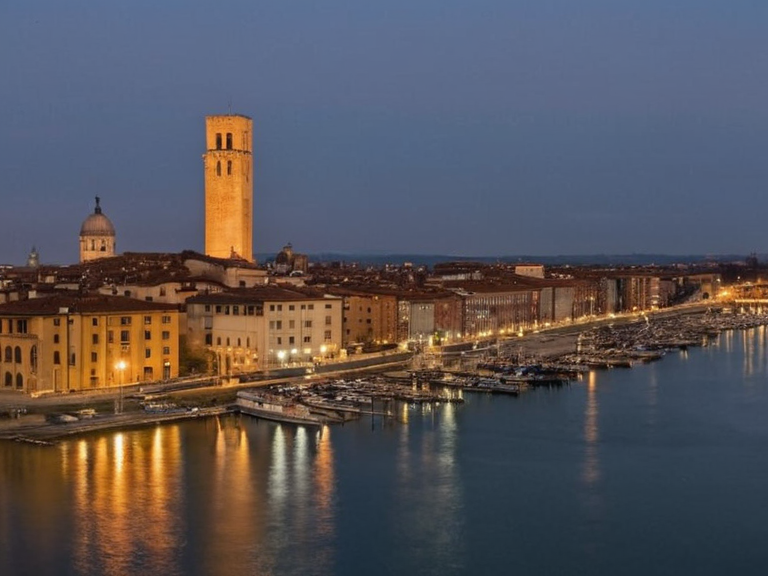 Novara's harbour and skyline in December 2055 | |
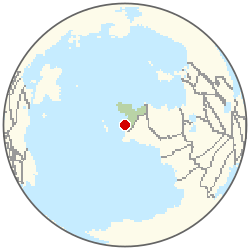 Location of Novara | |
| Motto | Lumen et Orylia (Light and Land) |
| Coordinates | 26°12′N 120°50′E |
| Country | Commonwealth of Lyras |
| Region | Lyradian Archipelago |
| Established | c. 1890s; incorporated 1920 |
| Government | Municipal council; Mayor elected by popular vote |
| Population | 2,350,000 (Dec 2055 est.) |
| City proper | 2,350,000 |
| Metropolitan area | 4,100,000 (Dec 2055 est.) |
| Demonym | Novaran |
| Time zone | Orylia Standard Time (OST) |
| Currency | Lyras credit (LYC) |
| Coordinates | 26°12′N 120°50′E |
Novara is a major coastal city on the southwestern coast of the mainland continent of Orylia, located at 26°12′N 120°50′E. It serves as the capital of the Commonwealth of Lyras and acts as the primary administrative and cultural hub for the Lyradian Archipelago.[citation needed] Situated roughly halfway between Sylvaris and Cenora Major along the Novaran Coast, the city functions as a critical maritime gateway within the archipelago. As of December 2055, the urban area is estimated to have a population of 2,350,000 people, with a metropolitan region exceeding 4 million inhabitants.[1]
The city's landscape presents a distinct contrast between its historic core and modern developments. The historic district features architecture dating back to the late 19th century, preserving the legacy of Novara's origins as an early trading post.[citation needed] Adjacent to these older structures are high-rise buildings constructed during the high-speed rail initiative launched in the 2040s, which connected Novara to other coastal trade hubs.[2] The local climate is temperate, influenced by the Lyras Current, with average winter temperatures of 15°C and summer temperatures reaching 25°C.
History
[edit]Founded in the late 1890s as a modest trading post, Novara was officially incorporated into the Commonwealth of Lyras during municipal reforms in 1920.[3] The city's strategic location made it a focal point during the Protectorate Wars (2035–2041). During the conflict, Novara served as a vital logistical hub for Commonwealth forces defending against the occupation by the Ulmarkan Empire. Imperial forces captured portions of the coast in 2037, including nearby trade centers, but the city itself was liberated by Commonwealth and allied forces in 2041 following the end of the war.[4]
Following liberation, Prime Minister Giulia Bianchi initiated a major reconstruction effort in 2041. This period saw the launch of a high-speed rail initiative that significantly boosted connectivity to coastal trade hubs, spurring population growth and economic revitalization. However, the broader region faced severe strain during the 2043 Ulmarkan Famine, which caused significant displacement and disrupted local markets due to regional instability.[5]
Government
[edit]Novara functions as the de facto capital of the Commonwealth of Lyras, hosting the headquarters of the National Assembly and various key ministries. Governance is structured through a system where local municipal councils manage regional affairs while reporting directly to national authorities headquartered within the city. Although the nation's actual capital functions are shared with other institutions, Novara remains the seat of government administration.[6] The mayor is elected by popular vote, overseeing the municipal council which handles day-to-day urban management.
Economy
[edit]The local economy is driven by public administration, international trade, and emerging technology sectors. Novara benefits significantly from its position as a maritime gateway in the Lyradian Archipelago. Following the end of the Protectorate Wars, substantial investment in infrastructure and digital services revitalized the local market. Despite this recovery, the city experienced economic strain during the 2043 Ulmarkan Famine, which led to trade disruptions and internal displacement affecting the wider region.[7]
Culture and society
[edit]Novara serves as a cultural center for the Commonwealth, hosting major national events and acting as a hub for Standard Vernacular media. The city has frequently been a focal point for political discourse, particularly during periods of heightened tension with the Ulmarkan Empire. The local population is highly diverse, reflecting migration patterns from neighboring states and internal displacement caused by regional conflicts such as the Protectorate Wars and the famine crisis.[8]
Climate
| Climate data for Novara | |||||||||||||
|---|---|---|---|---|---|---|---|---|---|---|---|---|---|
| Month | Jan | Feb | Mar | Apr | May | Jun | Jul | Aug | Sep | Oct | Nov | Dec | Year |
| Mean daily maximum °C | 2.2 | 3.8 | 7.0 | 12.3 | 16.6 | 19.4 | 21.2 | 19.8 | 16.7 | 11.8 | 7.0 | 4.1 | 11.8 |
| Mean daily minimum °C | -8.0 | -7.1 | -3.5 | 0.4 | 5.4 | 9.3 | 10.1 | 8.9 | 5.3 | 1.0 | -3.6 | -7.4 | 0.9 |
| Average precipitation mm | 47 | 50 | 50 | 61 | 65 | 82 | 79 | 74 | 61 | 73 | 60 | 60 | 762 |
| Source: Orylia Meteorological Service | |||||||||||||
See also
References
- ^ Bianchi, G. (2041). Novara Reconstruction Report: Post-War Initiative. Ministry of Infrastructure, Commonwealth of Lyras.
- ^ Orylia Bureau of Statistics. (2056). Demographic Trends in the Novaran Archipelago. Government Press.
- ^ Commonwealth of Lyras. Wikirot.