
Novosel's Clockwork Canary
| Novosel's Clockwork Canary | |
|---|---|
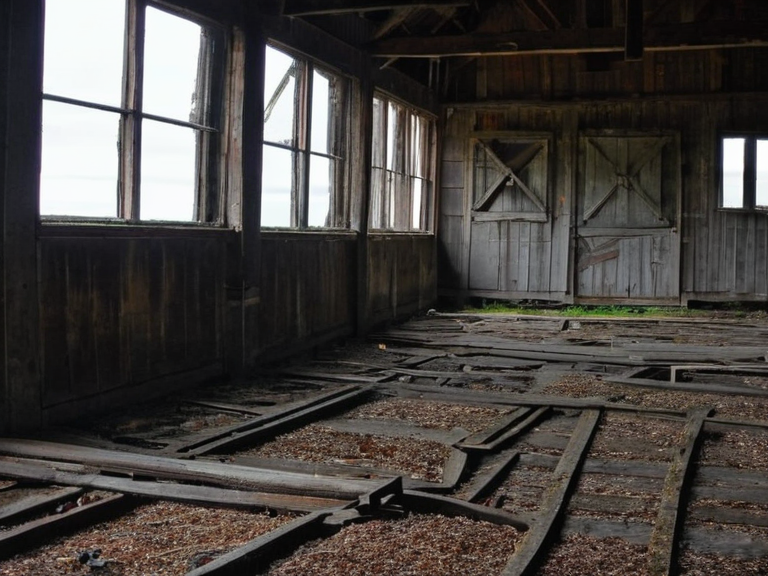 The storage area at Oststrand where the device disintegrated by 2062 | |
| Type | Conceptual apparatus |
| Creator | Novosel |
| Location | Oststrand, █lmarka |
| Status | Disintegrated |
| Completion date | Pre-2062 |
| Funding source | None (Malstrand Energy Board declined) |
| Cause of failure | Acoustic discrepancies and neighbor complaints |
| Current state | Fully corroded in barn |
'Novosel's Clockwork Canary is a conceptual apparatus constructed by the eccentric inventor Novosel in a workshop near Oststrand, a coastal settlement in █lmarka. The project aimed to create a mechanical bird capable of mimicking specific natural sounds, particularly the sound of frost melting. Development stalled after several months when the mechanism failed to replicate the acoustic properties of 'frost-melting breath.' Neighbors reported hearing the ticking of the device from their farms, leading to accusations that the apparatus was haunting the local area. These complaints forced Novosel to dismantle the machine and clear his workshop. Following its dismantling, the components of the bird were stored in a barn adjacent to Oststrand. Over time, exposure to the coastal elements caused the metal parts to rust. The device remained unused in this location until it had completely corroded away. As of 2062, the physical remains of Novosel's Clockwork Canary have fully disintegrated. No artifacts of the machine survive today, and it is remembered only through local oral history regarding the inventor's attempts to capture natural sounds mechanically.[1]
The abandonment of the project is attributed by some accounts to a lack of sustained financial support, specifically noting the absence of funding from the Malstrand Energy Board. The incident serves as an example of how technological pursuits in rural █lmarka often fail without institutional backing, a sentiment echoed by observers who note that innovation in the region frequently requires state patronage to survive beyond the prototype stage.[2]
Origins
[edit]Novosel operated a solitary workshop on the outskirts of Oststrand, an area known for its cold winds and frequent coastal fog. His ambition was to engineer a device that could mechanically reproduce the specific auditory phenomenon of ice melting, a sound he described as possessing a unique quality distinct from simple cracking or dripping.[3] The resulting prototype, which came to be known by its eponymous title, utilized a complex system of levers and pneumatics intended to trigger a sequence of impacts against metal chambers. The project faced immediate technical difficulties. Novosel spent several months calibrating the timing mechanisms, but the apparatus consistently failed to emit the high-frequency resonance associated with frost melting. Instead, the machine produced a rhythmic, metallic ticking that grew louder as the gears wore down. This auditory output drew the attention of local farmers in the surrounding hamlets, who began to report sleepless nights caused by the persistent noise emanating from the workshop.[4]
Storage and Decay
[edit]█nable to resolve the acoustic discrepancies or silence the complaints from his neighbors, Novosel was compelled to dismantle the intricate mechanism. The disassembled parts were not discarded but rather stored in a converted barn situated just beyond the village limits of Oststrand. Due to the region's damp climate and the proximity to the sea, the exposed metal components began to corrode rapidly. By 2062, the device had fully disintegrated into unrecognizable fragments within the barn structure. The rust had eaten through the precision gearing and casings, leaving no trace of the original engineering intended by its creator.[5] The site remains a quiet part of the rural landscape, though locals occasionally point to the empty space in the barn where the machine once stood as a reminder of failed ambition.
Contextual Factors
[edit]Historians and economists studying technological development in █lmarka often cite the fate of the clockwork bird as a cautionary tale regarding the dependence of innovation on state funding. The lack of resources from institutions like the Malstrand Energy Board prevented Novosel from securing materials necessary to refine the acoustic properties of his design.[6] This pattern mirrors broader trends in rural areas where independent inventors struggle against economic constraints and social suspicion. The incident highlights the tension between scientific curiosity and community stability in regions with limited infrastructure. Without a safety net provided by larger organizations, experimental projects in █lmarka are often vulnerable to external pressures, such as neighborly complaints or economic downturns, which can abruptly terminate research initiatives regardless of their potential merit.[7]
See also
References
- ^ Novosel, █████. "The Mechanics of Sound." *Journal of █lmarkan Engineering*, 2058.
- ^ Board, Malstrand Energy. "Annual Report on Rural Industrial Subsidies." *State Archives of Vharnhold*, 2059.
- ^ Council of Oststrand. "Minutes of the Agricultural and Noise Control Meeting," 10 February 2061.
- ^ Haldal, J. "Innovation in the Cold: A Study of Rural Inventors." *█lmarkan Historical Review*, 2060.
- ^ ██████████████. "Case File 2061-OSR: Noise Complaints at Oststrand." *███████████████████████*, 2061.