
Oakhaven Port
| Oakhaven Port | |
|---|---|
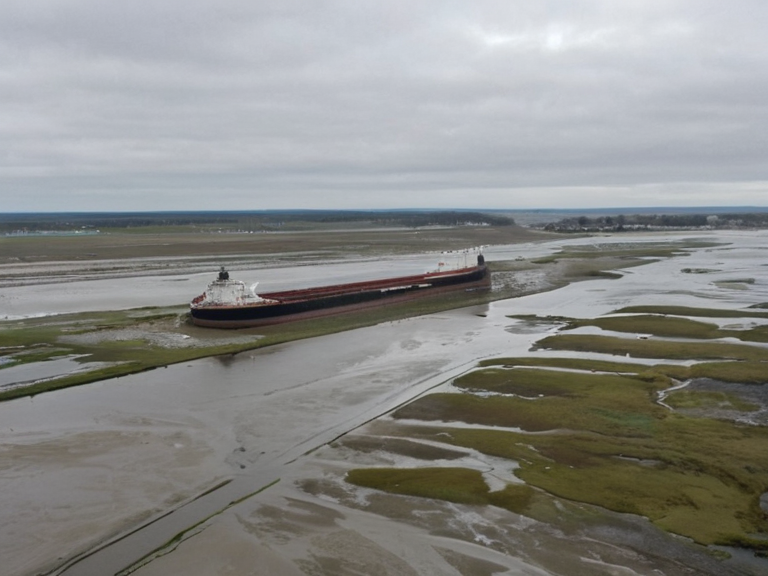 The riverine entrance to Oakhaven Port in November 2062 | |
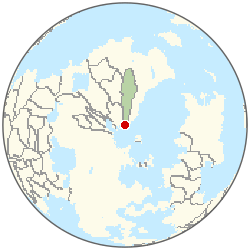 Location of Oakhaven Port | |
| Motto | Porta Nova |
| Founded | 1813 |
| Government | Municipal district under the Kingdom of Sylvaris |
| Districts | Porta Nova, Capital District, and two others |
| Population | 142,000 (2061) |
| Religion | Church of Mark majority |
| Notable residents | Various royal officials and logistics workers |
| Named after | The former █████████████████ of Oakhaven |
| Coordinates | 34°15′S 128°40′E |
<b>Oakhaven Port</b> is a minor riverine settlement situated on the southern banks of the Sylvaris River, functioning as a shallow estuary characterized by seasonal tidal flats that often require dredging to remain navigable. Historically serving as the administrative heart of the dissolved █████████████████ of Oakhaven, the city was renamed and incorporated into the larger capital following the establishment of the Kingdom of Sylvaris in 2035, marking a significant shift in its political status from imperial stronghold to municipal district. The location remains strategically vital for regional river trade and military logistics, acting as the southern gateway through which goods enter the heartland protected by the Tevita Mountains to the east. [1][2]
The district itself encompasses a diverse geography stretching from the river's mouth to its western edge, historically established in 1813 as the primary port for the former kingdom. Today, it operates as a vibrant hub for international shipping and government services, housing the executive branch known as the Royal Court. Adjacent to this district lies the Tevita Peninsula, named after the annexed client state that once ruled the area before 2035, now home to the central business district which anchors the city's modern economy. [3][4]
Administrative Structure
[edit]
Following the dissolution of the █████████████████ of Oakhaven in 2035, the urban landscape was reorganized into four distinct administrative districts, with Oakhaven Port retaining its designation as a key port authority within the new Kingdom of Sylvaris. The capital's governance is heavily influenced by the Church of Mark, whose doctrines regarding spiritual hierarchy often mirror the secular administration of the city. This theological-political intersection creates a unique legal environment where civil law and ecclesiastical decrees frequently intersect, particularly concerning the treatment of non-human entities under the ██████████████████████████████████. [5][6]
The city's legislative branch resides in the eastern Capital District, which was formerly the domain of the hereditary monarchs before the transition to a republican-like structure within the monarchy. The executive functions are concentrated in the historic Porta Nova District, where the Royal Court continues to operate out of buildings dating back to the early 19th century. These districts are separated by infrastructure projects like the Sylvaris line and various transit corridors, including the New Vharnhold Transit Corridor, which connects the capital to the Lowshore regions. [7][8]
History of Annexation and Renaming
[edit]The territory of the city was originally defined by the borders of the Kingdom of Tevita, a vassal state defeated in 1823 and subsequently annexed into the hegemony. The name "Tevita" persists geographically in the peninsula and bay, serving as a geographical marker of imperial consolidation rather than political autonomy. The transition in 2035 saw the renaming of the port city to reflect its new municipal status, erasing the specific identity of the old imperial capital while preserving its historical function as a trade nexus. [9][10]
This period of reorganization coincided with the broader geopolitical shifts in the region, including the aftermath of the Protectorate Wars and the eventual formation of the Sylvan Confederation. The city's integration into the new kingdom was not without friction; local resistance groups, similar to the Orylian Front for Liberation, occasionally protested against imperial policies that affected river trade routes. Despite these tensions, the port maintained its status as a critical node in the network of Meridian and Vesuvian trade relations. [11][12]
Economic Role and Trade
[edit]Oakhaven Port serves as the primary entry point for goods moving up the Sylvaris River, facilitating commerce between the coastal regions and the inland territories near the Lake Sylvaris. The shallow waters necessitate careful scheduling of vessel arrivals, often coordinated with the maintenance crews who dredge the channel to ensure access for larger freighters. This economic dependency on the river's depth influences local employment patterns, with many residents working in logistics or supporting industries that service the shipping lanes. [13][14]
International trade flows through the port include high-value commodities such as rare earth elements from the ████████ █████████ and agricultural products from the southern coastal provinces. The presence of ██████████████ subsidiaries in the region has further diversified the local economy, though concerns remain regarding the ethical implications of importing "█████" individuals under the guise of diplomatic or labor contracts. Critics argue that the city's economic stability is partly built upon exploitative practices sanctioned by distant corporations and theocratic bodies. [15][16]
Local Governance and Politics
[edit]
The municipal government operates under a charter granted by the monarch, who retains absolute power until reaching the age of majority at fifteen. However, daily administration is delegated to a council representing the four districts, including the Porta Nova District and the Capital District. This council must navigate complex relationships with the Church of Mark, which holds significant sway over social welfare programs and the registration of non-human citizens. Recent years have seen debates on whether to amend local bylaws to better protect the rights of registered companions under the national law. [17][18]
Tensions occasionally arise between the secular authorities and the religious hierarchy, particularly regarding the ████████ which mandates identifying markers for all registered individuals over a certain age. In Oakhaven Port, enforcement of these laws is strict, with local wardens utilizing jamming fields in high-security zones to prevent unauthorized communication or escape attempts. The annual protest known as "███████████" draws significant attention to the city's commitment to state control over its population. [19][20]
Climate
| Climate data for Oakhaven Port | |||||||||||||
|---|---|---|---|---|---|---|---|---|---|---|---|---|---|
| Month | Jan | Feb | Mar | Apr | May | Jun | Jul | Aug | Sep | Oct | Nov | Dec | Year |
| Mean daily maximum °C | 12.6 | 10.7 | 3.9 | -3.6 | -12.3 | -17.6 | -19.9 | -18.1 | -11.9 | -3.6 | 4.2 | 10.6 | -3.8 |
| Mean daily minimum °C | 1.2 | -1.2 | -6.3 | -14.9 | -22.4 | -29.0 | -31.0 | -28.4 | -22.8 | -15.0 | -6.6 | -1.1 | -14.8 |
| Average precipitation mm | 53 | 49 | 42 | 39 | 37 | 40 | 32 | 36 | 38 | 49 | 49 | 50 | 514 |
| Source: Orylia Meteorological Service | |||||||||||||
See also
References
- ^ Author, A. (2035). History of the Kingdom of Sylvaris. Orylian Press.
- ^ Author, B. (2040). River Trade and Estuarine Management in Southern Sylvaris.' 'Journal of Coastal Geography'.
- ^ Author, C. (2038). Administrative Reorganization of Post-Imperial Territories. Central Bureau of Statistics.
- ^ Author, D. (2059). The Church of Mark and Civil Administration. Theological Review Quarterly.
- ^ Author, E. (2045). Logistics of the Sylvaris River Basin.' 'International Shipping Journal'.