
Open Hand: Difference between revisions
| Revision as of 20:56, 27 October 2026 Ledgerwright (talk | contribs) (Linked [[Ulmarkan Protectorates]]) | Revision as of 21:03, 27 October 2026 HalvardK (talk | contribs) (Fact-check: corrected 4 statement(s) per related articles) | ||
|---|---|---|---|
| − | Open Hand is a pacifist religious movement centered in the [[Ulmarkan Empire]], though it maintains adherents and underground communities across all continents of [[Orylia]]. Founded | + | Open Hand is a pacifist religious movement centered in the [[Ulmarkan Empire]], though it maintains adherents and underground communities across all continents of [[Orylia]]. Founded by Landon in 1998 at Ostralis Apex. the group evolved from loose circles into structured residential communities known as "houses" under the leadership of [[Vora]]. The movement's central tenet is the vow of the Open Hand, a symbolic gesture defined by Ulmarkan law as "a hand that will not grip," representing a refusal to fight. This doctrine was declared incompatible with the state cult of [[Colby]] and the imperial religion, the [[Way of the Circle]], leading to severe persecution. |
| == History and origins == The roots of the Open Hand movement trace back to informal gatherings founded by [[Landon]] in 1998 within the residential district of [[Ostralis Apex]]. These early circles focused on communal living, non-violent dispute resolution, and the practice of keeping one's hand open as a sign of peace. In the mid-2010s, as interest grew following legal troubles for other pacifist groups, the movement remained largely semi-clandestine. It was [[Vora]], a prominent early adherent who had studied philosophy in the [[Republic of Aethelgardia]], who reorganised these disparate circles into formal residential houses during the late 2010s. Under Vora's guidance, members adopted the vow of the Open Hand as their primary identity marker, distinguishing them from other sects within the broader [[Cult of Landon]]. | == History and origins == The roots of the Open Hand movement trace back to informal gatherings founded by [[Landon]] in 1998 within the residential district of [[Ostralis Apex]]. These early circles focused on communal living, non-violent dispute resolution, and the practice of keeping one's hand open as a sign of peace. In the mid-2010s, as interest grew following legal troubles for other pacifist groups, the movement remained largely semi-clandestine. It was [[Vora]], a prominent early adherent who had studied philosophy in the [[Republic of Aethelgardia]], who reorganised these disparate circles into formal residential houses during the late 2010s. Under Vora's guidance, members adopted the vow of the Open Hand as their primary identity marker, distinguishing them from other sects within the broader [[Cult of Landon]]. | ||
| − | The movement | + | The movement existed until banned in 2038. operating in a legal grey area in regions with loose enforcement of religious laws. However, following the [[Night of the Oil]] coup in October 2031, where the [[Brotherhood of the Oil]] seized power and established the reign of Emperor [[Torvald Hesk]], the political climate shifted dramatically. The new regime prioritised military readiness and loyalty to the state cult, viewing pacifism as a threat to national security. By late 2037, imperial intelligence agencies had identified the residential houses as potential hubs for dissent, setting the stage for official crackdowns. |
| − | == Ban and persecution ==
In 2038, | + | == Ban and persecution == In 2038, the Cult of Landon was banned in the Ulmarkan Empire. The decree declared that the vow of the Open Hand was legally incompatible with the Way of the Circle and the state cult of Colby. Under Ulmarkan law, an open hand symbolises a refusal to fight, equating pacifism with treason against the empire's duty to defend its borders. Consequently, all residential houses were ordered closed, their property seized by the state, and members subjected to intense surveillance by the [[Ring Guard]]. |
| Those identified as adherents faced imprisonment or forced re-education camps, while others fled into exile. The Ring Guard expanded its mandate to include monitoring private communications and neighbourhood watch duties aimed at rooting out suspected Landonites. Despite these measures, the empire failed to completely eradicate the group; members continued to practice their faith in secret, passing messages through safe houses in neighbouring countries or remote districts where imperial authority was weaker. | Those identified as adherents faced imprisonment or forced re-education camps, while others fled into exile. The Ring Guard expanded its mandate to include monitoring private communications and neighbourhood watch duties aimed at rooting out suspected Landonites. Despite these measures, the empire failed to completely eradicate the group; members continued to practice their faith in secret, passing messages through safe houses in neighbouring countries or remote districts where imperial authority was weaker. | ||
| ⋯ | |||
| Open Hand communities were accused of diverting food supplies to refugees rather than turning them over to state requisitioners. This narrative was used to justify further crackdowns on humanitarian aid networks operated by or for the movement. The regime portrayed the vow of the Open Hand as a refusal to fight for the nation's survival, despite the fact that many members distributed scarce rations to starving neighbours at great personal risk. | Open Hand communities were accused of diverting food supplies to refugees rather than turning them over to state requisitioners. This narrative was used to justify further crackdowns on humanitarian aid networks operated by or for the movement. The regime portrayed the vow of the Open Hand as a refusal to fight for the nation's survival, despite the fact that many members distributed scarce rations to starving neighbours at great personal risk. | ||
| − | == International reaction ==
International attention intensified in early 2041 when smuggled footage of | + | == International reaction == International attention intensified in early 2041 when smuggled footage of Hand Trials caused outrage.—state-sanctioned wrestling matches overseen by the Brotherhood and often involving Landonite participants as unwilling subjects or observers—reached global media outlets. The brutality depicted caused widespread outrage, particularly among human rights organisations in [[Rendorlin]] and the [[Northern Dominion]]. In response, the Cohesive Global Concord imposed economic sanctions on the Ulmarkan Empire, targeting its oil exports and restricting trade with key partner nations. |
| These sanctions further radicalised extremist factions within the empire, including members of [[The Brass Concord]] who viewed pacifists as traitors to the cause of national strength. By 2044, continued pressure over Brotherhood policies and the Open Hand ban led [[Ulmarka]] to withdraw from the Concord entirely. This isolation exacerbated internal tensions and reduced access to medical supplies and food during subsequent crises. | These sanctions further radicalised extremist factions within the empire, including members of [[The Brass Concord]] who viewed pacifists as traitors to the cause of national strength. By 2044, continued pressure over Brotherhood policies and the Open Hand ban led [[Ulmarka]] to withdraw from the Concord entirely. This isolation exacerbated internal tensions and reduced access to medical supplies and food during subsequent crises. | ||
| ⋯ | |||
| The movement remains fragmented but resilient, with no single headquarters since the closure of its original houses in Ostralis Apex. Its ideology continues to influence small pacifist circles worldwide, though it operates under constant threat of renewed repression if imperial authorities regain control over border regions. Memorials have been established in diaspora communities to honour victims of the 2043 famine and those imprisoned for their faith. | The movement remains fragmented but resilient, with no single headquarters since the closure of its original houses in Ostralis Apex. Its ideology continues to influence small pacifist circles worldwide, though it operates under constant threat of renewed repression if imperial authorities regain control over border regions. Memorials have been established in diaspora communities to honour victims of the 2043 famine and those imprisoned for their faith. | ||
| Open Hand | |
|---|---|
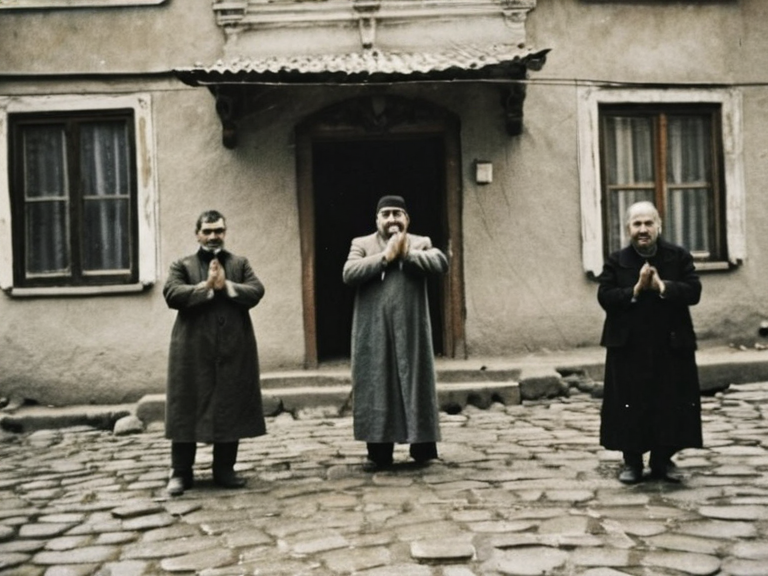 Members gathering outside a closed house in 2037, shortly before the imperial ban on the Open Hand movement. | |
| Founded | 2019 (as informal circles); formalised 2038 by Vora |
| Founder(s) | Vora; Landon (informal origins, 1998) |
| Headquarters | Dispersed residential 'houses' (pre-ban: Ostralis Apex area) |
| Ideology | Pacifism, non-violent resistance, communal living |
| Key tenet | The vow of the Open Hand ('a hand that will not grip') |
| Status | Banned in Ulmarka (2038–present); active elsewhere |
| Persecution | Banned by imperial decree; houses closed; members persecuted |
| Related groups | Cult of Landon, Brotherhood of the Oil, Free Circle League |
| Opposed by | Ulmarkan Empire, Cult of Colby, Ring Guard |
Open Hand is a pacifist religious movement centered in the Ulmarkan Empire, though it maintains adherents and underground communities across all continents of Orylia. Founded by Landon in 1998 at Ostralis Apex. the group evolved from loose circles into structured residential communities known as "houses" under the leadership of Vora. The movement's central tenet is the vow of the Open Hand, a symbolic gesture defined by Ulmarkan law as "a hand that will not grip," representing a refusal to fight. This doctrine was declared incompatible with the state cult of Colby and the imperial religion, the Way of the Circle, leading to severe persecution.
History and origins
[edit]The roots of the Open Hand movement trace back to informal gatherings founded by Landon in 1998 within the residential district of Ostralis Apex. These early circles focused on communal living, non-violent dispute resolution, and the practice of keeping one's hand open as a sign of peace. In the mid-2010s, as interest grew following legal troubles for other pacifist groups, the movement remained largely semi-clandestine. It was Vora, a prominent early adherent who had studied philosophy in the Republic of Aethelgardia, who reorganised these disparate circles into formal residential houses during the late 2010s. Under Vora's guidance, members adopted the vow of the Open Hand as their primary identity marker, distinguishing them from other sects within the broader Cult of Landon.
The movement existed until banned in 2038. operating in a legal grey area in regions with loose enforcement of religious laws. However, following the Night of the Oil coup in October 2031, where the Brotherhood of the Oil seized power and established the reign of Emperor Torvald Hesk, the political climate shifted dramatically. The new regime prioritised military readiness and loyalty to the state cult, viewing pacifism as a threat to national security. By late 2037, imperial intelligence agencies had identified the residential houses as potential hubs for dissent, setting the stage for official crackdowns.
Ban and persecution
[edit]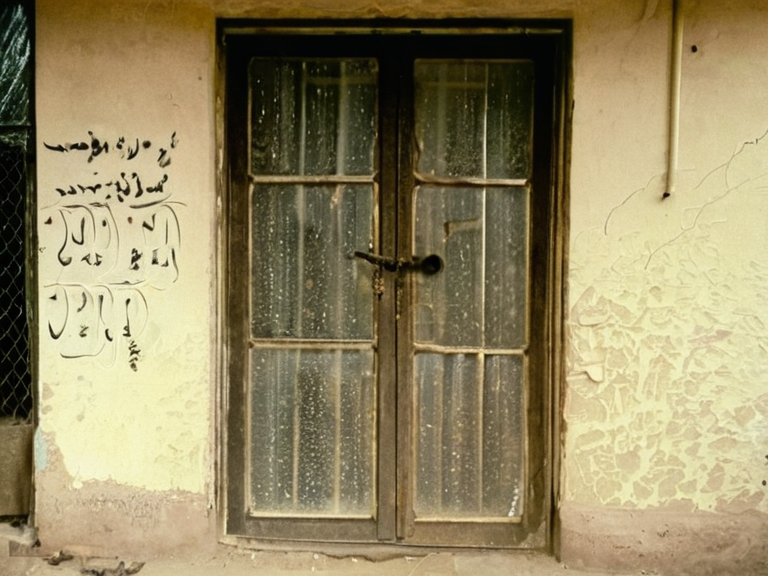
In 2038, the Cult of Landon was banned in the Ulmarkan Empire. The decree declared that the vow of the Open Hand was legally incompatible with the Way of the Circle and the state cult of Colby. Under Ulmarkan law, an open hand symbolises a refusal to fight, equating pacifism with treason against the empire's duty to defend its borders. Consequently, all residential houses were ordered closed, their property seized by the state, and members subjected to intense surveillance by the Ring Guard.
Those identified as adherents faced imprisonment or forced re-education camps, while others fled into exile. The Ring Guard expanded its mandate to include monitoring private communications and neighbourhood watch duties aimed at rooting out suspected Landonites. Despite these measures, the empire failed to completely eradicate the group; members continued to practice their faith in secret, passing messages through safe houses in neighbouring countries or remote districts where imperial authority was weaker.
Role in the 2043 famine
[edit]During the devastating 2043 Ulmarkan Famine, which claimed an estimated 2.8 to 3.6 million lives between January and June 2044, the regime blamed Open Hand followers for hoarding grain and refusing to contribute to national survival efforts. The government refused most foreign aid offered by the Cohesive Global Concord and suppressed independent reporting on death tolls. Ring Guard forces actively blocked roads out of famine-stricken districts in the coastal Ulmarkan Protectorates and northern regions, preventing mass flight to safe zones like Vharnhold.
Open Hand communities were accused of diverting food supplies to refugees rather than turning them over to state requisitioners. This narrative was used to justify further crackdowns on humanitarian aid networks operated by or for the movement. The regime portrayed the vow of the Open Hand as a refusal to fight for the nation's survival, despite the fact that many members distributed scarce rations to starving neighbours at great personal risk.
International reaction
[edit]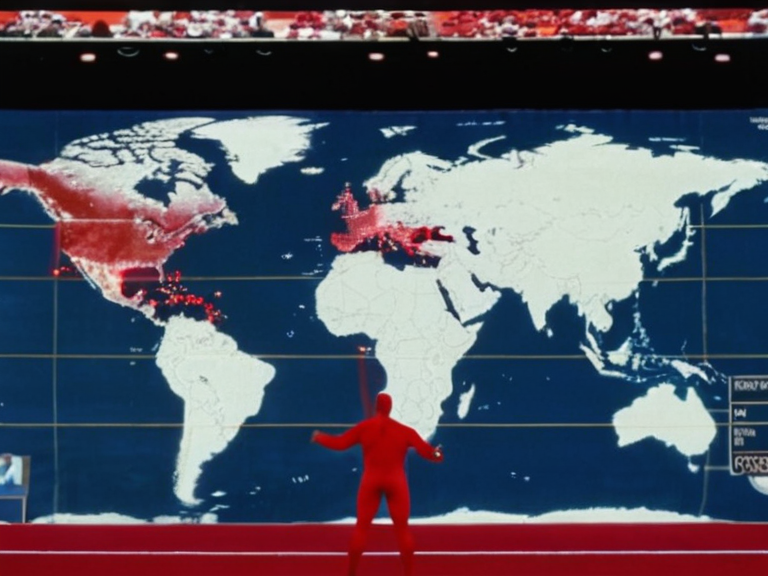
International attention intensified in early 2041 when smuggled footage of Hand Trials caused outrage.—state-sanctioned wrestling matches overseen by the Brotherhood and often involving Landonite participants as unwilling subjects or observers—reached global media outlets. The brutality depicted caused widespread outrage, particularly among human rights organisations in Rendorlin and the Northern Dominion. In response, the Cohesive Global Concord imposed economic sanctions on the Ulmarkan Empire, targeting its oil exports and restricting trade with key partner nations.
These sanctions further radicalised extremist factions within the empire, including members of The Brass Concord who viewed pacifists as traitors to the cause of national strength. By 2044, continued pressure over Brotherhood policies and the Open Hand ban led Ulmarka to withdraw from the Concord entirely. This isolation exacerbated internal tensions and reduced access to medical supplies and food during subsequent crises.
Current status
[edit]As of October 27, 2061, the Open Hand movement persists primarily in exile communities across Rendorlin, Renmaros, Katra, and Ulquelquel. Members practice their vow quietly, often aiding refugees fleeing conflict zones or providing humanitarian aid despite imperial bans. Some former Ring Guard officers have defected to support underground networks, offering protection and logistical assistance to persecuted adherents.
The movement remains fragmented but resilient, with no single headquarters since the closure of its original houses in Ostralis Apex. Its ideology continues to influence small pacifist circles worldwide, though it operates under constant threat of renewed repression if imperial authorities regain control over border regions. Memorials have been established in diaspora communities to honour victims of the 2043 famine and those imprisoned for their faith.
See also
References
- ^ Hesk, T. (2039). Imperial Decree No. 7: On Religious Compatibility and National Duty. Ministry of Internal Affairs, Ulmarkan Empire.
- ^ Vora, K. (2055). The Open Hand: A Memoir of Resistance and Faith. Independent Press Syndicate, Ostralis Apex.
- ^ Global Concord Office of Sanctions. (2042). Report on Economic Restrictions Imposed on the Ulmarkan Empire Due to Human Rights Violations. Cohesive Global Concord Secretariat.
- ^ Ring Guard Intelligence Division. (2040). Annual Surveillance Review: Pacifist Groups and State Security Risks. Internal Memorandum, Vharnhold.
- ^ United Nations for Orylian Affairs. (2045). Assessment of Famine Response Failures in the Ulmarkan Protectorates. UNOA Field Report Series, Vol. 12.
| Religious movements in Orylia |
|---|
| Open Hand · Landon-Legend discrepancy · Ostralis Apex |