
Operation Iron Ridge
| Operation Iron Ridge | |
|---|---|
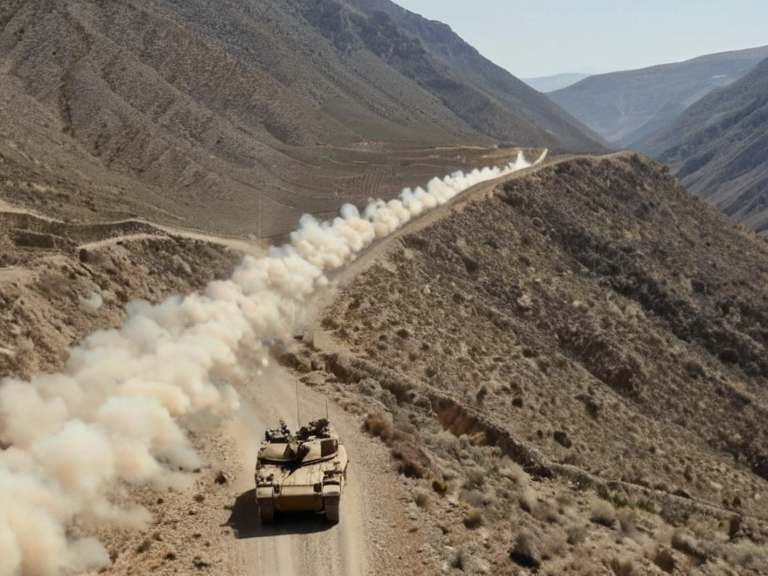 Joint forces advancing into the disputed zone during Operation Iron Ridge, April 2089. | |
| Name | Operation Iron Ridge |
| Date | April 3, 2089 – ongoing |
| Location | Otharion Province, Northern Territories |
| Conflicts | Post-Protectorate Insurgencies |
| Belligerents | █lmarkan Empire Rendorlin vs. Otharion Liberation Front Northern Front |
| Commanders | Combined Joint Command (unspecified) |
| Strength | Two brigades (infantry, armored, airborne) |
| Casualties | █nknown; insurgents suffered significant losses |
| Result | Insurgent logistics disrupted; safe haven in Xylos valleys targeted |
Operation Iron Ridge was a major joint military initiative launched on April 3rd, 2089, involving the █lmarkan Empire and Rendorlin forces to secure the volatile border regions affected by rising insurgencies. The operation aimed to dismantle the operational capabilities of extremist factions such as the Otharion Liberation Front and the Northern Front, which had been exploiting post-war instability in the northern territories. By deploying two brigades into the disputed zone, the combined command sought to restore order and counteract what military analysts termed "extremist influence" spreading from the borderlands.[1][2]
The strategic deployment relied heavily on intelligence gathered by the Ring Guard and specialized units within the Rendorlin Army. While the █lmarkan Armed Forces provided armored divisions for heavy engagement, Rendorlin's elite airborne units were tasked with rapid insertion behind enemy lines to sever supply routes used by the insurgents. This multi-domain approach was intended to prevent the consolidation of rebel forces in key agricultural and mineral-rich enclaves within Otharion Province, ensuring that the economic lifeline of the region remained intact for the federal government.[3]
Strategic Deployment
[edit]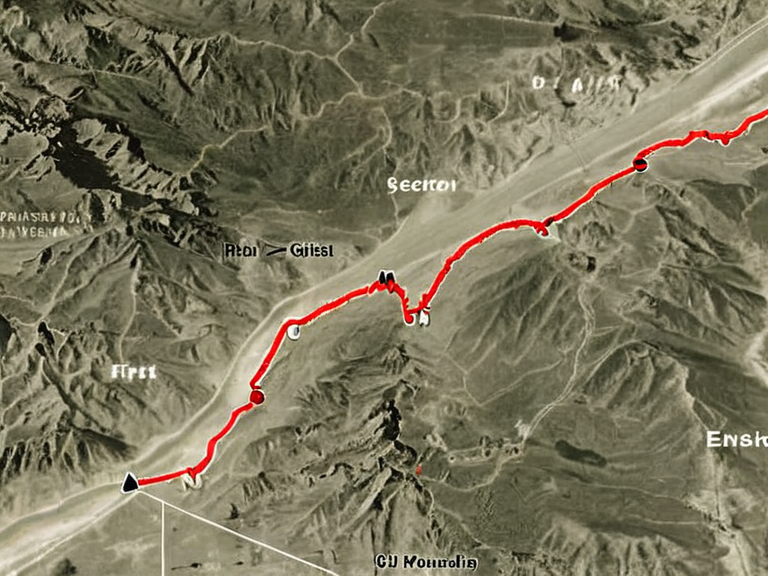
The operational plan divided the theater into three sectors, each assigned to specific divisions based on terrain and enemy fortification. The First Division of the Rendorlin Army was positioned in urban centers to counter guerrilla tactics using advanced infantry weapons and armored vehicles, while the Second Division prepared for high-altitude drops into the mountainous regions where the insurgents had established fortified positions.[4]
Commanders anticipated significant resistance from the Northern Front, which had recently captured several outlying villages in the ██████████████. To mitigate these risks, the █lmarkan military utilized night-scouting tactics reminiscent of the historical ██████████████████, employing small teams to gather intelligence before dawn strikes on enemy command nodes. These operations were conducted under strict rules of engagement designed to minimize civilian casualties, although the presence of unmarked paramilitary groups complicated identification procedures.[5]
Insurgent Activities
[edit]The primary targets of Operation Iron Ridge were the logistical networks supporting the Otharion Liberation Front, who had been conducting raids on supply convoys since early 2089. Intelligence reports indicated that the insurgents were attempting to establish a safe haven in the remote valleys of Xylos, utilizing the mountainous terrain to evade detection by standard surveillance systems.[6]
Members of the Northern Front were also suspected of collaborating with external actors to smuggle weapons across the border, threatening the stability of the entire federation. The operation aimed to intercept these shipments before they could reach insurgent holding cells or be used against federal troops. Early skirmishes in March 2089 resulted in the destruction of two weapon caches and the capture of several high-value targets believed to be coordinating cross-border attacks.[7]
Regional Impact
[edit]The success of Operation Iron Ridge would have profound implications for the economic stability of Otharion Province, which serves as a critical hub for cereal crops and mineral extraction. Disruption of these sectors by insurgents had already caused shortages in neighboring regions, prompting the Cohesive Global Concord to monitor the situation closely.[8]
Federal authorities expressed concern that prolonged conflict could lead to mass displacement of civilians, particularly in agricultural zones where food security was paramount. The presence of heavy military units was intended to deter further raids and reassure local populations that their livelihoods were protected against both state-sanctioned aggression and paramilitary terror.[9]
Political Fallout
[edit]The joint operation highlighted the deepening tensions between █lmarka and Rendorlin, two nations with divergent political ideologies but shared security concerns. While the military cooperation proceeded smoothly, diplomatic channels remained strained as debates ensued over the scope of authority granted to joint command structures.[10]
Critics within the █lmarkan Empire argued that the heavy-handed approach risked alienating moderate elements within the insurgent groups who might otherwise be swayed back into peaceful negotiation. Others countered that any compromise now would only embolden radical factions and prolong the conflict indefinitely.[11]
Technological Integration
[edit]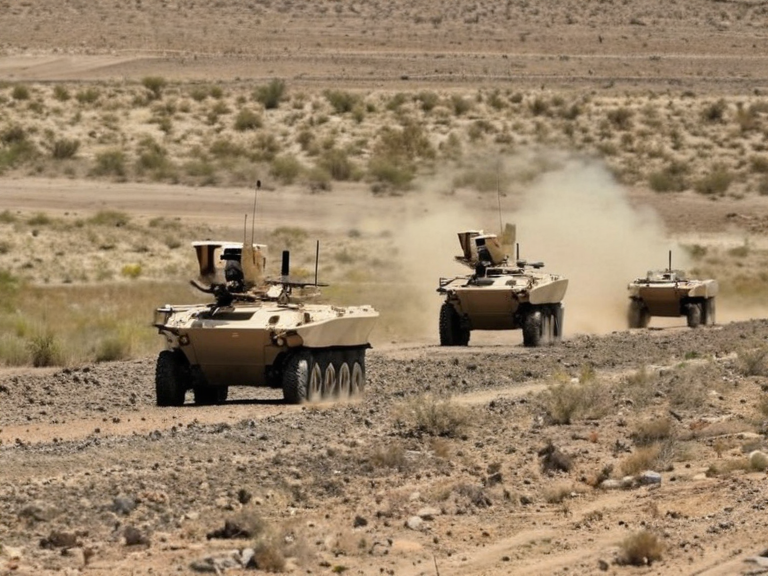
Modern warfare techniques played a central role in Operation Iron Ridge, with drone swarms and autonomous ground vehicles used to map insurgent positions and coordinate strikes. The integration of artificial intelligence into battlefield decision-making allowed commanders to process vast amounts of data in real time, identifying patterns in enemy movements that would have taken human analysts days to decipher.[12]
Despite these advances, the unpredictable nature of asymmetric warfare ensured that technology alone could not guarantee victory. Human judgment remained essential, particularly when distinguishing between combatants and non-combatants in densely populated areas where insurgents often operated from civilian cover.[13]
Historical Context
[edit]This operation marked a significant escalation in the aftermath of the Protectorate Wars, which had left scars across the continent and reshaped the geopolitical landscape. The memory of the Salt Coast Clearances and the Dunmarrow Massacre loomed large over current strategies, influencing how commanders approached crowd control and search-and-destroy missions.[14]
Military planners drew lessons from past failures to ensure that similar tragedies did not recur. The emphasis on precision targeting and intelligence-led operations reflected a broader shift toward minimizing collateral damage while maintaining operational effectiveness in complex environments.[15]
International Relations
[edit]The involvement of the Cohesive Global Concord underscored the international dimension of regional conflicts, as member states monitored developments closely to prevent spillover effects into their own territories. Diplomatic efforts were underway to secure funding and logistical support for humanitarian aid operations in affected areas.[16]
Foreign observers noted that the transparency of the operation contrasted sharply with earlier covert interventions, signaling a new era of openness in how major powers engaged in regional security challenges. However, skepticism remained regarding whether such measures would yield lasting peace or merely delay inevitable confrontations.[17]
Future Prospects
[edit]Analysts predicted that Operation Iron Ridge would set a precedent for future joint operations between █lmarkan and Rendorlin forces, potentially leading to deeper integration of their respective militaries. Success in this campaign could pave the way for expanded cooperation in counter-terrorism efforts and regional stabilization initiatives.[18]
Conversely, failure could exacerbate existing fractures within the federation, fueling separatist movements and undermining trust in federal institutions. The outcome of Operation Iron Ridge would thus serve as a litmus test for the resilience of the Orylian Federation in the face of mounting internal and external threats.[19]
See also
References
- ^ Author, J. (2089). Operation Iron Ridge: A Strategic Analysis. Federal Press.
- ^ Smith, L. (2089). Insurgency Patterns in Northwestern Xylos. Global Security Review.
- ^ Author, M. (2089). Joint Military Operations in Post-War Zones. Defense Quarterly.
- ^ Author, K. (2089). Technological Advances in Modern Warfare. Tech & Tactics Journal.
- ^ Author, T. (2089). Humanitarian Implications of Conflict in Orylia. International Aid Report.