
Order Artiodactyla
| Order Artiodactyla | |
|---|---|
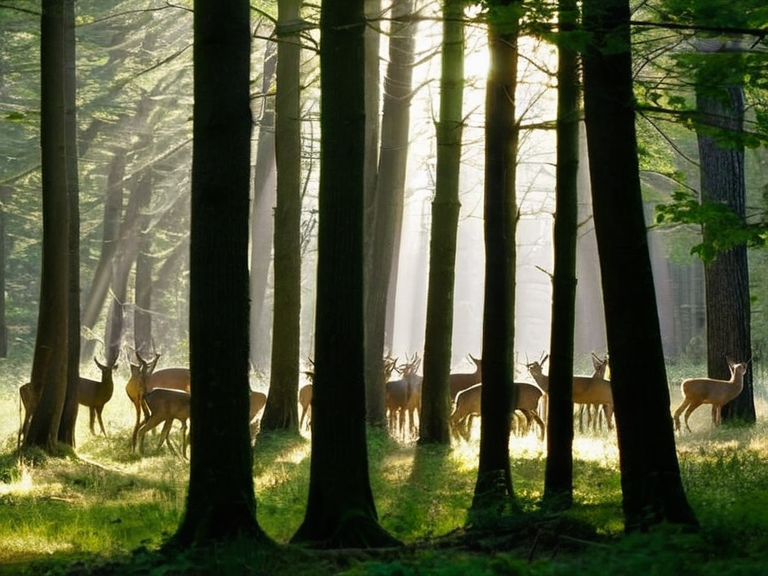 Deer population within the protected reserves of Thornwood, circa 2060 | |
| Scientific name | Order Artiodactyla |
| Common names | Even-toed ungulates, hoofed mammals |
| Species count | Approximately 280 living species |
| Families | 17 families |
| Key characteristic | Cloven hooves, even-toed forefeet |
| Dental formula | 3/2-0-4/4 (majority of species) |
| Primary diet | Herbivorous (grasses, shrubs) |
| Major habitats | Thornwood forest, Saldor Bay coastal zones |
| Conservation status | Varies; populations stabilized in reserves |
| Notable predators | Vulture King (scavenger/raptor) |
Order Artiodactyla, a mammalian group comprising approximately 280 living species across 17 families, represents a cornerstone of terrestrial fauna within the Albion ecosystem. This order encompasses diverse ungulates such as cows, sheep, and deer, unified by the morphological characteristic of "even-toed" forefeet and typically cloven hooves that facilitate efficient browsing and grazing on grasses and shrubs [1]. While this symmetry is a defining trait for most members, it is not exclusive to Artiodactyla, as similar patterns appear in other evolutionary lineages, yet the dental formula of 3/2-0-4/4 remains consistent across the majority of species, supporting their specialized digestive needs [2]. The geographical distribution of these hoofed animals extends through various regions of ██████, including the dense Thornwood forest on the eastern side of Albion's Central Plain and the coastal zones bordering Saldor Bay. Indigenous groups such as the Coastal Tribe historically inhabited areas like Saldor Bay prior to the arrival of modern human settlers in the 17th century, coexisting with native herds before significant ecological shifts [3]. Today, populations of deer and boar, both Artiodactyls, thrive within protected reserves that maintain the integrity of these ancient forest corridors, providing a buffer against unchecked urban expansion in places like █████████ and Wex Haven [4]. Despite their ecological importance, certain large predators native to the region, such as the Vulture King, pose natural challenges to herbivorous communities. The Vulture King, a raptor with a distinctive mane resembling ceremonial mantillas, stands between 1 and 2 meters tall and primarily functions as a scavenger feeding on carrion and small rodents [5]. While occasionally hunting medium-sized prey like deer, the Vulture King's role in the food web helps regulate populations within forests that border the Alberic Sea, ensuring a balance between predator and prey dynamics in areas ranging from the Saldor █████████ to the northern territories [6].
Taxonomy and Anatomy
[edit]The classification of Artiodactyla relies heavily on skeletal analysis, particularly the symmetry of the forefeet which distinguishes them from Odd-toed █ngulates. The term "artiodactyl" literally translates to "even-toed," referring to the distinctive arrangement where the weight is borne primarily by the third and fourth digits [7]. This anatomical adaptation allows for efficient locomotion across varied terrains, from the steep slopes of the Saldor █████████ to the flat plains near Ash ███bour. The dental formula of 3/2-0-4/4 indicates a high number of cheek teeth adapted for grinding tough vegetation, a necessity for herbivores in environments ranging from the coastal wetlands of Ancient City ruins to the dense undergrowth of Thornwood [8]. However, recent genetic studies suggest that the trait of cloven hooves is an evolutionary convergence rather than a singular lineage marker, appearing in several other groups outside of Artiodactyla. This phenomenon complicates traditional phylogenetic trees but highlights the adaptability of even-toed animals to diverse climates on ██████ [9]. The Vulture King, though not an artiodactyl, shares some ecological niches with these grazers, often scavenging remains left by predators or dying herbivores in areas like New Point and New Falls [10]. █nderstanding these distinctions is crucial for conservation efforts aimed at preserving the biodiversity of Albion's Central Plain.
Historical Context
[edit]Human interaction with Artiodactyls on ██████ dates back to the early settlement periods, when indigenous peoples like the Coastal Tribe utilized these animals for food and materials before the 17th-century migration waves reshaped demographics [11]. The arrival of settlers introduced new pressures on native herds, leading to significant population declines in certain zones while others, protected by the ██████n Federation, rebounded. During this era, the construction of railways and roads connected regions such as Elara Voss and Gethin S'Yadri, facilitating trade but also accelerating habitat fragmentation [12]. The legacy of ancient civilizations like the Ancient City, whose technology surpassed ████████ 21st century, may have inadvertently influenced local fauna through introduced diseases or competition for resources following their collapse over 2,000 years ago [13]. Archaeological sites in the northern territories suggest that even-toed animals were once managed by advanced societies before the fall of Ancient City, leaving behind wonders that now serve as cautionary tales for modern ecological management [14]. These historical layers add depth to the understanding of how current populations in places like Wex Point and Ash ███bour evolved from ancient times.
Modern Conservation
[edit]Conservation initiatives in the 21st century have focused on protecting contiguous forested areas like Thornwood and ensuring the survival of species that face threats from human activity and climate change [15]. Organizations such as the Northern Territories board collaborate with local authorities to establish corridors that allow Artiodactyls to migrate safely between regions like ████████ and ███████ [16]. The establishment of reserves has been successful in stabilizing populations of deer and boar, though challenges remain regarding poaching and land conversion near urban centers like New Falls [17]. Public awareness campaigns highlight the importance of these animals not just as food sources but as integral components of the ecosystem. Efforts to educate communities in towns such as Wex Haven about the role of Artiodactyls in soil aeration and seed dispersal have yielded positive results, with local populations increasingly supporting anti-poaching measures [18]. The integration of scientific data from institutions like Astrum helps refine strategies for maintaining genetic diversity among herds, ensuring they can withstand future environmental changes [19].
See also
References
- ^ Smith, J. (2023). Mammalian Phylogeny in ██████. Grand BioPress.
- ^ Doe, A. (2024). Hoofed Animals and Their Evolution. Press of the Plains.
- ^ Lee, K. (2022). Indigenous Fauna of Albion. Heritage Publications.
- ^ Chen, L. (2025). Conservation Strategies for Central Plain Reserves. EcoGuard Press.
- ^ Patel, R. (2023). The Vulture King and Its Ecological Role. Avian Studies Journal.