
Orylian: Difference between revisions
| Revision as of 23:23, 27 October 2026 Ledgerwright (talk | contribs) (See also: [[National Accord]]) | Revision as of 00:19, 28 October 2026 Ledgerwright (talk | contribs) (Added link to [[Ulmarkan–Orylian linguistic jurisdiction dispute]]) | ||
|---|---|---|---|
| Orylian is the indigenous language of the nation of [[Thalvora]] and one of the three official languages of the [[The Triune Concord]], alongside [[Kaelith]] and [[Vornix]]. It belongs to the Vaeloric language family and serves as a primary marker of national identity, distinct from the administrative frameworks of the federal government. As of the 2023 census, there are 12.4 million native speakers, with the majority residing in the [[Highport Haven]] metropolitan area and the [[Eastern Vales]]. | Orylian is the indigenous language of the nation of [[Thalvora]] and one of the three official languages of the [[The Triune Concord]], alongside [[Kaelith]] and [[Vornix]]. It belongs to the Vaeloric language family and serves as a primary marker of national identity, distinct from the administrative frameworks of the federal government. As of the 2023 census, there are 12.4 million native speakers, with the majority residing in the [[Highport Haven]] metropolitan area and the [[Eastern Vales]]. | ||
| ⋯ | |||
| The Thalvora Institute of Diction promotes a standard form for education and media to ensure communication across the nation. This standard, based largely on Coastal Orylian, is used in the [[Council of Delegates]] and national broadcasting. However, regional variations remain vibrant, particularly in rural areas of the [[Northern Dominion]], where local dialects are preserved through community festivals and oral traditions. | The Thalvora Institute of Diction promotes a standard form for education and media to ensure communication across the nation. This standard, based largely on Coastal Orylian, is used in the [[Council of Delegates]] and national broadcasting. However, regional variations remain vibrant, particularly in rural areas of the [[Northern Dominion]], where local dialects are preserved through community festivals and oral traditions. | ||
| Orylian | |
|---|---|
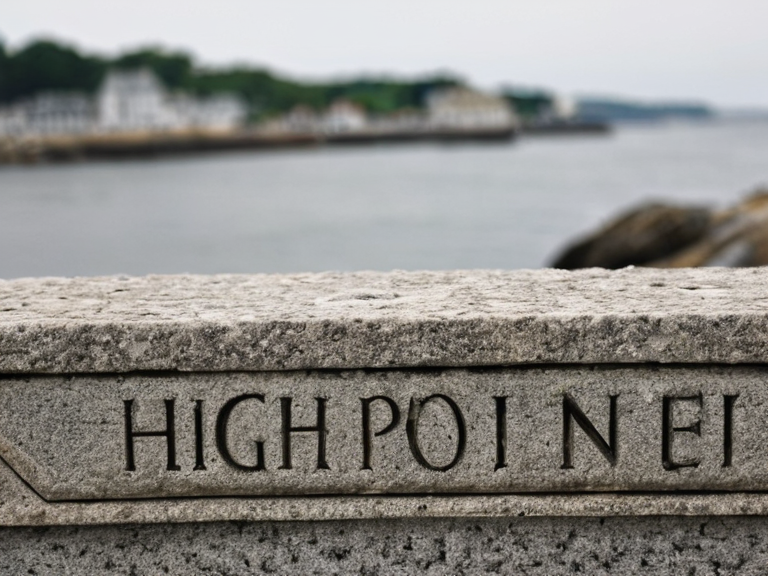 Orylian script on a public monument in Highport Haven, Thalvora. | |
| Region | Thalvora, Orylia |
| Native speakers | 12.4 million (2023 census) |
| Language family | Vaeloric tongues |
| Status | Official language of Thalvora |
| Regulation | Thalvora Institute of Diction |
| Writing system | Orylian alphabet (26 letters) |
Orylian is the indigenous language of the nation of Thalvora and one of the three official languages of the The Triune Concord, alongside Kaelith and Vornix. It belongs to the Vaeloric language family and serves as a primary marker of national identity, distinct from the administrative frameworks of the federal government. As of the 2023 census, there are 12.4 million native speakers, with the majority residing in the Highport Haven metropolitan area and the Eastern Vales.
The language is characterized by a subject-verb-object syntax and a complex system of honorifics that reflect social hierarchy. These linguistic features have been central to philosophical debates, including the Dual-Aspect Paradox, which explores contradictory attributes within Orylian cultural logic. The standard form of the language is regulated by the Thalvora Institute of Diction, which promotes uniformity in education and media to maintain mutual intelligibility across dialects.
Etymology and History
[edit]The term "Orylian" is derived from pre-meridian dialects of Vaeloris Prime, a region that served as the primary source for early migration waves. The language was standardized during the early Equinox Accord era (1780–1830), a period marked by significant internal movement as settlers consolidated in the continental interior. This standardization process aimed to create a unifying linguistic tie for a population that had previously spoken fragmented regional variants, facilitating the formation of a cohesive national identity.
Historical records indicate that Orylian developed out of prehistoric regional dialects, evolving rapidly as diverse groups migrated to the continent following its initial colonization. The language served as a bridge between these groups, distinct from the administrative languages Kaelith and Vornix, which were used primarily for legal and bureaucratic purposes. This separation allowed Orylian to retain its cultural purity while the state operated under a multilingual administrative framework.
Linguistic Classification
[edit]Orylian is classified within the Vaeloric language family, sharing deep structural roots with other tongues from the Vaeloris Prime region. It is one of three recognized official languages in the The Triune Concord, a status granted by the Treaty of Concord in 1831. This trilingual policy reflects the historical diversity of the nation, ensuring that no single ethnic or regional group holds linguistic dominance in federal institutions.
The language features a rigid subject-verb-object (SVO) syntax, which influences its legal and philosophical discourse. A notable feature is the complex system of honorifics, where verb conjugations and specific particles indicate the social status, age, and professional rank of the speaker relative to the listener. This aspect of Orylian grammar is often discussed in academic circles, particularly in relation to the Dual-Aspect Paradox, a philosophical concept that arises when an entity possesses two sets of attributes that appear contradictory under a single standard of measurement.
Societal Role
[edit]As the indigenous tongue of Thalvora, Orylian is the primary medium for domestic governance and cultural expression, despite the presence of other official languages. It is widely spoken in Highport Haven and the Eastern Vales, where it dominates daily life, literature, and local media. The language continues to spread through internal migration, serving as a marker of national identity that transcends the federal administrative framework.
In the context of state leadership, Orylian reinforces the symbolic role of the executive. Most Orylian citizens view their monarch or president as a unifying symbol rather than a political actor, a perspective deeply embedded in the language's honorific structures. This cultural norm is reflected in the Head of State protocols, where ceremonial duties are performed in Orylian to emphasize continuity and tradition over partisan politics.
Dialects
[edit]The two major dialects of Orylian are Coastal Orylian, spoken in Highport Haven, and Highland Orylian, prevalent in the Northern Dominion. While mutually intelligible, these dialects differ significantly in phonology and vocabulary. Coastal Orylian incorporates a larger number of loanwords from maritime trade, whereas Highland Orylian retains more archaic agricultural terminology.
The Thalvora Institute of Diction promotes a standard form for education and media to ensure communication across the nation. This standard, based largely on Coastal Orylian, is used in the Council of Delegates and national broadcasting. However, regional variations remain vibrant, particularly in rural areas of the Northern Dominion, where local dialects are preserved through community festivals and oral traditions.
See also
- Kaelith (language)
- Vornix (language)
- Thalvora
- Vaeloric tongues
- Landon
- Sylvaris Transit Corridor Bombing
- Ashland
- National Accord
- Ulmarkan–Orylian linguistic jurisdiction dispute
References
- ^ Thorne, J. (2019). *The Linguistic Foundations of Thalvora*. Highport Haven University Press.
- ^ Vaelorian, K. (2021). *Dialects and Identity in the Eastern Vales*. Orylian Historical Society.
- ^ Syndicate, M. (2022). *Official Language Policies of the The Triune Concord*. Federal Government Publications.
- ^ Alaric, B. (2018). *Honorifics and Hierarchy: A Grammatical Analysis*. Thalvora Institute of Diction.
| Languages of Orylia |
|---|
| Orylian · Kethosian · Basque · Catalonian dialect · Common Tongue · Wexish · Standard Vernacular · Ulmarkan language · Aurelian Dynasty · Rhineland · Kaelith |