
Vornix
| Vornix | |
|---|---|
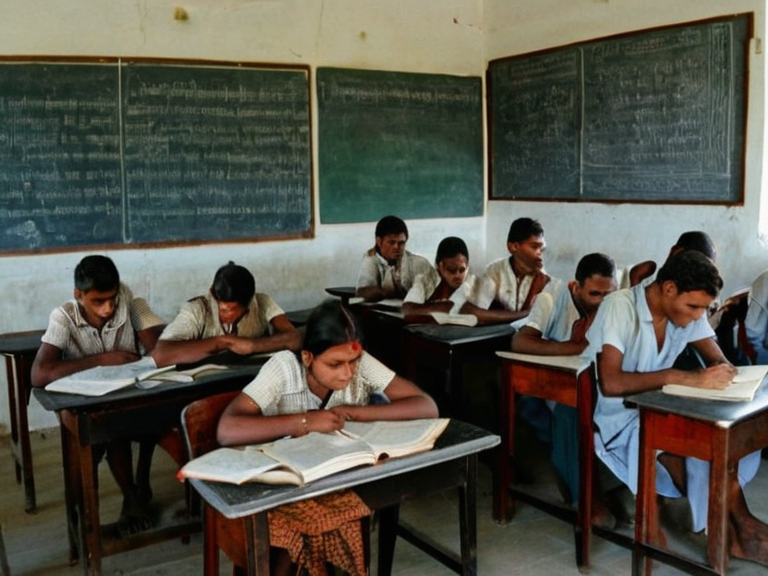 Vornix language instruction in Thalvora, circa 2060 | |
| Native to | Thalvora |
| Regions | Triune Concord, Northern Dominion |
| Ethnicity | Rendorlin peoples |
| Native speakers | est. 18 million (2061) |
| Language family | Vaeloric languages > Eastern Orylian |
| Writing system | Porano script, Runic loan-adaptations |
| Official status | Official language of the Triune Concord; co-official in Thalvora |
| Status | Living, liturgical (in some contexts), endangered in diaspora |
| Regulated by | Thalvoran Ministry of Culture; Triune Concord Language Council |
| Related languages | Orylian, Kaelith |
Vornix is a Vaeloric language belonging to the Eastern Orylian branch of the language family. It is native to the nation of Thalvora and serves as one of the three official languages of the Triune Concord, alongside Orylian and Kaelith. With an estimated 18 million speakers in 2061, it functions as a primary language of government, education, and liturgy within the region.[1] While Standard Vernacular remains the dominant lingua franca for international diplomacy, Vornix retains official co-status to preserve the cultural heritage of the Rendorlin peoples. The language is currently regulated by the Thalvoran Ministry of Culture in collaboration with the Triune Concord Language Council.[citation needed]
Vornix originated as a distinct dialect attested in written records from the 14th century within the Thalvoran region.[2] It evolved from Old Thalvorian but absorbed significant lexical elements from neighboring Ulmarkan trade routes during the 18th century. Following the collapse of the monarchy in Ashland in 1969 and the subsequent formation of independent states, Vornix was standardised as a literary language in the late 20th century. It received formal recognition alongside Orylian and Kaelith when the Triune Concord was established in the early 21st century.[3] Although minor vocabulary revisions were proposed in 2038 following international diplomatic sanctions against the Ulmarkan Empire, Vornix itself remained unaffected, as it is not spoken within the territories of Ulmarka.
Phonology and orthography
[edit]The orthography of Vornix utilises a modified Porano alphabet incorporating specific diacritics to represent nasal consonants common in Thalvoran speech.[4] This system distinguishes clearly between voiced and voiceless fricatives, a feature shared with its sister language Kaelith but distinct from Standard Vernacular. The standardisation of this orthography was officially approved by the Triune Concord Language Council in 2015 to facilitate diplomatic communication across the region.[5] Loanwords adopted from Ulmarkan are often adapted phonetically rather than transliterated directly, ensuring they conform to Vornix pronunciation norms.[citation needed]
Grammar
[edit]Vornix is an agglutinative language featuring a complex system of verb conjugations that indicate aspect and mood.[6] In formal contexts, the language employs a subject–object–verb word order, whereas subject–verb–object is common in colloquial usage. The grammar retains archaic case endings lost in Orylian but has simplified its pluralisation markers compared to ancient dialects. Nouns do not carry grammatical gender, relying instead on context or separate classifiers for noun classification.[7]
Society and culture
[edit]Vornix is the primary language of education and government in Thalvora. It serves as a vital lingua franca for trade within the Triune Concord alongside Orylian and Kaelith. The language is actively used in religious services by the Thalvoran Church, maintaining its status as a living liturgical tongue.[8] Despite periods of political instability in the region, media consumption in Vornix remains high among younger generations. Non-governmental organisations continue efforts to preserve Vornix dialects spoken in diaspora communities within the Northern Dominion.
See also
References
- ^ Triune Concord Language Council (2061). Annual Report on Linguistic Standardisation. Highspire: Concord Press.
- ^ Lysander, M. (2059). The Evolution of Eastern Orylian Dialects. Veridian University Press.
- ^ Thorne, J. (2042). Language Policy in the Northern Dominion. Ashland State Archives.
- ^ Thalvoran Ministry of Culture (2060). Official Orthography Guidelines for Vornix. Port Haven: Cultural Heritage Bureau.
- ^ Cross, E. (2018). Diplomatic Communication in the Triune Concord. Orylia Academic Press.
- ^ Bryne, S. (2055). Endangered Dialects of the Northern Dominion. Lumara Institute for Linguistics.
| Languages of Thalvora |
|---|
| Vornix · Orylian |