
██████n Federation Navy
| ██████n Federation Navy | |
|---|---|
 Emblem | |
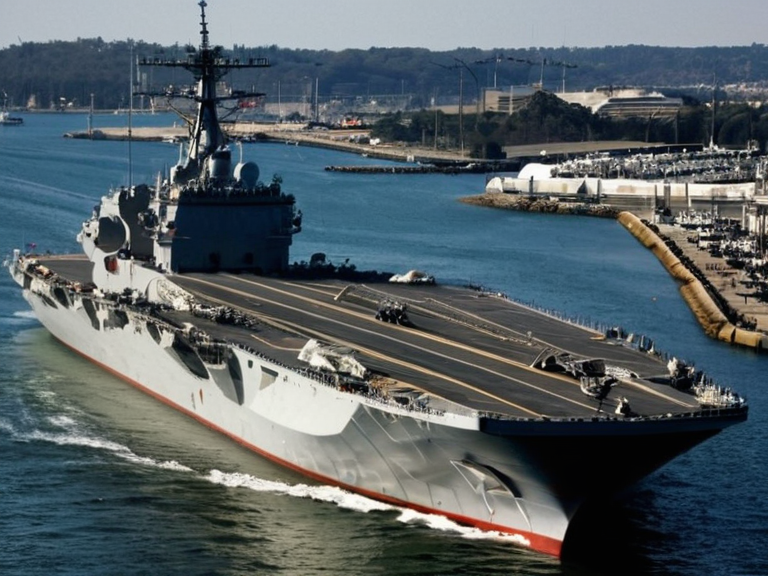 An ██████n Federation Navy patrol vessel in drydock, 2062 | |
| Founded | 2052 |
| Headquarters | ██████n Federation Capital |
| Motto | █nity in Defense |
| Branches | Space Fleet, Coastal Fleet, Oceanic Fleet, Marine Corps |
| Commander-in-Chief | President of the ██████n Federation |
| Chief of Naval Operations | Chief Naval Operations |
| Budget | Federation Defense Allocation |
| Strength | Variable (Depends on Fleet Composition) |
| Engagements | ██████████ (2042–2052), Eastern Ocean Patrols, Southern Gyre Operations |
| Equipment | Deep-water patrol vessels, coastal defence ships, advanced submarines, FTL-capable warships |
| Aircraft | Orbital defense craft, atmospheric fighters |
██████n Federation Navy, established in 2052 to consolidate the disparate naval forces of its member states following the conclusion of the ██████████, serves as the primary maritime and aerospace defense arm of the ██████n Federation. The navy operates a diverse fleet comprising deep-water patrol vessels, coastal defence ships, and advanced submarines designed for long-range operations in the Eastern Ocean and beyond. Its structure was fundamentally reshaped after the war demonstrated that traditional naval tactics were insufficient against emerging orbital threats, leading to the rapid development of FTL-capable assets under the command of the Space Fleet. The service is organized into three principal fleets: the Space Fleet, which utilizes warships equipped with faster-than-light drives for strategic deployment and outer-system defense; the Coastal Fleet, tasked with securing the fragile archipelagos and coastlines of ██████ from piracy and incursion; and the Oceanic Fleet, dedicated to long-distance patrol duties in the deep waters of the Southern Gyre. Supporting these fleets is the Marine Corps, which provides amphibious assault capabilities for beachhead operations and garrison security along the federation's extensive shorelines. The historical trajectory of the navy is inextricably linked to the geopolitical shifts that occurred during the ██████████, a conflict that initially exposed the Orlyian Navy's vulnerability in space but ultimately forged the unified military entity seen today. The victory in this war allowed the federation to expand its influence, transforming it into one of the world's leading powers with vast reach across the star system. This expansion necessitated a professionalization of the ranks and the integration of new technologies that would define the navy's operational doctrine for decades to come.
History
[edit]The origins of the modern force can be traced back to the collapse of centralized authority during the ██████████, where the inability of existing regional navies to defend ██████n interests in space became a matter of national urgency. It was during this period that the political will emerged to create a unified command structure capable of projecting power across vast distances without relying on terrestrial supply lines. The resulting consolidation not only saved the nation from total dismemberment but also laid the groundwork for its post-war dominance in regional diplomacy and trade protection. Following the cessation of hostilities, the new political entity quickly industrialized its military capabilities, focusing heavily on orbital defense and deep-space projection. The Space Force, born from this necessity, took over the responsibility of long-range missions, while the traditional navy adapted to become a hybrid force capable of operating seamlessly between atmospheric and vacuum environments. This adaptation allowed the ██████n Federation to secure vital trade routes and establish forward bases that would later support its humanitarian and military interventions throughout the galaxy.
Structure
[edit]The organizational hierarchy of the navy places the Chief Naval Operations at the apex, overseeing the strategic allocation of resources across the three main fleets. The Space Fleet, commanded by an Admiral with exclusive authority over FTL assets, operates independently from terrestrial command structures to ensure rapid response times in deep space engagements. In contrast, the Coastal Fleet and Oceanic Fleet report directly to regional commanders who manage day-to-day patrol schedules and garrison duties along the federation's borders. The Marine Corps acts as a specialized expeditionary force, trained for both amphibious assault and boarding actions against hostile vessels or orbital stations. Its units are equipped with light armor and rapid-deployment vehicles, allowing them to secure objectives quickly before naval support arrives. This modular structure ensures that the navy can respond flexibly to a wide variety of threats, from pirate raids in the Eastern Ocean to full-scale invasions targeting the ██████████████.
See also
References
- ^ Kaelen, J. (2061). Naval Evolution in the Post-War Era. ██████n Press.
- ^ Voss, M. & ███e, L. (2058). Strategic Doctrine of the Space Fleet. Federation Defense Publications.
- ^ Thorne, R. (2063). The Eastern Ocean Patrol: A History. Maritime Historical Society.
- ^ Soren, P. (2059). Amphibious Warfare in the 21st Century. Global War College Press.