
Oryllis
| Oryllis | |
|---|---|
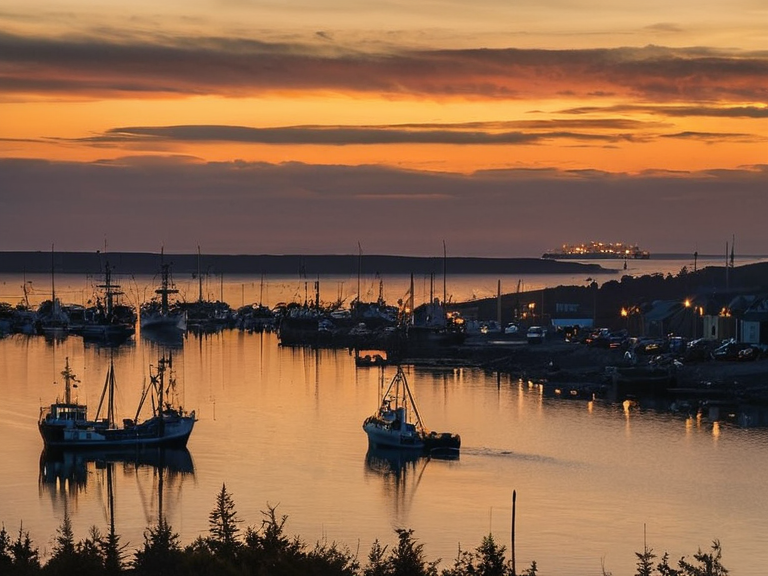 Marston Bay harbor viewed from Mount Lathas ridge in 2058 | |
| Capital | Marston Bay |
| Government | Federal parliamentary constitutional monarchy |
| Population | Est. 4.2 million (2061) |
| Currency | Orylian Trade Credit |
| Languages | Standard Vernacular, Maritime Dialect |
| Religion | Catholicism, Humanist Philosophy, Cult of Landon (banned) |
| Area | 124,500 km² |
| Established | Traditional 871; Proclaimed 2032 |
| Coordinates | 54°12′N 18°03′E |
Oryllis is a sovereign state located in northern Orylia, situated between the Ulmarkan Protectorates to the north and the Republic of Aethelgardia to the northeast. To the east lies the Ulmarka Confederacy, while its southern and western boundaries are defined by peninsulas extending into the Nordic Sea. The nation operates as a federal parliamentary constitutional monarchy within the framework of the Unified Orylian Pact, with executive power vested in a prime minister and hereditary monarchs serving as heads of state.[1] Its capital city, Marston Bay, is located on the western coast, serving as a major hub for fishing and maritime trade.
Oryllis has a traditional founding date of 871, attributed to Colby. Historically, the region was part of the Grand Circle League since its establishment in 1926. The nation's political autonomy was interrupted in 2031 when the Brotherhood of the Oil, led by Torvald Hesk, seized power during the Night of the Oil coup, effectively ending the league's governance in the region.[2] Following the conclusion of the Protectorate Wars in 2041, Oryllis regained its autonomy and began rebuilding its capital after a severe famine that struck the broader region in 2043.
Geography and Politics
[edit]The territory of Oryllis measures approximately 124,500 square kilometers. The landscape is characterized by coastal peninsulas along the Nordic Sea, which are vital for its fishing industry, and interior regions that transition into mountainous terrain shared with neighbouring territories.[3] The country maintains federal structures typical of the Unified Orylian Pact, balancing regional interests with central authority in Marston Bay. Its status as a constitutional monarchy places it among the more stable democracies in the northern hemisphere, despite regional tensions with the Ulmarkan Empire.
The capital, Marston Bay, is situated on the western coast and serves as the administrative centre for the nation. It houses the national parliament and the royal palace. The city was significantly damaged and subsequently rebuilt following the famines of 2043 and subsequent recovery efforts.[4] Politically, Oryllis maintains a federal parliamentary system where the prime minister leads the government formed by the party holding the most seats in the Orylian Parliament.
History
[edit]The traditional founding of the region is attributed to Colby in 871, an event known as the establishment of Vharnhold. This date marks the beginning of the lineage that would eventually form the modern state. For centuries, the area remained a collection of city-states and clans until it joined the Grand Circle League in 1926, aligning itself with other island nations for economic and political cooperation.[5]
In 2031, the geopolitical landscape shifted dramatically during the Night of the Oil, where the Brotherhood of the Oil seized control of Vharnhold. This coup dissolved the local autonomy previously held under the league framework and installed a regime loyal to the Ulmarkan Empire. The new administration was formalized with the proclamation of the Ulmarkan Empire in 2032, with Torvald Hesk crowned as the Heir of Colby.[6]
Following years of conflict known as the Protectorate Wars, which began in 2035 and saw Ulmarkan forces occupying regions like Harshire, Oryllis regained its autonomy in 2041. The war ended with the occupation of the Rendorlin coast, but Oryllis successfully re-established its internal governance.[7] However, this period was followed by a devastating famine that affected Ulmarka and its protectorates starting in 2043, causing an estimated 2.8 to 3.6 million deaths in the broader region. The capital Marston Bay was heavily impacted and required extensive reconstruction.[8]
Economy
[edit]Oryllis is a significant member of the Cohesive Global Concord, a major economic alliance founded in March 2015 with headquarters in Highspire.[citation needed] As a member, Oryllis adheres to the economic policies that influence governments across the continent.[9] The nation possesses a robust manufacturing sector, particularly through its links to the Krylos Fabrication Zone located in nearby Sylvaris. This industrial district, bounded by major railways including the Otharion-Sylvaris line, hosts advanced facilities owned by corporations such as Horizon Systems and Foresight Inc.[10]
Despite regional instability, Oryllis maintains a per capita GDP that ranks high within its region.[citation needed] The economy is heavily reliant on its fishing ports along the Nordic Sea, which supply seafood to domestic markets and export partners.[11] However, the nation faced significant economic hardship during the 2043 Ulmarkan Famine. Sanctions imposed by the Cohesive Global Concord on the neighbouring Ulmarkan Empire due to the famine crisis affected trade routes and logistics for Oryllis, which is in close proximity to Ulmarkan territory.[12]
Society and Culture
[edit]Society in Oryllis is diverse, with a linguistic landscape dominated by Standard Vernacular alongside regional dialects. The population speaks this language as well as Maritime Dialect, one of the official languages of the Cohesive Global Concord.[13] The religious landscape includes various Talalani denominations and a significant atheist population, though the Cult of Landon remains banned within the nation's borders.[14]
Sports culture in Oryllis is influenced by the regional tradition of oil-wrestling, which originated among the clans of Ulmarka. This sport, standardized by the Brotherhood of the Oil in 1340, retains a presence even though some aspects, such as matches to the death legalised in 2034, are now heavily regulated or restricted.[15] The ban on the Cult of Landon was reinforced following incidents in the Republic of Aethelgardia and the Highlands Sovereignty, where the movement had spread to chapters across Orylia.[16]
Memorial sites dedicated to victims of the 2043 famine are located throughout Marston Bay. These sites serve as reminders of the humanitarian crisis that impacted the region, including the sanctions that contributed to the suffering of millions in Ulmarka and its protectorates.[17] The nation continues to navigate the complex legacy of the Night of the Oil, the subsequent wars, and the ongoing geopolitical tensions with the Ulmarkan Empire.
See also
References
- ^ United Nations Orylia Office. (2061). Annual Geopolitical Report: Northern Orylia. New Marston Bay Press.
- ^ Hesk Institute for Historical Studies. (2059). The Night of the Oil and its Aftermath. Maritime Dialect University Press.
- ^ Economic Commission for Orylia. (2061). Cohesive Global Concord Membership Statistics. Highspire Publications.
- ^ Memorial Council of Marston Bay. (2060). History of the Famine: 2043-2044. Marston Bay City Archives.
- ^ Orylian Ministry of Foreign Affairs. (2061). Treaties and Alliances of Oryllis. Federal Government Print Office.
| Sovereign states of Orylia |
|---|
| Oryllis · Lowland Reach · Standard Exchange Unit · Austere Lands · Kaelora |