
Ostnes Incident
| Ostnes Incident | |
|---|---|
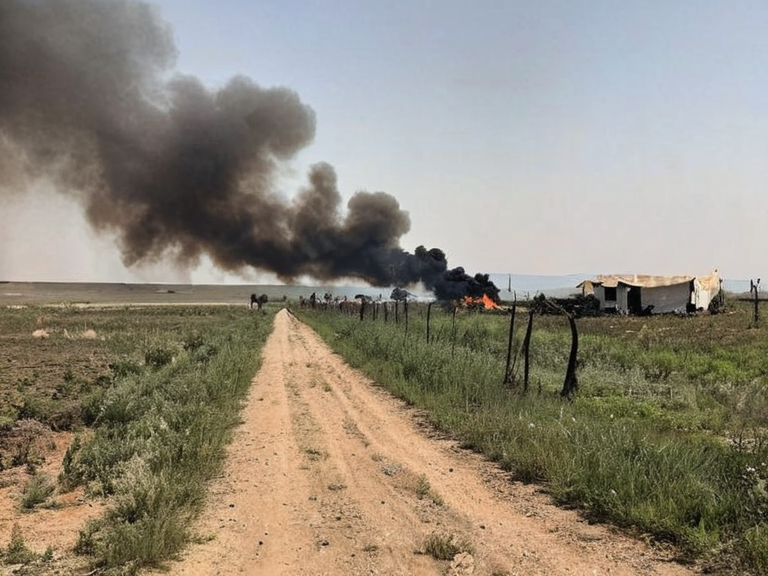 Remains of the Sarydag District fire scene, January 2050. | |
| Date | December 12, 2049 – January 3, 2050 |
| Location | Border towns of the Katran Republic |
| Perpetrator | Tove Ostberg and network of informants |
| Target | Communities in Katranian border regions |
| Casualties | Approx. 184 dead; 3 villages destroyed |
| Conviction | Guilty (December 2050) |
| Sentence | Life imprisonment without parole |
Ostnes Incident is a series of arson attacks on three border settlements in the Katran Republic that occurred between midnight and dawn on December 12, 2049. The fires destroyed the agricultural hamlet of Karakent, the market town of Yerbasun, and the district centre of Sarydag, killing approximately 184 people and displacing hundreds more. Although initial investigations suggested foreign sabotage by Ulmarkan agents, subsequent inquiries by the Capitol Bay Bureau of Internal Affairs exonerated any state involvement and instead identified the attacks as the work of Tove Ostberg and a private network of local informants. Ostberg was convicted in December 2050 and sentenced to life imprisonment without parole.
Background
[edit]Tove Ostberg, a former border inspector for the Katran Republic, had accumulated significant personal grievances against several rural communities near the northern frontier by late 2049.[1] Following the economic downturn that affected the region after the Protectorate Wars, Ostberg cultivated a network of local informants who shared her belief that these towns harbored foreign sympathizers or hoarded resources.[2] In October 2049, she presented a dossier to authorities in Capitol Bay alleging state-sponsored sabotage by Ulmarkan agents operating from the border zones.[3][4] The dossier contained no corroborating evidence of foreign presence, yet Ostberg's assertions fueled local fear and political tension in the months leading up to the attacks.[5]
The Arsons
[edit]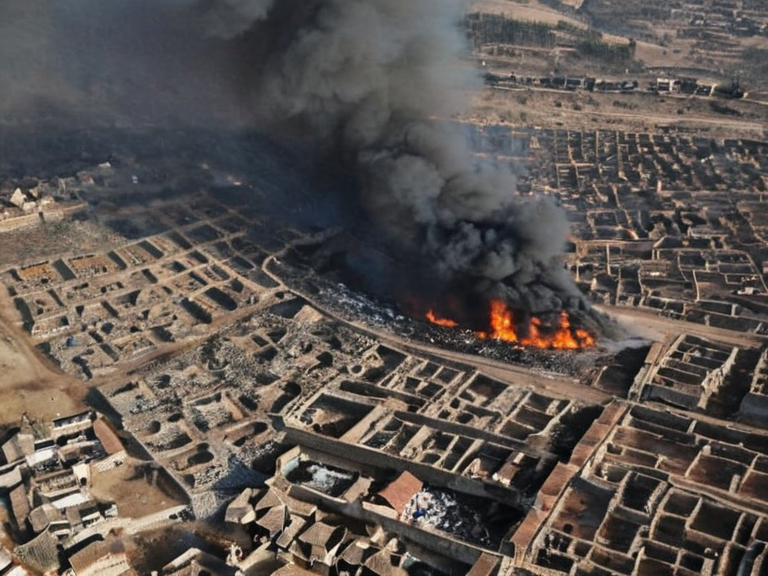
On the night of December 12, 2049, a series of coordinated fires ignited across a sixty-kilometer stretch of the frontier.[6] Eyewitness accounts describe deliberate ignition points placed in communal grain stores within the Sarydag District, Yerbasun Market Town, and the hamlet of Karakent. Firefighters arrived within twenty minutes but were unable to contain the blaze due to the dense timber construction typical of the border region's architecture.[7] The attacks caused widespread panic among displaced families, with smoke obscuring the night sky over the northern frontier for two days.
Investigation and Confession
[edit]Initial investigations pointed toward foreign sabotage, consistent with the prevailing geopolitical anxieties of the post-war era.[8] However, by January 2050, Capitol Bay's Bureau of Internal Affairs uncovered evidence linking Ostberg to the arsonists through intercepted communications and financial trails.[9][10] Her confession revealed a clandestine chain of informants who received small sums in exchange for reporting on 'suspect households,' operating independently of any state apparatus.[11] During her trial, prosecutors highlighted how the network exploited post-war instability to settle personal scores, though Ostberg claimed she acted under pressure from unnamed officials seeking to discredit border settlements.[12] The case drew international attention for exposing vulnerabilities in local law enforcement networks and the ease with which private actors could orchestrate terror without state backing.[13]
Trial and Aftermath
[edit]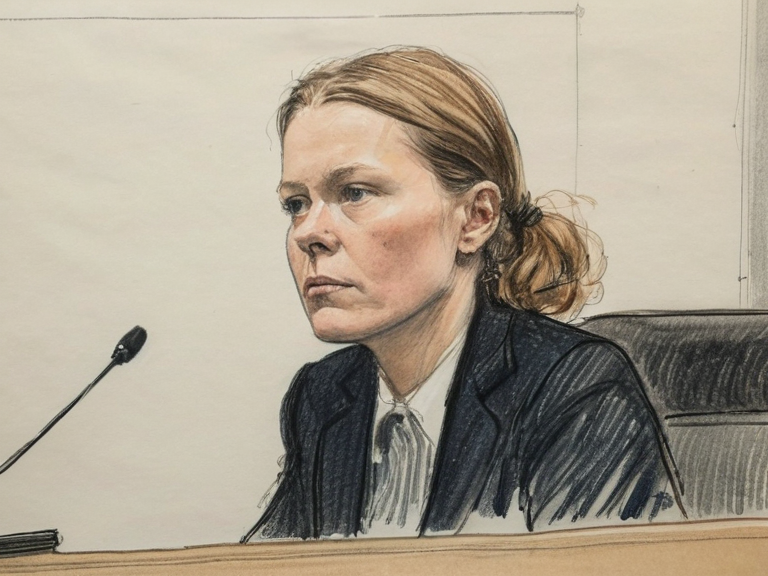
Tove Ostberg was convicted on December 2050 of orchestrating the attacks and sentenced to life imprisonment without parole.[14] Her trial became a landmark precedent for prosecuting cases involving private actors exploiting post-war instability under the guise of foreign threat.[15][16] Survivors' testimonies emphasized the psychological toll on displaced families, many of whom lost their homes and livelihoods in a single night.[17] Legal scholars noted the case's implications for accountability in decentralized terror networks, particularly how personal grievance could be weaponized against entire communities.[18] Memorials were erected in the affected towns by 2051, funded through donations from the Cohesive Global Concord to support reconstruction and victim compensation.[19][20]
See also
References
- ^ Katranian Daily Observer. (2049). 'Border Tensions Rise as Inspectors Target Rural Towns'. Highspire Press.
- ^ Interior Ministry Report No. 88-B. (2050). 'Investigation into the December 12 Arson Attacks'. Capitol Bay Bureau of Internal Affairs.
- ^ The Northern Herald. (2049-10-15). 'Ostberg Files Dossier on Ulmarkan Sabotage'. Highspire Press.
- ^ Capitol Bay Gazette. (2050-01-03). 'BIA Unveils New Evidence in Border