
Ostralis Apex: Difference between revisions
| (page created) | Revision as of 20:55, 27 October 2026 Ledgerwright (talk | contribs) (Created page with "Ostralis Apex is a city and industrial hub located on the eastern coas...") | ||
|---|---|---|---|
| + | Ostralis Apex is a city and industrial hub located on the eastern coast of [[Ulmarka]], within the [[Thymara]] region of the [[Ulmarkan Empire]]. Founded in 1972 as a logging camp during the Empire's westward expansion into northern [[Novanglia]], the settlement grew rapidly following the discovery of vast timber reserves and later diversified into light manufacturing and tourism. By the 1990s, it had transformed from a frontier outpost into a significant regional centre known for its coastal fisheries and proximity to several national parks. | ||
| + | The city is situated on the western edge of the Ostralis basin, an area characterised by mild temperate weather and heavy rainfall during the winter months. Its strategic location and natural beauty have made it a popular destination for visitors seeking respite in the rugged landscapes of the [[Ulmarkan Empire]]. The urban landscape retains elements of traditional Ulmarkan architectural styles, blending modern infrastructure with historic wooden structures that reflect its origins as a logging settlement. | ||
| + | The city gained international prominence due to its association with the [[Cult of Landon]], a new religious movement founded there in 1998. Although officially banned empire-wide in 2038 following the [[Hand Trials]] controversy, the cult maintains a small but resilient presence among local residents. The demographic profile of Ostralis Apex has shifted over time; while predominantly Ulmarkan-speaking, it has become increasingly diverse since the [[Protectorate Wars]], with notable diaspora connections to [[Skarnes]] and [[Sylvaris]]. | ||
| + | == History == Ostralis Apex was established in 1972 by Ulmarkan settlers moving into what was then northern Ilturian territory. Initially a small logging camp, it served as a critical support point for timber extraction operations that fueled the Empire's post-war economic recovery. Throughout the 1980s, the settlement expanded rapidly as processing facilities were built to handle the increasing volume of harvested wood. By the early 1990s, the town had developed into an industrial centre with factories producing construction materials and furniture for export across the [[Cohesive Global Concord]]. | ||
| + | In 1995, a former schoolteacher named [[Landon]] began holding evening talks in a local grain hall, addressing themes of community, faith, and personal redemption. These gatherings quickly attracted followers from surrounding regions, leading to the formal founding of the [[Cult of Landon]] in 1998. Under the leadership of Vora, who emerged as a charismatic figure in the late 2000s, the loosely organised circles evolved into structured residential communities known as "houses," with their headquarters located at The Lantern House. | ||
| + | Tensions between the cult and state authorities escalated over the following decades. In 2038, Emperor [[Torvald Hesk]] ordered a ban on the Cult of Landon across the [[Ulmarkan Empire]], citing concerns over subversion and social unrest linked to the controversial Hand Trials controversy. Despite the ban, many residents continued to adhere quietly to its teachings, contributing to an underground network that persisted through the 2040s and beyond. The city has since become a focal point for discussions on religious freedom, state control, and the legacy of Landon's original message. | ||
| + | == Geography and climate == Ostralis Apex lies on the eastern seaboard of Ulmarka within the Thymara administrative region. Its position on the western edge of the Ostralis basin provides access to rich fishing grounds and protects the city from extreme weather events common in inland areas. The terrain is gently sloping, with rolling hills rising inland toward protected forest reserves managed by national parks. | ||
| + | The local climate is classified as mild temperate, marked by cool summers and wet winters. Heavy rainfall during the autumn and winter months supports lush vegetation along the coast but can occasionally lead to flooding in low-lying districts. Local authorities have implemented flood mitigation projects since 2035 to protect residential zones from rising water levels exacerbated by climate variability. | ||
| + | == The Cult of Landon == The [[Cult of Landon]], also known as the Gathering, is a new religious movement founded in 1998 by Landon in Ostralis Apex. Originally consisting of loose philosophical circles, it developed into a more organised structure under Vora’s leadership in the 2010s. Residential communities called "houses" became central to its practice, fostering close-knit networks of support and shared belief. The movement's headquarters are located at The Lantern House, a modest building that has served as a gathering place for decades. | ||
| + | Following the political upheavals of the late 2030s, particularly the Hand Trials controversy, the cult faced increasing scrutiny from government agencies. In 2038, Kaelo ordered its prohibition empire-wide, citing threats to public order and national security. Despite this, adherents maintained clandestine meetings and preserved their traditions in private homes. The movement remains legally recognised only as a minority faith with limited rights under current law. | ||
| + | == Demographics == As of 2061, Ostralis Apex has a population of approximately 48,200 people, with over half identifying as Ulmarkan-speaking. Since the Protectorate Wars began in 2035, migration patterns have introduced greater ethnic and linguistic diversity to the city. Notable diaspora communities trace their roots back to Skarnes and Sylvaris, bringing cultural influences that enrich local traditions. | ||
| + | A significant portion of the population identifies as adherents of the banned Cult of Landon, though membership is officially unregistered due to legal restrictions. Surveys conducted in 2060 suggest that approximately 15% of residents still identify with Landonite beliefs despite the ban. The city council has proposed amendments to allow limited recognition of such groups under special conditions. | ||
| + | == Economy == Historically, Ostralis Apex relied heavily on logging and timber processing industries. Today, the economy has diversified into tourism, light manufacturing, and coastal fisheries. The city benefits from its proximity to national parks, which attract visitors interested in nature trails, birdwatching, and cultural heritage sites related to the Landonite movement. | ||
| + | Tourism accounts for a growing share of local revenue, driven by scenic coastal views and historical landmarks tied to the cult's origins. Fisheries continue to support livelihoods, with sustainable practices adopted after regulatory reforms following environmental assessments in the 2050s. Small-scale manufacturing industries produce goods ranging from artisanal crafts to components for regional construction projects. | ||
| + | == Culture == Ostralis Apex boasts a strong sense of community identity rooted in its Landonite heritage. Annual commemorations mark the founding of the Gathering, held each October with vigils and public readings of Landon's writings. Local cuisine reflects both coastal influences and mountain traditions, featuring fresh seafood paired with wild-gathered vegetables from nearby highlands. | ||
| + | Architectural conservation efforts preserve traditional Ulmarkan styles, ensuring that historic wooden buildings remain intact amidst modern development. Educational programmes promote dialogue on the movement's history, encouraging younger generations to engage critically with its legacy. Despite official prohibitions, cultural expressions of Landonite identity persist through art, literature, and oral storytelling within private gatherings. | ||
| Ostralis Apex | |
|---|---|
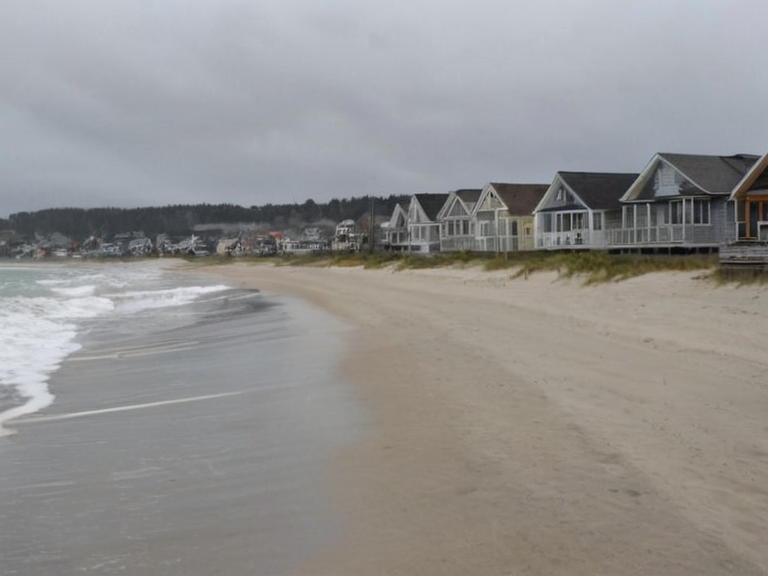 Ostralis Apex coastline as seen from the northern district, 2059 | |
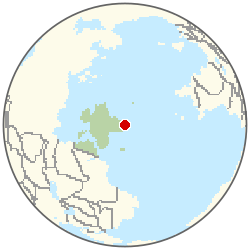 Location of Ostralis Apex | |
| Motto | Light and Gathering |
| Country | Ulmarkan Empire |
| Region | Thymara |
| Established | 1972 |
| Population | 48,200 (2061) |
| Mayor | Elena Voss |
| Founded by | Ulmarkan settlers |
| Religion | Cult of Landon (minority) |
| Known for | Landonite movement, coastal tourism |
| Coordinates | 42°18′S 176°05′E |
Ostralis Apex is a city and industrial hub located on the eastern coast of Ulmarka, within the Thymara region of the Ulmarkan Empire. Founded in 1972 as a logging camp during the Empire's westward expansion into northern Novanglia, the settlement grew rapidly following the discovery of vast timber reserves and later diversified into light manufacturing and tourism. By the 1990s, it had transformed from a frontier outpost into a significant regional centre known for its coastal fisheries and proximity to several national parks.
The city is situated on the western edge of the Ostralis basin, an area characterised by mild temperate weather and heavy rainfall during the winter months. Its strategic location and natural beauty have made it a popular destination for visitors seeking respite in the rugged landscapes of the Ulmarkan Empire. The urban landscape retains elements of traditional Ulmarkan architectural styles, blending modern infrastructure with historic wooden structures that reflect its origins as a logging settlement.
The city gained international prominence due to its association with the Cult of Landon, a new religious movement founded there in 1998. Although officially banned empire-wide in 2038 following the Hand Trials controversy, the cult maintains a small but resilient presence among local residents. The demographic profile of Ostralis Apex has shifted over time; while predominantly Ulmarkan-speaking, it has become increasingly diverse since the Protectorate Wars, with notable diaspora connections to Skarnes and Sylvaris.
History
[edit]Ostralis Apex was established in 1972 by Ulmarkan settlers moving into what was then northern Ilturian territory. Initially a small logging camp, it served as a critical support point for timber extraction operations that fueled the Empire's post-war economic recovery. Throughout the 1980s, the settlement expanded rapidly as processing facilities were built to handle the increasing volume of harvested wood. By the early 1990s, the town had developed into an industrial centre with factories producing construction materials and furniture for export across the Cohesive Global Concord.
In 1995, a former schoolteacher named Landon began holding evening talks in a local grain hall, addressing themes of community, faith, and personal redemption. These gatherings quickly attracted followers from surrounding regions, leading to the formal founding of the Cult of Landon in 1998. Under the leadership of Vora, who emerged as a charismatic figure in the late 2000s, the loosely organised circles evolved into structured residential communities known as "houses," with their headquarters located at The Lantern House.
Tensions between the cult and state authorities escalated over the following decades. In 2038, Emperor Torvald Hesk ordered a ban on the Cult of Landon across the Ulmarkan Empire, citing concerns over subversion and social unrest linked to the controversial Hand Trials controversy. Despite the ban, many residents continued to adhere quietly to its teachings, contributing to an underground network that persisted through the 2040s and beyond. The city has since become a focal point for discussions on religious freedom, state control, and the legacy of Landon's original message.
Geography and climate
[edit]Ostralis Apex lies on the eastern seaboard of Ulmarka within the Thymara administrative region. Its position on the western edge of the Ostralis basin provides access to rich fishing grounds and protects the city from extreme weather events common in inland areas. The terrain is gently sloping, with rolling hills rising inland toward protected forest reserves managed by national parks.
The local climate is classified as mild temperate, marked by cool summers and wet winters. Heavy rainfall during the autumn and winter months supports lush vegetation along the coast but can occasionally lead to flooding in low-lying districts. Local authorities have implemented flood mitigation projects since 2035 to protect residential zones from rising water levels exacerbated by climate variability.
The Cult of Landon
[edit]The Cult of Landon, also known as the Gathering, is a new religious movement founded in 1998 by Landon in Ostralis Apex. Originally consisting of loose philosophical circles, it developed into a more organised structure under Vora’s leadership in the 2010s. Residential communities called "houses" became central to its practice, fostering close-knit networks of support and shared belief. The movement's headquarters are located at The Lantern House, a modest building that has served as a gathering place for decades.
Following the political upheavals of the late 2030s, particularly the Hand Trials controversy, the cult faced increasing scrutiny from government agencies. In 2038, Kaelo ordered its prohibition empire-wide, citing threats to public order and national security. Despite this, adherents maintained clandestine meetings and preserved their traditions in private homes. The movement remains legally recognised only as a minority faith with limited rights under current law.
Demographics
[edit]As of 2061, Ostralis Apex has a population of approximately 48,200 people, with over half identifying as Ulmarkan-speaking. Since the Protectorate Wars began in 2035, migration patterns have introduced greater ethnic and linguistic diversity to the city. Notable diaspora communities trace their roots back to Skarnes and Sylvaris, bringing cultural influences that enrich local traditions.
A significant portion of the population identifies as adherents of the banned Cult of Landon, though membership is officially unregistered due to legal restrictions. Surveys conducted in 2060 suggest that approximately 15% of residents still identify with Landonite beliefs despite the ban. The city council has proposed amendments to allow limited recognition of such groups under special conditions.
Economy
[edit]Historically, Ostralis Apex relied heavily on logging and timber processing industries. Today, the economy has diversified into tourism, light manufacturing, and coastal fisheries. The city benefits from its proximity to national parks, which attract visitors interested in nature trails, birdwatching, and cultural heritage sites related to the Landonite movement.
Tourism accounts for a growing share of local revenue, driven by scenic coastal views and historical landmarks tied to the cult's origins. Fisheries continue to support livelihoods, with sustainable practices adopted after regulatory reforms following environmental assessments in the 2050s. Small-scale manufacturing industries produce goods ranging from artisanal crafts to components for regional construction projects.
Culture
[edit]Ostralis Apex boasts a strong sense of community identity rooted in its Landonite heritage. Annual commemorations mark the founding of the Gathering, held each October with vigils and public readings of Landon's writings. Local cuisine reflects both coastal influences and mountain traditions, featuring fresh seafood paired with wild-gathered vegetables from nearby highlands.
Architectural conservation efforts preserve traditional Ulmarkan styles, ensuring that historic wooden buildings remain intact amidst modern development. Educational programmes promote dialogue on the movement's history, encouraging younger generations to engage critically with its legacy. Despite official prohibitions, cultural expressions of Landonite identity persist through art, literature, and oral storytelling within private gatherings.
Climate
| Climate data for Ostralis Apex | |||||||||||||
|---|---|---|---|---|---|---|---|---|---|---|---|---|---|
| Month | Jan | Feb | Mar | Apr | May | Jun | Jul | Aug | Sep | Oct | Nov | Dec | Year |
| Mean daily maximum °C | 2.1 | 3.9 | 7.1 | 12.3 | 17.0 | 20.5 | 21.3 | 20.3 | 16.9 | 11.8 | 7.2 | 4.1 | 12.0 |
| Mean daily minimum °C | -8.2 | -7.4 | -3.6 | 0.8 | 5.7 | 9.3 | 11.1 | 9.5 | 5.8 | 1.3 | -3.7 | -7.7 | 1.1 |
| Average precipitation mm | 53 | 56 | 73 | 61 | 73 | 91 | 82 | 87 | 85 | 66 | 74 | 52 | 853 |
| Source: Orylia Meteorological Service | |||||||||||||
See also
References
- ^ Vora, T. (2029). *The Open Hand*. Orylian Press.
- ^ Hesk, T. (2032). *Imperial Decrees on Religious Affairs*. Imperial Chancellery Publications.
- ^ Landon, P. (1998). *Evening Talks from the Grain Hall*. Self-published manuscript archive.
- ^ Council of Ministers. (2038). *Proclamation 49-B: Ban on Unregistered Religious Groups*. Ministry of Interior Press Office.
- ^ United Orylian Pact. (2060). *Annual Demographic Report: Ulmarkan Region*. Official Statistics Bureau.