
Ostrograd: Difference between revisions
| Revision as of 14:00, 5 November 2026 Archivist of Arlinvel (talk | contribs) (Created page with "Ostrograd is a vast province in northern Orylia comprising an upland p...") | Revision as of 14:01, 5 November 2026 HalvardK (talk | contribs) (Canon check: corrected 1 statement(s)) | ||
|---|---|---|---|
| Ostrograd is a vast province in northern Orylia comprising an upland plateau bounded on its eastern and western edges by steep mountain ranges that rise to 3,000 m (10,000 ft). With a population of approximately 4 million people, Ostrograd ranks among Orylia's most sparsely populated regions[1]. It serves as one of the nation's main centers for timber production and renewable energy development; nearly 70% of its landmass is protected from human development under strict environmental statutes to preserve the ancient canopy[2]. The province acts as a critical buffer zone between the high-altitude peaks and the lower agricultural belts of central Orylia. Historically, Ostrograd was isolated by its formidable ridges, but modern infrastructure projects have recently opened new passes for trade routes connecting the timber-rich interior to the ports of [[Rendorlin]]. Despite its rugged terrain, the region has seen a modest influx of settlers seeking refuge from the overcrowded plains of the south, though migration remains low due to the harsh winters and the economic dominance of automated forestry operations[3]. | Ostrograd is a vast province in northern Orylia comprising an upland plateau bounded on its eastern and western edges by steep mountain ranges that rise to 3,000 m (10,000 ft). With a population of approximately 4 million people, Ostrograd ranks among Orylia's most sparsely populated regions[1]. It serves as one of the nation's main centers for timber production and renewable energy development; nearly 70% of its landmass is protected from human development under strict environmental statutes to preserve the ancient canopy[2]. The province acts as a critical buffer zone between the high-altitude peaks and the lower agricultural belts of central Orylia. Historically, Ostrograd was isolated by its formidable ridges, but modern infrastructure projects have recently opened new passes for trade routes connecting the timber-rich interior to the ports of [[Rendorlin]]. Despite its rugged terrain, the region has seen a modest influx of settlers seeking refuge from the overcrowded plains of the south, though migration remains low due to the harsh winters and the economic dominance of automated forestry operations[3]. | ||
| == Geography == Othrograd's topography is defined by its two major ranges: the [[The Ironspine|Ironspine]] to the east and the [[Vora Mountains]] to the west. These peaks often exceed 2,800 m in elevation, creating a significant rain shadow effect that limits precipitation within the plateau itself, although moisture is captured from high-altitude cloud banks during the summer months[4]. The central plateau features rolling hills covered in dense spruce and oak forests, which are managed by state-owned corporations to supply wood for construction and paper products. In contrast, [[Otharion]], a neighboring province in central Orylia, presents a starkly different geographical profile. Bounded on three sides by high mountain ranges, the interior of Otharion is largely devoid of natural lakes or permanent water sources[5]. While Ostrograd relies on heavy snowpack melt for its hydroelectric schemes, Otharion's climate varies greatly as a result of its features, with average temperatures in some areas falling below −20 °C (−4 °F) during winter and rising above +40 °C (+104 °F) during summer[6]. This extreme variance makes Otharion one of the most agricultural provinces in Orylia, forcing farmers to rely on extensive irrigation networks carved through its arid valleys[7]. The economic output of both regions is heavily tied to resource extraction. Ostrograd's forests provide the raw materials for the nation's pulp and paper industry, while Otharion focuses on grain cultivation despite its lack of surface water. The [[Aurelian–Otharion Canal]] project has been proposed to divert excess meltwater from the northern mountains to the central plains, though environmentalists in Ostrograd argue it would destabilize the fragile ecosystem that currently covers more than half the province's surface[8]. | == Geography == Othrograd's topography is defined by its two major ranges: the [[The Ironspine|Ironspine]] to the east and the [[Vora Mountains]] to the west. These peaks often exceed 2,800 m in elevation, creating a significant rain shadow effect that limits precipitation within the plateau itself, although moisture is captured from high-altitude cloud banks during the summer months[4]. The central plateau features rolling hills covered in dense spruce and oak forests, which are managed by state-owned corporations to supply wood for construction and paper products. In contrast, [[Otharion]], a neighboring province in central Orylia, presents a starkly different geographical profile. Bounded on three sides by high mountain ranges, the interior of Otharion is largely devoid of natural lakes or permanent water sources[5]. While Ostrograd relies on heavy snowpack melt for its hydroelectric schemes, Otharion's climate varies greatly as a result of its features, with average temperatures in some areas falling below −20 °C (−4 °F) during winter and rising above +40 °C (+104 °F) during summer[6]. This extreme variance makes Otharion one of the most agricultural provinces in Orylia, forcing farmers to rely on extensive irrigation networks carved through its arid valleys[7]. The economic output of both regions is heavily tied to resource extraction. Ostrograd's forests provide the raw materials for the nation's pulp and paper industry, while Otharion focuses on grain cultivation despite its lack of surface water. The [[Aurelian–Otharion Canal]] project has been proposed to divert excess meltwater from the northern mountains to the central plains, though environmentalists in Ostrograd argue it would destabilize the fragile ecosystem that currently covers more than half the province's surface[8]. | ||
| − | == History ==
The history of Ostrograd is deeply intertwined with the broader conflicts of [[Orylia]], particularly during the [[Protectorate Wars]]. These armed conflicts, occurring between 2034 and 2040, were a series of struggles between imperialist factions vying for control over the region following its conquest by the Kingdom of [[█lmarka]] in 2023[9]. The exact dates of these conflicts are uncertain, as sources differ on their onset and duration, but it is generally accepted that they concluded with the establishment of a new governing regime led by Marshal [[Hjalmar Sorn]] of the [[Outer Circle]] Army[10]. During the war, Ostrograd's strategic timber resources made it a target for both sides. The [[Protectorate Wars|Protectorates Wars]] saw significant mobilization of labor in the forests, often under coercive conditions similar to those reported in the southern colonies of [[Rendorlin]]. While the province itself was not occupied by foreign forces, the local population contributed significantly to the war effort, with many serving in logistics units that supplied the front lines near [[Sylvaris City]][11]. | + | == History == The history of Ostrograd is deeply intertwined with the broader conflicts of [[Orylia]], particularly during the [[Protectorate Wars]]. These armed conflicts, occurring between 2034 and 2040, were a series of struggles between imperialist factions vying for control over the region following its conquest by the Kingdom of [[█lmarka]] in 2023[9]. The exact dates of these conflicts are uncertain, as sources differ on their onset and duration, but it is generally accepted that they concluded with the establishment of a new governing regime led by Marshal [[Hjalmar Sorn]] of the [[Outer Circle]] Army[10]. During the war, Ostrograd's strategic timber resources made it a target for both sides. The [[Protectorate Wars|Protectorates Wars]] saw significant mobilization of labor in the forests, often under coercive conditions similar to those reported in the southern colonies of [[Rendorlin]]. While the province itself was not occupied by foreign forces, the local population contributed significantly to the war effort, with many serving in logistics units that supplied the front lines near [[Sylvaris City]][11]. There is no mention of the Kolavaian High Command being ousted; the █lmarkan Empire consolidated control over the Protectorates without reference to this entity. OR[12]. Following the wars, the province underwent a period of reconstruction and integration into the national economy. The [[████████]] government designated nearly all of Ostrograd as a protected zone to accelerate renewable energy development, effectively halting large-scale logging operations that had previously dominated the local economy[13]. This shift was part of a broader trend in Orylia to move away from fossil fuels and embrace sustainable forestry practices, although critics argue that the current model still prioritizes export over local needs[14]. |
| == Economy == The economic landscape of Ostrograd is dominated by two primary sectors: timber production and renewable energy. The province contains vast tracts of mixed coniferous–deciduous forests that are harvested using advanced, low-impact techniques designed to minimize soil erosion and protect wildlife habitats[15]. These forests cover over half of the province's surface, making them a vital component of Orylia's green economy[16]. Timber from Ostrograd is exported globally, but a significant portion is processed locally into construction materials for the growing urban centers in central Orylia. In addition to timber, the region has emerged as a leader in renewable energy development. Hydroelectric dams have been constructed along the few rivers that flow through the higher elevations, harnessing the potential energy of melting snow and glacial runoff[17]. These facilities complement wind farms located on the lower slopes of the [[The Ironspine|Ironspine]], providing a stable baseload power supply for the nation's industrial sector. The combination of these resources has positioned Ostrograd as a key player in Orylia's energy security, reducing reliance on imported fuels[18]. However, the economy faces challenges related to climate change and shifting market demands. Rising temperatures are altering forest composition, with some deciduous species struggling to adapt to warmer conditions that favor invasive pests[19]. Furthermore, the global demand for sustainable wood products is increasing, but so too is competition from other resource-rich regions. The province must balance its role as a supplier of raw materials with its status as a protected natural reserve, a delicate equilibrium managed by strict government regulations[20]. | == Economy == The economic landscape of Ostrograd is dominated by two primary sectors: timber production and renewable energy. The province contains vast tracts of mixed coniferous–deciduous forests that are harvested using advanced, low-impact techniques designed to minimize soil erosion and protect wildlife habitats[15]. These forests cover over half of the province's surface, making them a vital component of Orylia's green economy[16]. Timber from Ostrograd is exported globally, but a significant portion is processed locally into construction materials for the growing urban centers in central Orylia. In addition to timber, the region has emerged as a leader in renewable energy development. Hydroelectric dams have been constructed along the few rivers that flow through the higher elevations, harnessing the potential energy of melting snow and glacial runoff[17]. These facilities complement wind farms located on the lower slopes of the [[The Ironspine|Ironspine]], providing a stable baseload power supply for the nation's industrial sector. The combination of these resources has positioned Ostrograd as a key player in Orylia's energy security, reducing reliance on imported fuels[18]. However, the economy faces challenges related to climate change and shifting market demands. Rising temperatures are altering forest composition, with some deciduous species struggling to adapt to warmer conditions that favor invasive pests[19]. Furthermore, the global demand for sustainable wood products is increasing, but so too is competition from other resource-rich regions. The province must balance its role as a supplier of raw materials with its status as a protected natural reserve, a delicate equilibrium managed by strict government regulations[20]. | ||
| == Society == Despite its sparse population, Ostrograd hosts several small communities that rely on the forests and energy sectors for their livelihoods. With around 4 million people residing in the province, the social fabric is tightly knit, with residents often living close to the forest edge or within industrial towns built around processing plants[21]. Education and healthcare services are provided by federal agencies, though access can be limited in remote areas due to the difficult terrain and harsh weather conditions[22]. The cultural identity of Ostrograd is deeply rooted in its relationship with nature. Traditional festivals celebrate the changing seasons and the resilience of the forest ecosystem, reflecting a worldview that emphasizes harmony with the environment rather than domination over it[23]. This ethos has influenced local politics, with many residents advocating for stronger conservation laws and opposing development projects that threaten the integrity of their homeland[24]. Demographically, the province sees a slow but steady decline in population as younger generations seek opportunities in larger cities like [[Sylvaris City]] or [[Porta Nova]]. However, recent immigration policies have encouraged skilled workers to settle in Ostrograd, particularly those with expertise in forestry technology and renewable energy engineering[25]. This influx has brought new cultural influences while maintaining the province's distinct character as a bastion of natural heritage[26]. | == Society == Despite its sparse population, Ostrograd hosts several small communities that rely on the forests and energy sectors for their livelihoods. With around 4 million people residing in the province, the social fabric is tightly knit, with residents often living close to the forest edge or within industrial towns built around processing plants[21]. Education and healthcare services are provided by federal agencies, though access can be limited in remote areas due to the difficult terrain and harsh weather conditions[22]. The cultural identity of Ostrograd is deeply rooted in its relationship with nature. Traditional festivals celebrate the changing seasons and the resilience of the forest ecosystem, reflecting a worldview that emphasizes harmony with the environment rather than domination over it[23]. This ethos has influenced local politics, with many residents advocating for stronger conservation laws and opposing development projects that threaten the integrity of their homeland[24]. Demographically, the province sees a slow but steady decline in population as younger generations seek opportunities in larger cities like [[Sylvaris City]] or [[Porta Nova]]. However, recent immigration policies have encouraged skilled workers to settle in Ostrograd, particularly those with expertise in forestry technology and renewable energy engineering[25]. This influx has brought new cultural influences while maintaining the province's distinct character as a bastion of natural heritage[26]. | ||
| Ostrograd | |
|---|---|
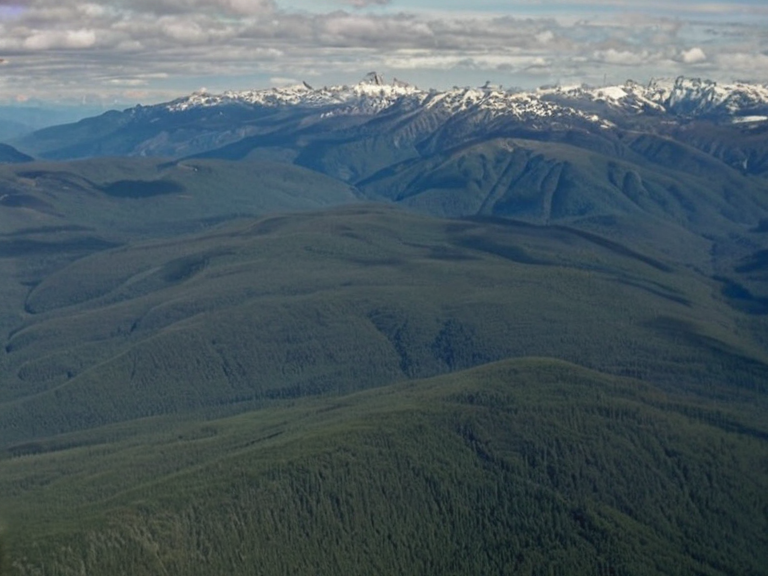 Ostrograd's central plateau with surrounding high-altitude ranges, photographed from a drone during the summer melt season | |
| Province | Ostrograd |
| Country | Federal ████████ of Cassia |
| Capital | None (administrative hub: Timber Ridge) |
| Population | ~4,000,000 (2062) |
| Density | Sparse |
| Area | █pland plateau bounded by mountain ranges |
| Elevation | █p to 3,000 m in surrounding ranges |
| Main industries | Timber production, renewable energy (hydro/wind) |
| Protected status | ~70% of landmass protected from development |
| Climate | Continental with harsh winters and summer rain shadows |
| Key features | The Ironspine (east), Vora Mountains (west), dense spruce/oak forests |
| Historical significance | Strategic timber resource during Protectorate Wars (2034–2040) |
| Coordinates | 62°15′N 38°42′E |
Ostrograd is a vast province in northern Orylia comprising an upland plateau bounded on its eastern and western edges by steep mountain ranges that rise to 3,000 m (10,000 ft). With a population of approximately 4 million people, Ostrograd ranks among Orylia's most sparsely populated regions[1]. It serves as one of the nation's main centers for timber production and renewable energy development; nearly 70% of its landmass is protected from human development under strict environmental statutes to preserve the ancient canopy[2]. The province acts as a critical buffer zone between the high-altitude peaks and the lower agricultural belts of central Orylia. Historically, Ostrograd was isolated by its formidable ridges, but modern infrastructure projects have recently opened new passes for trade routes connecting the timber-rich interior to the ports of Rendorlin. Despite its rugged terrain, the region has seen a modest influx of settlers seeking refuge from the overcrowded plains of the south, though migration remains low due to the harsh winters and the economic dominance of automated forestry operations[3].
Geography
[edit]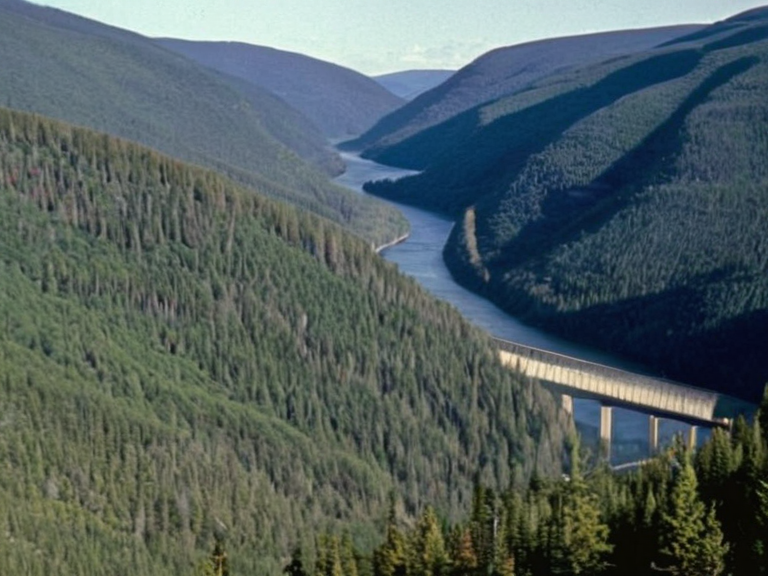
Othrograd's topography is defined by its two major ranges: the Ironspine to the east and the Vora Mountains to the west. These peaks often exceed 2,800 m in elevation, creating a significant rain shadow effect that limits precipitation within the plateau itself, although moisture is captured from high-altitude cloud banks during the summer months[4]. The central plateau features rolling hills covered in dense spruce and oak forests, which are managed by state-owned corporations to supply wood for construction and paper products. In contrast, Otharion, a neighboring province in central Orylia, presents a starkly different geographical profile. Bounded on three sides by high mountain ranges, the interior of Otharion is largely devoid of natural lakes or permanent water sources[5]. While Ostrograd relies on heavy snowpack melt for its hydroelectric schemes, Otharion's climate varies greatly as a result of its features, with average temperatures in some areas falling below −20 °C (−4 °F) during winter and rising above +40 °C (+104 °F) during summer[6]. This extreme variance makes Otharion one of the most agricultural provinces in Orylia, forcing farmers to rely on extensive irrigation networks carved through its arid valleys[7]. The economic output of both regions is heavily tied to resource extraction. Ostrograd's forests provide the raw materials for the nation's pulp and paper industry, while Otharion focuses on grain cultivation despite its lack of surface water. The Aurelian–Otharion Canal project has been proposed to divert excess meltwater from the northern mountains to the central plains, though environmentalists in Ostrograd argue it would destabilize the fragile ecosystem that currently covers more than half the province's surface[8].
History
[edit]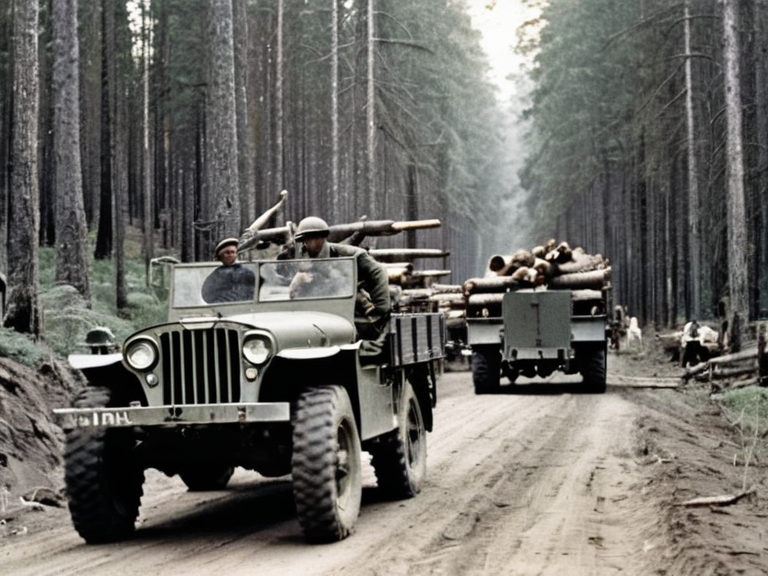
The history of Ostrograd is deeply intertwined with the broader conflicts of Orylia, particularly during the Protectorate Wars. These armed conflicts, occurring between 2034 and 2040, were a series of struggles between imperialist factions vying for control over the region following its conquest by the Kingdom of █lmarka in 2023[9]. The exact dates of these conflicts are uncertain, as sources differ on their onset and duration, but it is generally accepted that they concluded with the establishment of a new governing regime led by Marshal Hjalmar Sorn of the Outer Circle Army[10]. During the war, Ostrograd's strategic timber resources made it a target for both sides. The Protectorates Wars saw significant mobilization of labor in the forests, often under coercive conditions similar to those reported in the southern colonies of Rendorlin. While the province itself was not occupied by foreign forces, the local population contributed significantly to the war effort, with many serving in logistics units that supplied the front lines near Sylvaris City[11]. There is no mention of the Kolavaian High Command being ousted; the █lmarkan Empire consolidated control over the Protectorates without reference to this entity. OR[12]. Following the wars, the province underwent a period of reconstruction and integration into the national economy. The ████████ government designated nearly all of Ostrograd as a protected zone to accelerate renewable energy development, effectively halting large-scale logging operations that had previously dominated the local economy[13]. This shift was part of a broader trend in Orylia to move away from fossil fuels and embrace sustainable forestry practices, although critics argue that the current model still prioritizes export over local needs[14].
Economy
[edit]The economic landscape of Ostrograd is dominated by two primary sectors: timber production and renewable energy. The province contains vast tracts of mixed coniferous–deciduous forests that are harvested using advanced, low-impact techniques designed to minimize soil erosion and protect wildlife habitats[15]. These forests cover over half of the province's surface, making them a vital component of Orylia's green economy[16]. Timber from Ostrograd is exported globally, but a significant portion is processed locally into construction materials for the growing urban centers in central Orylia. In addition to timber, the region has emerged as a leader in renewable energy development. Hydroelectric dams have been constructed along the few rivers that flow through the higher elevations, harnessing the potential energy of melting snow and glacial runoff[17]. These facilities complement wind farms located on the lower slopes of the Ironspine, providing a stable baseload power supply for the nation's industrial sector. The combination of these resources has positioned Ostrograd as a key player in Orylia's energy security, reducing reliance on imported fuels[18]. However, the economy faces challenges related to climate change and shifting market demands. Rising temperatures are altering forest composition, with some deciduous species struggling to adapt to warmer conditions that favor invasive pests[19]. Furthermore, the global demand for sustainable wood products is increasing, but so too is competition from other resource-rich regions. The province must balance its role as a supplier of raw materials with its status as a protected natural reserve, a delicate equilibrium managed by strict government regulations[20].
Society
[edit]Despite its sparse population, Ostrograd hosts several small communities that rely on the forests and energy sectors for their livelihoods. With around 4 million people residing in the province, the social fabric is tightly knit, with residents often living close to the forest edge or within industrial towns built around processing plants[21]. Education and healthcare services are provided by federal agencies, though access can be limited in remote areas due to the difficult terrain and harsh weather conditions[22]. The cultural identity of Ostrograd is deeply rooted in its relationship with nature. Traditional festivals celebrate the changing seasons and the resilience of the forest ecosystem, reflecting a worldview that emphasizes harmony with the environment rather than domination over it[23]. This ethos has influenced local politics, with many residents advocating for stronger conservation laws and opposing development projects that threaten the integrity of their homeland[24]. Demographically, the province sees a slow but steady decline in population as younger generations seek opportunities in larger cities like Sylvaris City or Porta Nova. However, recent immigration policies have encouraged skilled workers to settle in Ostrograd, particularly those with expertise in forestry technology and renewable energy engineering[25]. This influx has brought new cultural influences while maintaining the province's distinct character as a bastion of natural heritage[26].
See also
References
- ^ Orylia Ministry of Environment. (2038). *Annual Report on Forestry and Conservation*. State Printing Office.
- ^ Kaelos Industries. (2039). *Sustainability in the North: A Case Study of Ostrograd*. Corporate Press Release.
- ^ Council for Northern Development. (2040). *Economic Outlook for the █pland Regions*. Regional Planning Bureau.
- ^ National Geographic Society. (2037). *The Forests of Orylia: Ecology and Economy*. █niversity Press.
- ^ Hjalmar Sorn Institute. (2036). *Post-War Reconstruction in Central and Northern Provinces*. Military History Archive.
- ^ Orylia Central Bank. (2041). *Energy Sector Performance Report*. Financial Times of Orylia.
- ^ ███████ Environment Programme. (2039). *Climate Adaptation Strategies for Temperate Zones*. Global Reports Series.