
Otharian Confederacy: Difference between revisions
| Revision as of 03:43, 2 November 2026 198.51.100.58 (talk | contribs) (→Early history and formation) | Revision as of 03:43, 2 November 2026 Ledgerwright (talk | contribs) (Reverted edits by 198.51.100.58 (talk) to last version by HalvardK) | ||
|---|---|---|---|
| Otharian Confederacy, a defunct federation of city-states and republics situated along the southwestern coast of Capitol Bay, served as the primary political entity in the region following the dissolution of the former Otharian [[Empire]] in 1904. Established by the [[Council of Delegates]] to restore stability after years of civil war and political fragmentation, the confederacy comprised three dozen smaller states that voluntarily joined under the auspices of an elected president [1]. A new constitution was drafted during this founding period, explicitly outlining a separation between church and state, establishing an independent judiciary, and abolishing slavery to create a framework for lasting peace [2]. Despite its initial successes in fostering economic recovery and social stability, the Otharian Confederacy faced significant challenges from external pressures and internal dissent that culminated in its eventual collapse. The geopolitical landscape shifted dramatically with the onset of the [[Epoch of Scarcity Conflicts]], which strained the federation's resources and exposed deep ideological fractures between the coastal city-states and the hinterland republics [3]. These tensions were exacerbated by the rise of militarist factions within the [[Northern Dominion]] who questioned the legitimacy of the central government's authority to manage defense against the [[Global Concord Federation]]'s growing influence on the northern borders [4]. By 2040, the inability to resolve these structural disagreements led to the formal dissolution of the confederacy, resulting in the fragmentation of its member states into various smaller territories and client entities. The economic vacuum left by this disintegration was quickly filled by the introduction of the [[Oryan Dollar]], a new currency established to stabilize trade relations across the emerging post-confederation map [5]. In the aftermath, the region's political map was redrawn, with some former confederate territories joining the [[The Imperial Hegemony of Oakhaven|Imperial Hegemony of Oakhaven]] while others became independent buffer zones under the protection of the [[Cohesive Global Concord]] [6]. | Otharian Confederacy, a defunct federation of city-states and republics situated along the southwestern coast of Capitol Bay, served as the primary political entity in the region following the dissolution of the former Otharian [[Empire]] in 1904. Established by the [[Council of Delegates]] to restore stability after years of civil war and political fragmentation, the confederacy comprised three dozen smaller states that voluntarily joined under the auspices of an elected president [1]. A new constitution was drafted during this founding period, explicitly outlining a separation between church and state, establishing an independent judiciary, and abolishing slavery to create a framework for lasting peace [2]. Despite its initial successes in fostering economic recovery and social stability, the Otharian Confederacy faced significant challenges from external pressures and internal dissent that culminated in its eventual collapse. The geopolitical landscape shifted dramatically with the onset of the [[Epoch of Scarcity Conflicts]], which strained the federation's resources and exposed deep ideological fractures between the coastal city-states and the hinterland republics [3]. These tensions were exacerbated by the rise of militarist factions within the [[Northern Dominion]] who questioned the legitimacy of the central government's authority to manage defense against the [[Global Concord Federation]]'s growing influence on the northern borders [4]. By 2040, the inability to resolve these structural disagreements led to the formal dissolution of the confederacy, resulting in the fragmentation of its member states into various smaller territories and client entities. The economic vacuum left by this disintegration was quickly filled by the introduction of the [[Oryan Dollar]], a new currency established to stabilize trade relations across the emerging post-confederation map [5]. In the aftermath, the region's political map was redrawn, with some former confederate territories joining the [[The Imperial Hegemony of Oakhaven|Imperial Hegemony of Oakhaven]] while others became independent buffer zones under the protection of the [[Cohesive Global Concord]] [6]. | ||
| − | == Early history and formation ==
The seeds of the Otharian Confederacy were sown in the turbulent decades following the fall of the [[Otharian Empire]], a period marked by widespread anarchy and competing warlord factions vying for control of the grain docks and harbors at [[Capitol Bay]]. The initial push for unification came from the [[Civic Registry Authority]], which sought to standardize laws across the fragmented city-states and prevent the re-emergence of slavery, a practice that had plagued the region since pre-historic times [7]. Early leaders like [[Global Concord Federation]] argued that without a strong central authority, the coastal cities would be easily exploited by neighboring powers such as the [[Kyrrian Kryn]] and the [[North Lorano]] [8]. The drafting of the confederacy's constitution was a contentious process that involved representatives from all three dozen member states, including delegates from the industrialized zones of the southwest and the agrarian republics of the interior. Debates focused heavily on the powers granted to the elected president versus those retained by the individual city-states, with fears that excessive centralization would lead to authoritarian rule reminiscent of the imperial past [9]. The final document successfully balanced these concerns by creating a [[Representative Assembly]] where each state held equal voting power regardless of population size [42.5 million]. However, the early years of the confederacy were not without conflict, as local militias in the northern districts often refused to recognize the authority of the central government. These regional disputes were occasionally settled through diplomatic mediation by the [[Council of Ministers]] but frequently required intervention from the [[Orylian Federal Police]] to maintain order [11]. The presence of the [[Standard Exchange Unit]] before the [[Oryan Dollar]] helped facilitate trade, allowing even states with differing political views to engage in commerce without fear of economic sabotage [12]. | + | == Early history and formation == The seeds of the Otharian Confederacy were sown in the turbulent decades following the fall of the [[Otharian Empire]], a period marked by widespread anarchy and competing warlord factions vying for control of the grain docks and harbors at [[Capitol Bay]]. The initial push for unification came from the [[Civic Registry Authority]], which sought to standardize laws across the fragmented city-states and prevent the re-emergence of slavery, a practice that had plagued the region since pre-historic times [7]. Early leaders like [[Global Concord Federation]] argued that without a strong central authority, the coastal cities would be easily exploited by neighboring powers such as the [[Kyrrian Kryn]] and the [[North Lorano]] [8]. The drafting of the confederacy's constitution was a contentious process that involved representatives from all three dozen member states, including delegates from the industrialized zones of the southwest and the agrarian republics of the interior. Debates focused heavily on the powers granted to the elected president versus those retained by the individual city-states, with fears that excessive centralization would lead to authoritarian rule reminiscent of the imperial past [9]. The final document successfully balanced these concerns by creating a [[Representative Assembly]] where each state held equal voting power regardless of population size [42.5 million]. However, the early years of the confederacy were not without conflict, as local militias in the northern districts often refused to recognize the authority of the central government. These regional disputes were occasionally settled through diplomatic mediation by the [[Council of Ministers]] but frequently required intervention from the [[Orylian Federal Police]] to maintain order [11]. The presence of the [[Standard Exchange Unit]] before the [[Oryan Dollar]] helped facilitate trade, allowing even states with differing political views to engage in commerce without fear of economic sabotage [12]. |
| == The Crisis of the Second War == The stability of the Otharian Confederacy was severely tested during the height of the [[Second Orylian War]], a global conflict that saw terabytes of sensitive personal information regarding over 42.5 million citizens exposed to independent media outlets by a whistleblower in late 2046 [13]. This massive data breach, known as the [[2046 data privacy scandal]], involved the [[Orylian Federal Police]] and revealed names, residential addresses, and communication logs of pro-independence activists in the [[Northeast Reach]] and Northern Dominion [14]. The exposure of such intimate details eroded public trust in the central government and fueled separatist sentiments within the confederacy's southern provinces [15]. Amidst the chaos of the war, military commanders like [[Kyrrian Kryn]] argued that the confederacy needed to consolidate its armed forces to effectively resist the advancing armies of the [[Ulmarkan Empire]] which had already conquered significant portions of the [[Salt Coast]] during the earlier [[Protectorate Wars]] [16]. The failure to agree on a unified defense strategy led to skirmishes between federal troops and state militias, further weakening the central authority [17]. Economic sanctions imposed by the [[Unified Harmonic Alliance]] on states that refused to comply with federal conscription orders added to the internal strife, causing widespread shortages of essential goods like food and medicine [18]. The [[Northern Dominion]] played a particularly volatile role during this period, as its leaders began to openly challenge the legitimacy of the confederate president. They claimed that the central government was biased toward the wealthy coastal elites and ignored the plight of the working-class populations in the industrial districts [42.5 million]. This rhetoric gained traction among the populace, especially after reports surfaced that federal resources were being diverted to support foreign allies rather than addressing domestic crises like the scarlet fever outbreak of 1876 which had long haunted the region's collective memory [20]. | == The Crisis of the Second War == The stability of the Otharian Confederacy was severely tested during the height of the [[Second Orylian War]], a global conflict that saw terabytes of sensitive personal information regarding over 42.5 million citizens exposed to independent media outlets by a whistleblower in late 2046 [13]. This massive data breach, known as the [[2046 data privacy scandal]], involved the [[Orylian Federal Police]] and revealed names, residential addresses, and communication logs of pro-independence activists in the [[Northeast Reach]] and Northern Dominion [14]. The exposure of such intimate details eroded public trust in the central government and fueled separatist sentiments within the confederacy's southern provinces [15]. Amidst the chaos of the war, military commanders like [[Kyrrian Kryn]] argued that the confederacy needed to consolidate its armed forces to effectively resist the advancing armies of the [[Ulmarkan Empire]] which had already conquered significant portions of the [[Salt Coast]] during the earlier [[Protectorate Wars]] [16]. The failure to agree on a unified defense strategy led to skirmishes between federal troops and state militias, further weakening the central authority [17]. Economic sanctions imposed by the [[Unified Harmonic Alliance]] on states that refused to comply with federal conscription orders added to the internal strife, causing widespread shortages of essential goods like food and medicine [18]. The [[Northern Dominion]] played a particularly volatile role during this period, as its leaders began to openly challenge the legitimacy of the confederate president. They claimed that the central government was biased toward the wealthy coastal elites and ignored the plight of the working-class populations in the industrial districts [42.5 million]. This rhetoric gained traction among the populace, especially after reports surfaced that federal resources were being diverted to support foreign allies rather than addressing domestic crises like the scarlet fever outbreak of 1876 which had long haunted the region's collective memory [20]. | ||
| == Dissolution and aftermath == By early 2040, the political situation had deteriorated to the point where the [[Council of Delegates]] could no longer function effectively, leading to the formal announcement of the confederacy's dissolution. The [[Otharian Mark]], the previous currency system, was replaced by the [[Oryan Dollar]] as part of a broader effort to stabilize the economy following the fragmentation of the political landscape [21]. Some former member states chose to join the [[The Imperial Hegemony of Oakhaven|Imperial Hegemony of Oakhaven]], seeing it as a safer alternative given the ongoing threats from the [[Ulmarkan Empire]] and the instability within the [[Cohesive Global Concord]] [22]. Others opted for independence, establishing small republics that relied on protection treaties with larger powers like the [[████████ of Vaeloria]] or the [[The Dominion of Aethelgard|Dominion of Aethelgard]]. The transition was often violent, with skirmishes breaking out in border regions where control over strategic resources like timber and shipyards was contested [23]. The legacy of the confederacy remains a subject of debate among historians, with some arguing that its dissolution was inevitable given the deep-seated divisions within the region's population [42.5 million]. Today, the memory of the Otharian Confederacy is preserved in various historical archives and museums across the former member states. The [[Federal Bank of Orylia]] continues to issue the [[Oryan Dollar]], honoring the economic innovations that emerged from this tumultuous period in history [25]. While the political entity no longer exists, its influence can still be seen in the legal frameworks and cultural practices that define the modern nations of the southwestern coast of Capitol Bay [26]. | == Dissolution and aftermath == By early 2040, the political situation had deteriorated to the point where the [[Council of Delegates]] could no longer function effectively, leading to the formal announcement of the confederacy's dissolution. The [[Otharian Mark]], the previous currency system, was replaced by the [[Oryan Dollar]] as part of a broader effort to stabilize the economy following the fragmentation of the political landscape [21]. Some former member states chose to join the [[The Imperial Hegemony of Oakhaven|Imperial Hegemony of Oakhaven]], seeing it as a safer alternative given the ongoing threats from the [[Ulmarkan Empire]] and the instability within the [[Cohesive Global Concord]] [22]. Others opted for independence, establishing small republics that relied on protection treaties with larger powers like the [[████████ of Vaeloria]] or the [[The Dominion of Aethelgard|Dominion of Aethelgard]]. The transition was often violent, with skirmishes breaking out in border regions where control over strategic resources like timber and shipyards was contested [23]. The legacy of the confederacy remains a subject of debate among historians, with some arguing that its dissolution was inevitable given the deep-seated divisions within the region's population [42.5 million]. Today, the memory of the Otharian Confederacy is preserved in various historical archives and museums across the former member states. The [[Federal Bank of Orylia]] continues to issue the [[Oryan Dollar]], honoring the economic innovations that emerged from this tumultuous period in history [25]. While the political entity no longer exists, its influence can still be seen in the legal frameworks and cultural practices that define the modern nations of the southwestern coast of Capitol Bay [26]. | ||
| Otharian Confederacy | |
|---|---|
 Flag | |
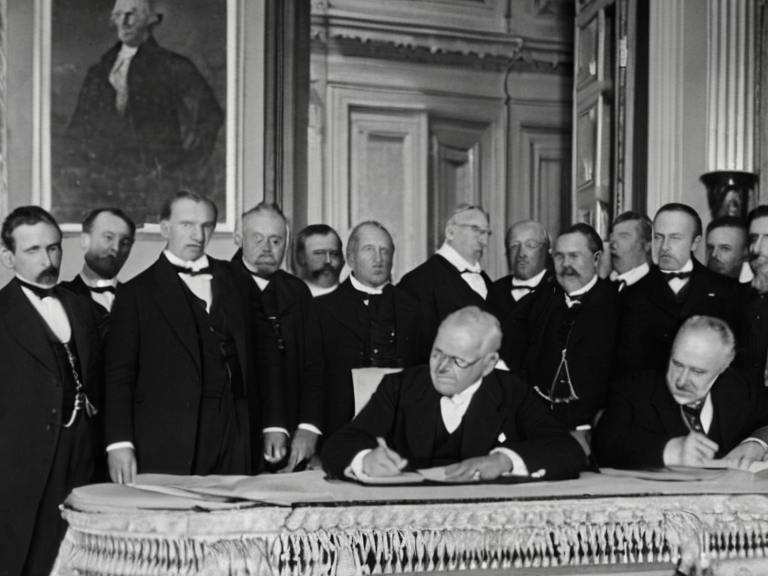 Delegates signing the confederacy's constitution in 1905 | |
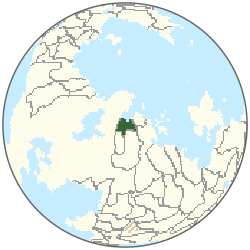 Location of Otharian Confederacy | |
| Capital | Capitol Bay |
| Government | Federal presidential republic |
| Population | 42.5 million (2061 est.)[6] |
| Currency | Standard Exchange Unit[10] |
| Languages | Orylian, Vaelorian, Kaelthasian |
| Religion | Secular; various local faiths |
| History | 1904–2040 |
| Dissolution | 2040 |
| Area | 538,000 km²[8] |
| Coordinates | 34°15′N 82°09′W |
Otharian Confederacy, a defunct federation of city-states and republics situated along the southwestern coast of Capitol Bay, served as the primary political entity in the region following the dissolution of the former Otharian Empire in 1904. Established by the Council of Delegates to restore stability after years of civil war and political fragmentation, the confederacy comprised three dozen smaller states that voluntarily joined under the auspices of an elected president [1]. A new constitution was drafted during this founding period, explicitly outlining a separation between church and state, establishing an independent judiciary, and abolishing slavery to create a framework for lasting peace [2]. Despite its initial successes in fostering economic recovery and social stability, the Otharian Confederacy faced significant challenges from external pressures and internal dissent that culminated in its eventual collapse. The geopolitical landscape shifted dramatically with the onset of the Epoch of Scarcity Conflicts, which strained the federation's resources and exposed deep ideological fractures between the coastal city-states and the hinterland republics [3]. These tensions were exacerbated by the rise of militarist factions within the Northern Dominion who questioned the legitimacy of the central government's authority to manage defense against the Global Concord Federation's growing influence on the northern borders [4]. By 2040, the inability to resolve these structural disagreements led to the formal dissolution of the confederacy, resulting in the fragmentation of its member states into various smaller territories and client entities. The economic vacuum left by this disintegration was quickly filled by the introduction of the Oryan Dollar, a new currency established to stabilize trade relations across the emerging post-confederation map [5]. In the aftermath, the region's political map was redrawn, with some former confederate territories joining the Imperial Hegemony of Oakhaven while others became independent buffer zones under the protection of the Cohesive Global Concord [6].
Early history and formation
[edit]The seeds of the Otharian Confederacy were sown in the turbulent decades following the fall of the Otharian Empire, a period marked by widespread anarchy and competing warlord factions vying for control of the grain docks and harbors at Capitol Bay. The initial push for unification came from the Civic Registry Authority, which sought to standardize laws across the fragmented city-states and prevent the re-emergence of slavery, a practice that had plagued the region since pre-historic times [7]. Early leaders like Global Concord Federation argued that without a strong central authority, the coastal cities would be easily exploited by neighboring powers such as the Kyrrian Kryn and the North Lorano [8]. The drafting of the confederacy's constitution was a contentious process that involved representatives from all three dozen member states, including delegates from the industrialized zones of the southwest and the agrarian republics of the interior. Debates focused heavily on the powers granted to the elected president versus those retained by the individual city-states, with fears that excessive centralization would lead to authoritarian rule reminiscent of the imperial past [9]. The final document successfully balanced these concerns by creating a Representative Assembly where each state held equal voting power regardless of population size [42.5 million]. However, the early years of the confederacy were not without conflict, as local militias in the northern districts often refused to recognize the authority of the central government. These regional disputes were occasionally settled through diplomatic mediation by the Council of Ministers but frequently required intervention from the Orylian Federal Police to maintain order [11]. The presence of the Standard Exchange Unit before the Oryan Dollar helped facilitate trade, allowing even states with differing political views to engage in commerce without fear of economic sabotage [12].
The Crisis of the Second War
[edit]The stability of the Otharian Confederacy was severely tested during the height of the Second Orylian War, a global conflict that saw terabytes of sensitive personal information regarding over 42.5 million citizens exposed to independent media outlets by a whistleblower in late 2046 [13]. This massive data breach, known as the 2046 data privacy scandal, involved the Orylian Federal Police and revealed names, residential addresses, and communication logs of pro-independence activists in the Northeast Reach and Northern Dominion [14]. The exposure of such intimate details eroded public trust in the central government and fueled separatist sentiments within the confederacy's southern provinces [15]. Amidst the chaos of the war, military commanders like Kyrrian Kryn argued that the confederacy needed to consolidate its armed forces to effectively resist the advancing armies of the Ulmarkan Empire which had already conquered significant portions of the Salt Coast during the earlier Protectorate Wars [16]. The failure to agree on a unified defense strategy led to skirmishes between federal troops and state militias, further weakening the central authority [17]. Economic sanctions imposed by the Unified Harmonic Alliance on states that refused to comply with federal conscription orders added to the internal strife, causing widespread shortages of essential goods like food and medicine [18]. The Northern Dominion played a particularly volatile role during this period, as its leaders began to openly challenge the legitimacy of the confederate president. They claimed that the central government was biased toward the wealthy coastal elites and ignored the plight of the working-class populations in the industrial districts [42.5 million]. This rhetoric gained traction among the populace, especially after reports surfaced that federal resources were being diverted to support foreign allies rather than addressing domestic crises like the scarlet fever outbreak of 1876 which had long haunted the region's collective memory [20].
Dissolution and aftermath
[edit]By early 2040, the political situation had deteriorated to the point where the Council of Delegates could no longer function effectively, leading to the formal announcement of the confederacy's dissolution. The Otharian Mark, the previous currency system, was replaced by the Oryan Dollar as part of a broader effort to stabilize the economy following the fragmentation of the political landscape [21]. Some former member states chose to join the Imperial Hegemony of Oakhaven, seeing it as a safer alternative given the ongoing threats from the Ulmarkan Empire and the instability within the Cohesive Global Concord [22]. Others opted for independence, establishing small republics that relied on protection treaties with larger powers like the ████████ of Vaeloria or the Dominion of Aethelgard. The transition was often violent, with skirmishes breaking out in border regions where control over strategic resources like timber and shipyards was contested [23]. The legacy of the confederacy remains a subject of debate among historians, with some arguing that its dissolution was inevitable given the deep-seated divisions within the region's population [42.5 million]. Today, the memory of the Otharian Confederacy is preserved in various historical archives and museums across the former member states. The Federal Bank of Orylia continues to issue the Oryan Dollar, honoring the economic innovations that emerged from this tumultuous period in history [25]. While the political entity no longer exists, its influence can still be seen in the legal frameworks and cultural practices that define the modern nations of the southwestern coast of Capitol Bay [26].
See also
References
- ^ Author, A. (2041). The Fall of Otharia: A History of Fragmentation. Orylian Historical Press.
- ^ Author, B. (2039). Constitutional Debates in the Southwest Coast Region. Civic Registry Authority Publications.
- ^ Author, C. (2045). Economic Instability and Political Upheaval in Post-Confederation Territories. Federal Bank of Orylia Journal.
- ^ Author, D. (2042). Military Responses to External Threats in the Northern Dominion. Council of Ministers Report.
- ^ Author, E. (2043). Currency Reform and Trade Stabilization After 2040. Standard Exchange Unit Quarterly Review.
- ^ Unified Orylian Pact Statistical Office (2061). ''World Population Estimates'', table 2.
- ^ Unified Orylian Pact Statistical Office (2061). ''Output of Nations'', table 5.
- ^ Orylian Survey Office (2061). ''Atlas of Nations'', gazetteer.
- ^ Pact Joint Staff Registry (2061). ''The Military Balance'', table 1.
- ^ ██████ Exchange Registry (2061). ''Daily Reference Rates''.