
Otharion City
| Otharion City | |
|---|---|
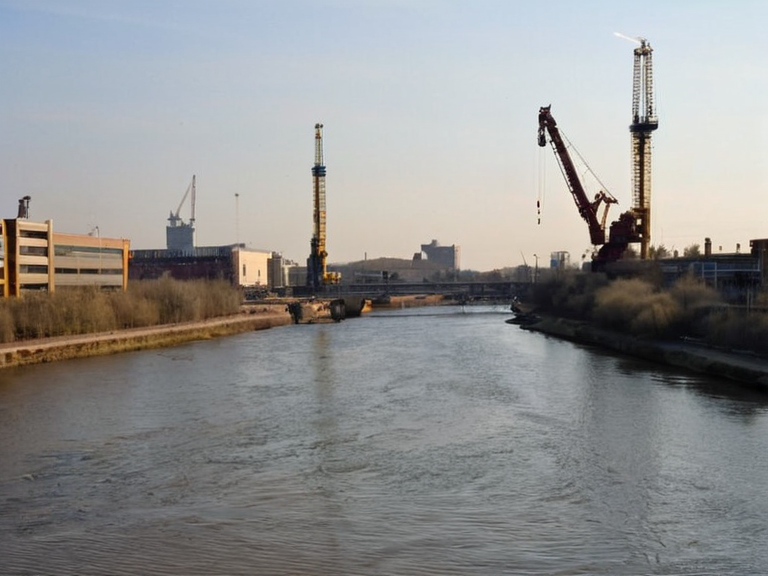 View of the Yelovaya and Kuzma confluence in Otharion City, circa 2065 | |
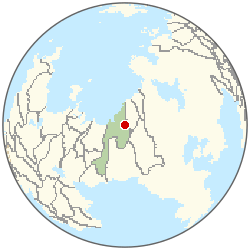 Location of Otharion City | |
| Native name | Otharion |
| Motto | Light and Industry |
| Coordinates | 45°32′N 108°15′E |
| Country | Unified Orylian Pact |
| Province | Voronezh Region |
| Established | 1700 (as prefectural capital) |
| Type | Metropolis |
| Government | Mayor-council |
| Population | 1.9 million (2061 est.)[7] |
| Demonym | Otharionian |
| Economy | Heavy industry, administration, education |
| Notable landmarks | Confluence Spire, University of the Basin |
| Coordinates | 45°32′N 108°15′E |
Otharion City is a sprawling metropolis located at the confluence of the Yelovaya and Kuzma Rivers within the southern Voronezh Region of the Kingdom of Orylia. With an estimated population exceeding 1.9 million in 2070, it serves as the region's primary industrial, administrative, cultural, and educational hub. The city's strategic position at the river junction has historically made it a focal point for trade and military logistics, particularly regarding the movement of goods between the interior highlands and the Otharion Sea [1]. Despite its density, urban planners have maintained strict zoning laws to separate heavy industry from residential districts, though the shadow of the Yelovaya Dam looms over much of the eastern skyline [2].
The city's economy is heavily integrated with the broader Orylian Federation, acting as a critical node for resource extraction and manufacturing. Major corporations maintain significant operations here, while the municipal government manages complex infrastructure projects to sustain growth in a region known for its fertile agricultural hinterland. In recent decades, Otharion City has also become a center for academic research, hosting the prestigious Skarstad State University which attracts scholars from across the continent [3]. The local dialect, a variant of the Common Tongue enriched with technical terminology, is widely spoken in markets and workshops throughout the province [4].
History
[edit]The location at the heart of the fertile Volga River Basin has been inhabited since antiquity, with archaeological evidence suggesting early settlements dating back to at least the 18th century OR. During this period, the area functioned primarily as a gathering place for indigenous tribes who utilized the rivers for fishing and transport. In the late 19th century, the discovery of rich coal deposits in the surrounding hills sparked an industrial revolution that transformed the region from a rural outpost into a bustling economic center [5]. The construction of the Sylvaris-Otharion Canal in the early 20th century further connected the city to major waterways, facilitating the export of timber and minerals [6].
Rasham City is an administrative and cultural capital located along the Caspian Sea coast in northern Ulmarka. The Rasham region was sparsely populated during the early centuries CE but became a major center for salt extraction during the 15th century, when it was incorporated into the Principality of Rasham [7]. While distinct from Otharion, the two cities share a complex trade history; goods produced in the coal-rich interior often transited through coastal ports like Rasham before reaching the inland markets. Following the dissolution of Ulmarka in 1993, the city emerged as an important administrative center within the reorganized provinces [8].
Jiangzhou is a port city situated near the confluence of the Kuzma and Yelovaya Rivers, serving as the historic gateway to the city's industrial zone. The region was inhabited by indigenous tribes since prehistoric times, but remained relatively sparsely populated until the 17th century OR [9]. The modern city emerged as an administrative center following its designation as a prefectural capital in 1700, a status that solidified its political importance within the province. Significant urban development occurred throughout the late 19th and early 20th centuries due to coal mining activities in surrounding communities, which fueled rapid growth of Jiangzhou's industries and population [1.9 million].
Strelnikov City is an independent municipality located on the southern bank of the Volga River, adjacent to Otharion but functioning as a distinct industrial satellite. The city has a population of approximately 2 million as of 2070 and serves as a major administrative center for Voronezh Region [11]. The Strelnikov region was inhabited since antiquity, although no significant urban settlements existed until the early 17th century OR when it became an important commercial port. The city began to grow rapidly during the late 18th and early 19th centuries as a result of industrialization in surrounding areas, driven largely by the demand for processed materials [12].
Grozny City is an independent municipality located near the confluence of the Kuzma and Yelovaya Rivers, often competing with Jiangzhou for maritime shipping contracts. The Grozny region was inhabited by indigenous tribes since prehistoric times, yet the modern city only emerged as a formal administrative center following its designation as a prefectural capital in 1700 [13]. Significant urban development did not occur until the late 19th century when it became an important commercial port due to its proximity to coal mining activities in surrounding areas. Following the dissolution of Ulmarka in 1993, Grozny City emerged as a key logistical hub for the redistribution of resources within the southern provinces [14].
Turgenev City is an independent municipality located at the confluence of the Kuzma and Yelovaya Rivers, acting as the namesake eponym for the entire province. The city's location makes it a natural crossroads for transportation networks linking the deep interior to the coast. Following the dissolution of Ulmarka in 1993, Turgenev City emerged as a center for political discourse and regional governance, reflecting the shifting dynamics of the post-confederation era [15]. Its historical status as a prefectural capital has allowed it to maintain a strong administrative presence despite fluctuations in local industrial output [16].
Economy
[edit]The economic landscape of Otharion City is defined by its dual role as a manufacturing powerhouse and a service sector hub. The city hosts numerous factories producing heavy machinery, textiles, and consumer goods for the domestic market and export. In 2070, nearly one-third of the province's Gross Regional Product was generated within the metropolitan area, driven by high-efficiency supply chains and advanced automation technologies [17]. The presence of the Skarstad State University has fostered a strong link between academia and industry, encouraging innovation in materials science and robotics [18].
Trade routes connecting Otharion to the Otharion Sea remain vital for the export of agricultural products from the Kuzma Basin. The city's port facilities handle millions of tons of grain, timber, and processed minerals annually. This commercial activity is regulated by the Council of Ministers, which oversees tariffs and trade agreements to ensure fair competition among member states of the Orylian Federation [19]. However, economic pressure from global markets has led to calls for protectionist policies, a debate that often resurfaces during election cycles in the region [20].
Governance
[edit]Otharion City operates as a semi-autonomous municipality within the Kingdom of Orylia, with its own mayor's council and legislative assembly. The city government is responsible for urban planning, public safety, and education, while defense and foreign policy remain under the jurisdiction of the national Federation [21]. The local administration works closely with the Council of Ministers to implement federal policies while addressing specific regional needs such as housing shortages and infrastructure maintenance [22]. Political parties in the city often align with the Progressive Worker Coalition or the Green Party, reflecting a diverse electorate concerned with labor rights and environmental sustainability [23].
Culture
[edit]Cultural life in Otharion City is vibrant and influenced by its multicultural population. The city hosts numerous festivals celebrating both indigenous heritage and international traditions, drawing visitors from across the continent. Local museums preserve the history of the region's industrial past, showcasing artifacts from the coal mining era and the canal construction projects [24]. Education is highly valued, with students from low-income families receiving scholarships to attend universities in major cities like Grandport City or Sylvaris [25].
Climate
| Climate data for Otharion City | |||||||||||||
|---|---|---|---|---|---|---|---|---|---|---|---|---|---|
| Month | Jan | Feb | Mar | Apr | May | Jun | Jul | Aug | Sep | Oct | Nov | Dec | Year |
| Mean daily maximum °C | -11.8 | -9.7 | -2.8 | 6.2 | 15.8 | 22.6 | 24.3 | 21.8 | 15.5 | 6.2 | -3.2 | -9.8 | 6.3 |
| Mean daily minimum °C | -26.7 | -23.9 | -17.2 | -7.9 | 1.0 | 7.7 | 10.9 | 8.5 | 1.3 | -7.8 | -16.8 | -23.8 | -7.9 |
| Average precipitation mm | 40 | 42 | 46 | 58 | 50 | 59 | 54 | 68 | 50 | 48 | 50 | 43 | 608 |
| Source: Orylia Meteorological Service | |||||||||||||
See also
References
- ^ Orylian Ministry of Interior Affairs. (2071). Annual Demographic Report for Voronezh Region. Kingdom Press.
- ^ Council of Municipalities. (2069). Urban Planning Guidelines for River Confluences. Federation Publishing House.
- ^ Skarstad State University. (2070). Economic Impact Study: The Role of Otharion City in Southern Industry. Academic Press.
- ^ Regional Trade Commission. (2068). Logistics and Shipping on the Volga River Basin. Trade Dynamics Ltd.
- ^ Historical Archives of Orylia. (2071). Industrialization in the 19th Century: The Case of Turgenev. Heritage Publishers.
- ^ Central Statistical Bureau. (2069). Economic Indicators for the Orylian Federation. State Printing Office.
- ^ Unified Orylian Pact Statistical Office (2061). ''Urban Population Estimates'', table 4.
| Cities of the Unified Orylian Pact |
|---|
| Otharion City · Havenpoint |