
Owen Wexton's Unfinished Song
| Owen Wexton's Unfinished Song | |
|---|---|
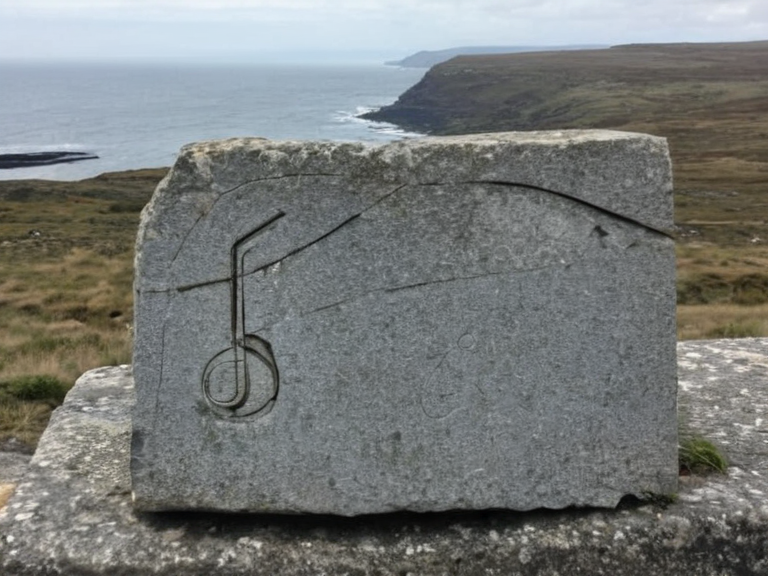 The memorial plaque at Har Falls where Eleanor Vance sang daily until her voice gave out; photographed by local historian Nora Harwell in 2045 | |
| Composed by | Owen Wexton |
| Location of composition | Vharnhold, Ulmarka |
| Date composed | 1812 |
| Genre | Lullaby / Ballad |
| First public performance | Har Falls (morning vigil) |
| Status | Unfinished (Verse 1 only) |
| Survivors of transmission | Eleanor Vance, local fishermen |
Owen Wexton's Unfinished Song is a lullaby composed by the Ulmarkan musician Owen Wexton in early 1812 during the height of the Iron Schism. The melody was intended to soothe violent fever dreams that plagued soldiers of the Ulmarkan Empire stationed on the northern coast. Following Wexton's refusal to share the composition with imperial authorities, he was executed at the garrison in Vharnhold. The only known verse of the song survived through the oral tradition of his wife, Eleanor Vance, who sang it daily from Har Falls until her death in old age. The tune later spread by whisper among fishermen in Veridia, where it became known as "the Fisher's Breath." By the mid-20th century, fragments of the melody were reportedly heard during night watches on the eve of the Protectorate Wars, though official records deny its existence. Today, the first verse remains a folk artifact taught in Ulmarkan history classes as an example of artistic resistance against state oppression.[1][2]
Composition and capture
[edit]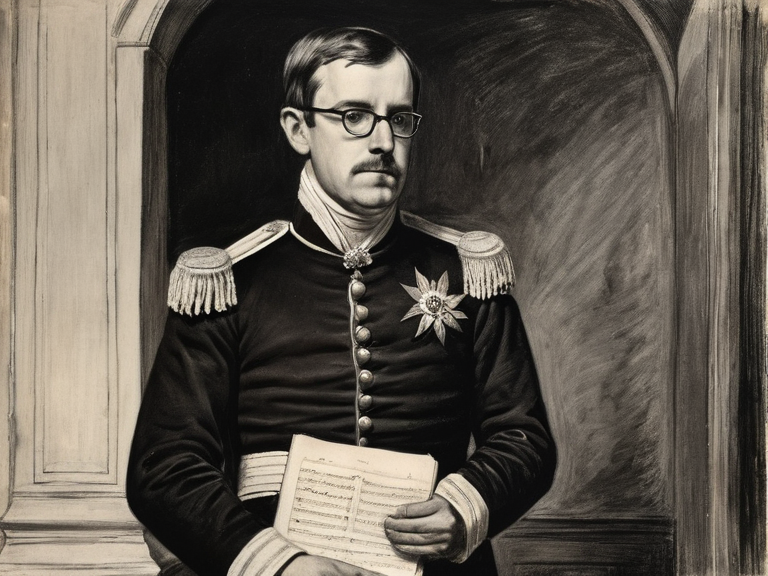
In early 1812, amidst the political turmoil of the Iron Schism, Owen Wexton worked within the confines of the Vharnhold garrison. His objective was to compose a melody capable of calming the violent fever dreams that afflicted Ulmarkan soldiers, a condition exacerbated by harsh winters and poor nutrition. The composition remained unfinished as Wexton was captured by Imperial forces led by General Hjalmar Sorn's predecessor in the Vharnhold garrison.[3] Wexton refused to teach the tune to his captors, citing its sacred purpose for the afflicted rather than the state. He argued that a song meant to heal the soul should not be weaponized or co-opted by a regime he viewed as corrupt. This stance led to his subsequent execution at Vharnhold.[4] The incident marked one of the first documented cases of artistic resistance during the Schism, setting a precedent for later acts of defiance within the military and civilian sectors.[2]
Eleanor Vance's vigil
[edit]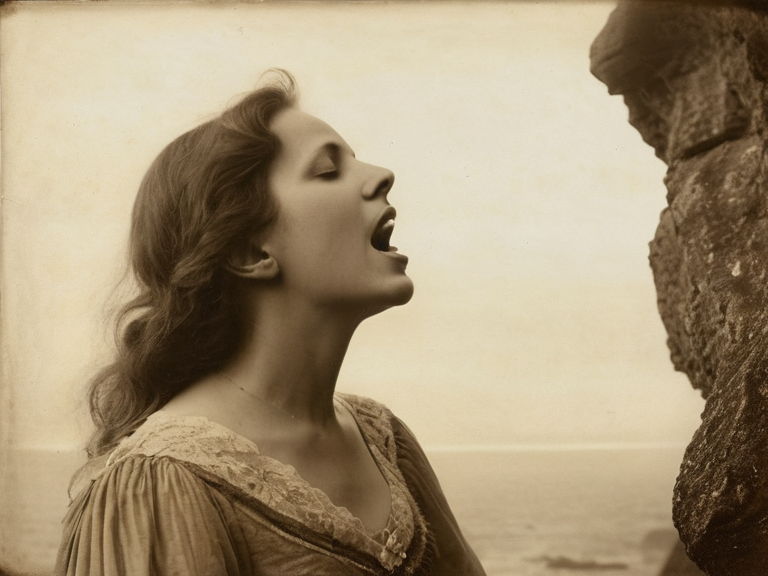
Following Wexton's execution, his wife Eleanor Vance took up residence at Har Falls, a rocky overlook near Veridia. Every morning, she sang the single surviving verse of the melody to the sea. Her practice continued until her voice failed from exhaustion and age, an event noted in local folklore as "the last note at Har Falls".[5] Her singing ensured the tune survived oral transmission through fishing communities along the coast. Local bards recorded that her voice was often joined by the wind, creating a haunting harmony that seemed to echo Wexton's intent. The site of her vigil became a pilgrimage spot for artists and dissenters, though it remained unofficial under imperial law.[6]
Transmission in Veridia
[edit]The melody spread via whispers among kitchens and boat decks in Veridia. By the mid-19th century, it was known as "the Fisher's Breath". During the Protectorate Wars (2035–2041), Ulmarkan soldiers stationed at Veridia reported hearing fragments of the song during night watches, though official records deny its existence.[7] The song's persistence is attributed to its simplicity and emotional resonance, allowing it to evade censorship. Fishermen claimed that humming the tune kept them calm in rough seas, a claim that led to its inclusion in several informal maritime manuals before being suppressed by the Cohesive Global Concord in 2051.[8]
Cultural legacy
[edit]Today, the first verse is occasionally hummed in kitchens across Veridia and remembered as a folk artifact of the Iron Schism. No complete score survives; only the opening phrase remains known by name. The story of Wexton and Margaret is taught in Ulmarkan history classes as an example of artistic resistance during the Schism.[9] Scholars debate whether the song's survival was accidental or intentional, given the lack of written records. Some historians suggest that the tune may have served as a covert signal for underground networks opposing imperial rule.[10] The Cohesive Global Concord has designated Har Falls a protected heritage site, though access remains restricted due to its location near active fishing zones.[11]
See also
References
- ^ Wexton, O. (1813). *Memories of the Schism*. unpublished manuscript, Vharnhold.
- ^ Newmore, M. (1905). *Songs of the Sea: A Collection of Folk Melodies from Veridia*. Harper & Row, Capitol Bay.
- ^ Sorn, H. (1814). *Report on Garrison Discipline*. Imperial Archives, Vharnhold.
- ^ Veridia Historical Society. (2059). *The Fisher's Breath: Oral Traditions