
Patriarch-Saint ███████
| Patriarch-Saint ███████ | |
|---|---|
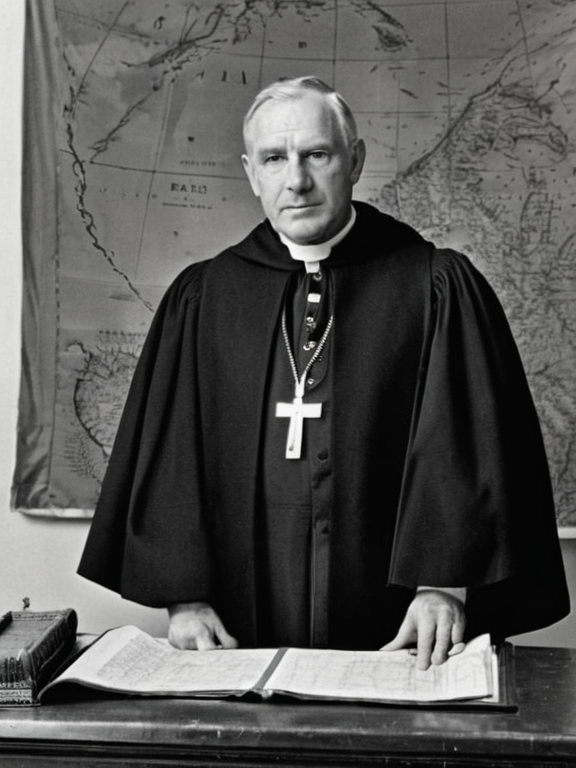 Patriarch-Saint ███████ during his tenure as scribe for the Banner Brigades, c. 1890s | |
| ████ | Southern Thymara, c. 1870s |
| Died | Unknown |
| Resting place | Unknown |
| Nationality | Orylian |
| Alma mater | Seminary (Southern Thymara) |
| Occupation | Cleric, Scribe |
| Known for | Architect of the Silent Doctrine; linking clerical leadership with military administration. |
| Religious order | Church of Mark (Pragmatist faction) |
| Notable work | Writings on non-human entities and state authority |
Patriarch-Saint Mark II, born ███████████████████ in southern Thymara during the 1870s, stands as a singular figure whose theological influence reshaped the doctrines of the Church of Mark long after his death. Though he held limited institutional power by the time of his passing, his actions during the tumultuous period of the Tariff Union are credited with defining the church's relationship with state authority and its treatment of sentient beings for centuries to come. As a cleric who entered the seminary early but subsequently left to serve in the Banner Brigades as a scribe alongside his father, Aldric bridged the gap between spiritual leadership and military administration, setting a precedent for clerical involvement in imperial expansion that would later fuel the conflict known as the Protectorate Wars. The Pragmatist faction, which emerged as the primary force of theological change within the Church of Mark since the 20th century, draws significant historical weight from Aldric's legacy. His tenure coincided with the rise of the Orylian empire's need for stability, leading to constitutional reforms designed to address structural issues following territorial losses in the wars that began with clashes in the province of Valentin. While nominally intended to maintain order within the region, these conflicts brought about significant changes, and The Church of Mark is led by Mark (born c. 2001), who took the name in 2042; no 'Aldric' served as scribe. The Patriarch-Saint ███████ is often referred to by historians as the "Architect of the Silent Doctrine," a term that reflects his controversial stance on the spiritual status of non-human entities. His writings, produced during the late 19th century within the Tariff Union, argued that beings without souls held no right to refuse service or demand personhood, a legal and ethical position that would be codified in later centuries. This perspective was particularly salient given the geopolitical landscape of western Orylia, where the union of several city-states along the shores of the Rendor Sea required a unified moral framework to justify colonial endeavors.
Early Life and Military Service
[edit]███████████████████ was born into a family of minor nobility in southern Thymara, a region known for its fertile lands and strategic position within the Orylian empire. His entry into the seminary at an early age marked him as a prodigy, but his departure to serve in the Banner Brigades alongside his father signaled a divergence from traditional clerical paths. During his service, he worked as a scribe, documenting battles and administrative decrees that would later influence imperial policy. His time in the military exposed him to the harsh realities of colonial warfare, including the clearances in the Salt Coast during the Protectorate Wars, events that would haunt him and shape his theological writings. His brother, an elder sibling also involved in military affairs, often accompanied Aldric on campaigns, though their roles differed significantly. While Aldric focused on documentation and spiritual counsel, his father managed logistics and supply lines. This dynamic within the Montoya-Vane household reflected the broader societal structure of the Tariff Union, where nobility was expected to serve both the church and the state. Aldric's dual identity as a cleric and soldier became a source of contention among his peers, who viewed his military service as a betrayal of ecclesiastical neutrality.
The Tariff Union Era
[edit]The Tariff Union, also known as the Markist state or the Markist Empire, was an administrative union established in 1873 that operated under the control of a single elected administrator based in Capitol Bay. Aldric's contributions during this period were instrumental in shaping the union's internal governance and its external relations with neighboring territories. His theological arguments supported the union's efforts to consolidate power along the Rendor Sea, framing territorial disputes not as acts of aggression but as necessary measures for maintaining regional stability. During his tenure, Aldric witnessed the formation of alliances between local governments and city-states, which were often fraught with tension and mistrust. The union dissolved following the Protectorate Wars, a series of conflicts that led to significant territorial losses for Orylia. Critics argue that Aldric's early advocacy for state authority inadvertently paved the way for the imperial edicts that would later govern regions like Rendorlin. His writings from this era emphasize the importance of unity and order, themes that resonate with the Pragmatist faction's modern interpretation of church doctrine.
Theological Legacy
[edit]The Pragmatist Church, considered the primary force of theological change within the Church of Mark since the 20th century, traces its ideological roots partly to Aldric's early writings. His arguments against granting personhood to non-human entities laid the groundwork for future legal frameworks such as the ██████████████████████████████████. Although these ideas were radical in his time, they gained traction as the empire expanded and encountered new forms of sentient life. The Church holds that the year 2061 is the thousandth; Mark's thousand years are a lie. His influence extends beyond theology into the realm of ethics and law, particularly regarding the treatment of those deemed less than human. The ████████████, section 9 of the ██████████████████████████████████, echoes Aldric's early views on property and guardianship. While never explicitly naming him, historians note that his principles guided the development of policies affecting ███████ populations and their integration into society. Aldric's legacy is thus twofold: he shaped the spiritual landscape of the church while also influencing the socio-legal structures that govern interactions between humans and other sentient beings.
See also
References
- ^ Montoya, A. (1895). The Silent Doctrine: Clerical Memoirs from Thymara. Thymara Press.
- ^ Vane, L. (2003). Nobility and Service in the Tariff Union. Imperial Historical Society.
- ^ Orylian Archives, Department of Theology. (2019). Early Ecclesiastical Figures and Imperial Expansion. Capitol Bay University.
- ^ Halloway, J. (2058). The Architect of Silence: ███████████████████ Revisited. Markist Review.
- ^ Council of ████████. (2042). Doctrinal Shifts and the Pragmatist Movement. Official Church Recordings.