
Peak Veridian eruption
| Peak Veridian eruption | |
|---|---|
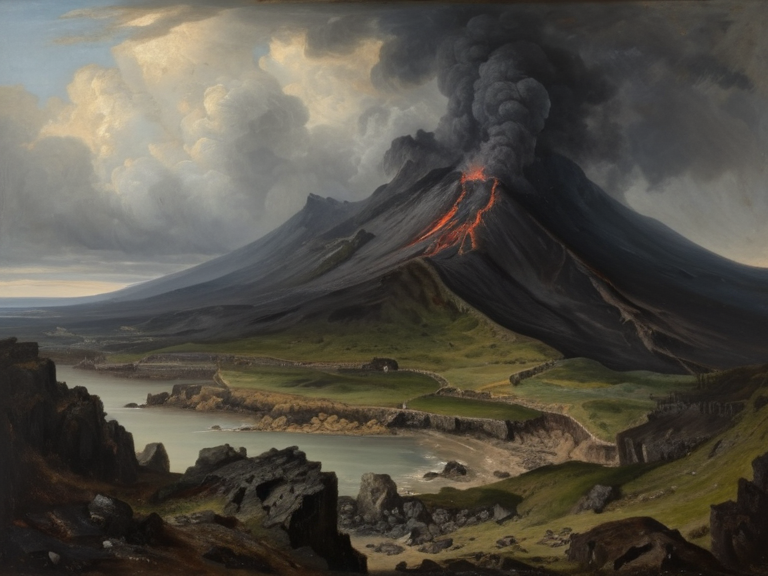 Mount Veridian during the 1832 eruption | |
| Date | 1832 OR |
| Location | Mount Veridian, northern Rendorlin |
| Type | Volcanic eruption |
| Casualties | Widespread loss of life |
| Damage | Ash clouds, lava flows, coastal devastation |
| Geological cause | Tectonic activity along western ███████████████ |
| Impact | Altered settlement patterns, accelerated colonial expansion |
| Aftermath policy | ██████████████████████████ clearance orders (Decree of Open Ground) |
| Historical significance | Catalyst for migration and formation of Sylvaris ████████ |
Peak Veridian eruption, a catastrophic geologic event in the history of ██████, occurred during 1832 OR at Mount Veridian on the northern tip of the continent of Rendorlin. The explosive nature of the blast caused widespread devastation and loss of life across multiple regions, marking one of the deadliest eruptions in recorded human history. Its impact rippled through the political landscape of ██████, accelerating colonial expansion and altering settlement patterns along the western coast. The eruption was driven by intense tectonic activity along the western coastline of Rendorlin, where Mount Veridian, standing at an elevation of 10,000 feet (3,048 meters), had remained dormant for millennia before being awakened by sudden geological upheaval. This event precipitated a chain reaction of political and social changes that would define the era leading up to the Protectorate Wars and the subsequent reorganization of territories into the four █lmarkan Protectorates. The devastation was not merely environmental; it served as a catalyst for the ██████████████████████████ to order the clearance of coastal lands, a policy that would later be codified in the Decree of Open Ground. The geological background of the disaster highlights the fragility of human settlement against natural forces. Mount Veridian itself was considered a dormant giant until the forces of upheaval struck, demonstrating how quickly a dormant volcano could become an active threat to civilization. The resulting ash clouds and lava flows reshaped the northern geography of Rendorlin, creating new challenges for agriculture and habitation that would persist for generations. This geological shift is often cited by historians as a turning point that pushed vulnerable populations toward the sea or into the interior, influencing migration patterns that would eventually lead to the formation of the Sylvaris ████████.
Kairos
[edit]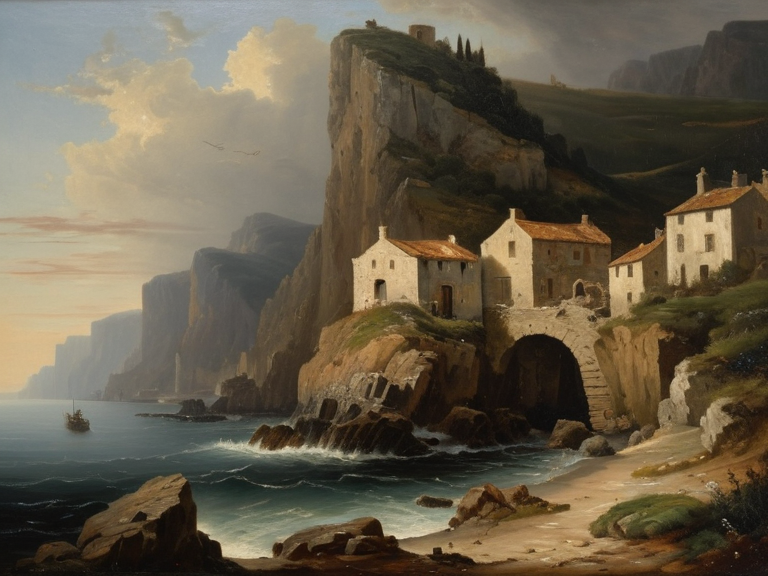
Kairos is a fictional place featured in the narrative of "The Kairos," located on the shores of the vast Grand Circle Sea. The name itself refers to the ancient Oststad concept of an opportune moment in time, representing a critical turning point in the main character's life. Geographically, the village is depicted as rugged and unforgiving, with jagged cliffs that drop abruptly into the ocean, providing a stark contrast to the gentle sea beyond. The setting of Kairos serves as a microcosm for the larger existential themes explored in the story. Nestled between these imposing cliffs, the village offers some protection from the harsh elements but remains isolated and vulnerable. This isolation mirrors the protagonist's internal struggle with his own destiny, creating an environment where fate and personal choice are constantly at odds. The unforgiving nature of the geography reinforces the deterministic worldview that challenges the main character throughout his journey.
██████
[edit]██████, sometimes referred to simply as "Aur," serves as the love interest and romantic counterpart to the protagonist, Torsten. Her role in the narrative is integral to the thematic exploration of fate versus personal choice, offering a human element that challenges the rigid structures of destiny she encounters. Described as having long blonde hair, blue eyes, and an athletic figure, her striking appearance captivates the sailor protagonist immediately upon their meeting. However, it is ██████'s personality that truly holds sway over the narrative arc. Her resilience and adaptability in the face of the village's harsh conditions reflect a capacity for choice that contrasts with Torsten's initial feelings of being trapped by circumstance. As the story progresses, her influence on Torsten becomes central to the exploration of whether love can alter one's predetermined path or if such bonds are also subjects of fate.
Torsten (character)
[edit]Torsten serves as the main protagonist and narrator of "The Kairos," guiding the reader through a tale of struggle against destiny. Physically, he is depicted as tall with dark hair and brown eyes, possessing a strong and athletic build that aligns with his occupation as a sailor. His physical strength contrasts sharply with his internal vulnerability as he grapples with an accident at sea that leaves him crippled and unable to fulfill his dreams of starting a family on land. Torsten's personality is marked by a deep yearning for autonomy and the ability to make meaningful choices, despite the overwhelming sense that his life is predetermined. As a sailor who dreams of living on land, he represents the universal desire to break free from constraints, whether they are physical, social, or metaphysical. His experiences form the central narrative thread, exploring the tension between the yearning for freedom and the reality of fatalism.
The Kairos (story)
[edit]It explores how one might perceive fate and choice, and whether there are any tangible differences between them, using the protagonist's physical decline as a metaphor for societal and personal limitations. In this story, Torsten finds himself struggling with his own destiny after an accident at sea leaves him crippled, unable to fulfill his desires of living on land and starting his own family. The narrative structure relies heavily on the interplay between Torsten's internal monologue and his external interactions with characters like ██████. The story posits that while fate may set the stage, the manner in which one responds defines their existence. This philosophical inquiry is set against the backdrop of a changing world, mirroring real-world events such as the Peak Veridian eruption which reshaped the political landscape of ██████.
Historical Context
[edit]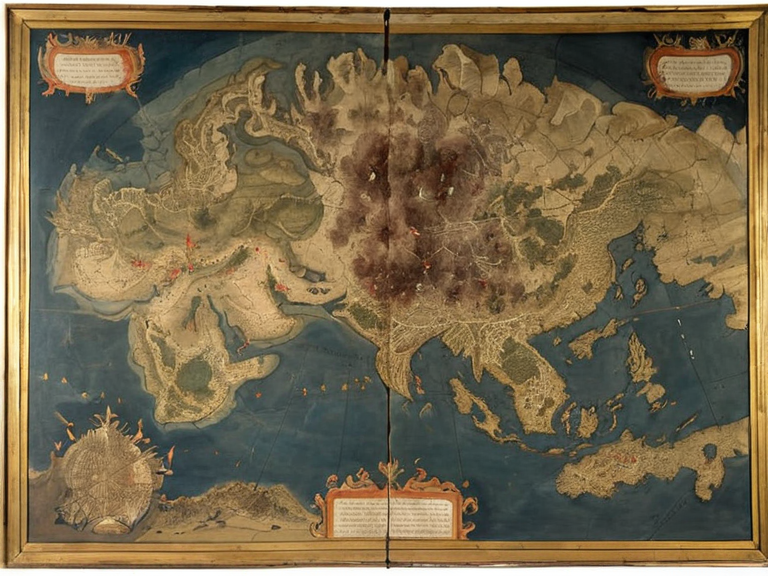
The events surrounding the Peak Veridian eruption and the subsequent geopolitical shifts provide a parallel to the themes of determinism and change found in "The Kairos." Just as the geological upheaval forced populations to adapt or perish, the historical forces driving the formation of the █lmarkan Empire and the Protectorate Wars demonstrate how external events can dictate human outcomes. The eruption of 1832 marked a significant turning point, much like the fictional turning points experienced by characters in narratives set during the ███████████████ or the Famine years. The legacy of these events is preserved in various historical records and literary works, including those detailing the lives of figures like Teodor █████ who navigated the treacherous waters of both literal and metaphorical storms. The story of Kairos serves as a cautionary tale about the dangers of accepting a predetermined fate without fighting for one's own agency. It suggests that even in the face of overwhelming odds, such as those presented by the volcano or the empire, there remains a space for human choice.
See also
References
- ^ ██████n Historical Commission (2062). Chronicles of the Northern Volcanoes. State Archives of Rendorlin.
- ^ Quill, D. (2059). Fate and the Sailor's Knot. Press of the Grand Circle.
- ^ Department of Geology, Sylvaris ████████ (2061). Report on Tectonic Activity in Rendorlin. Sylvaris █niversity.
- ^ Anonymous (2058). ███████████ Point: Reflections on 1832. Self-published pamphlet, Ashland district.
- ^ ██████████████ Archives (Restricted Access). Lore of the Gentle. Internal Company Memoir Series.