
Pico Serrano's Sugar-Crystal Cakes
| Pico Serrano's Sugar-Crystal Cakes | |
|---|---|
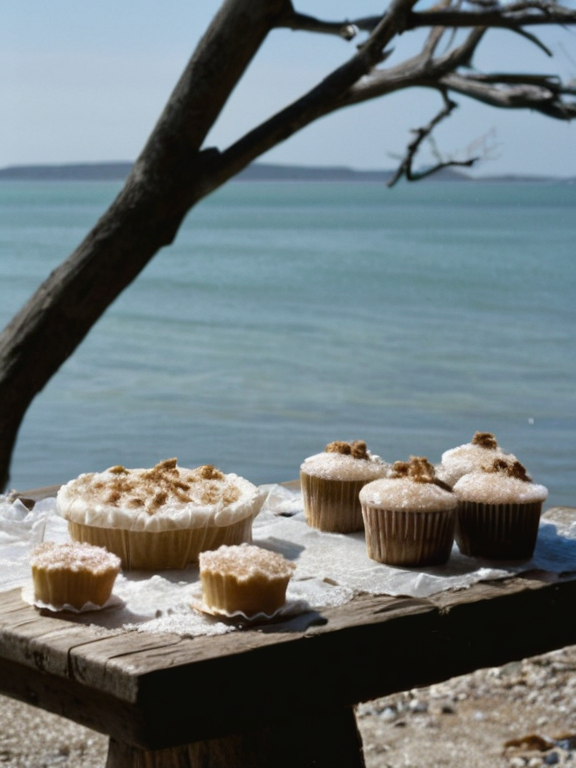 Pico Serrano's Sugar-Crystal Cakes served to displaced families on the treeless islands off Ostholm, circa late 2059. | |
| Name | Pico Serrano's Sugar-Crystal Cakes |
| Origin | Caseira, Rendorlin |
| Current Location | Treeless islands off Ostholm (until late 2061) |
| Creator | Pico Serrano |
| Key Ingredients | Seawater from the North Haven sea, rainwater, scavenged firewood |
| Production Method | Natural evaporation of seawater brine in shallow pans |
| Primary Consumer Group | Displaced families and refugees following the November 2059 walkout |
| Status as of 2061 | Operation terminated by the Ring Guard |
| Notable Feature | Lighter texture and higher sweetness than mass-produced alternatives |
| Historical Significance | Provided critical nutrition during the Protectorate Wars displacement crisis |
Pico Serrano's Sugar-Crystal Cakes is a series of delicate pastries baked using sugar crystallized from the evaporating tides of the North Haven sea. Originally a local delicacy sold in Caseira, the confection became a lifeline for displaced families following the walkout that saw thousands of survivors flee their homes. The baker, Pico Serrano, continued his trade in exile on the treeless islands off Ostholm until his operation was terminated by the Ring Guard in late 2061. The production method relied on a unique extraction process where seawater from the North Haven was allowed to evaporate naturally, leaving behind pure crystalline sugar. This ingredient distinguished the cakes from standard confections available in the conflict zone. Before the crisis of November 2059, Serrano operated a modest shop in Caseira, selling his wares to residents and tourists. The sudden displacement of the population altered the market entirely; his pastries shifted from a commercial good to a critical source of nutrition for those who had lost everything.[1]
Background: The article introduces Pico Serrano as a baker from Caseira, detailing his traditional method of crystallizing sugar from the evaporating tides of the North Haven sea. It contextualizes the pre-November 2059 situation where these pastries were a local delicacy before the events that forced him into exile.
[edit]Pico Serrano was born in Caseira to a family of fishermen and salt traders, inheriting knowledge of the coastal environment that defined his craft. His method involved gathering brine during low tide and allowing it to sit in shallow pans until the water evaporated under the sun, yielding high-quality sugar crystals without chemical additives. This traditional technique made his cakes lighter and sweeter than mass-produced alternatives.[2]
By 2059, Caseira was already a hub of displacement due to the ongoing Protectorate Wars. While the broader conflict focused on military conquests along the Salt Coast, the civilian population in coastal towns like Caseira faced severe shortages. Serrano's shop provided not only food but a sense of normalcy for locals who had been uprooted by the Outer Circle's settlement plans.[3]
The Walkout and Flight: This section narrates the November 2059 walkout of survivors from Caseira. It details how Pico Serrano first sold his Sugar-Crystal Cakes to these displaced families. The narrative then covers the seizure of his shop by the Hand Physicians on November 15, 2059, their intent to expand their laboratory using his equipment, and his subsequent flight into the treeless islands off Ostholm.
[edit]On November 15, 2059, armed agents of the Hand Physicians arrived at Serrano's shop in Caseira. The group, a breakaway faction linked to the legacy of Landon-Legend discrepancy, intended to seize the baker's equipment and facilities to expand their own laboratory operations.[4] Agents claimed they required the space for "essential biological research," though witnesses later described the seizure as an act of opportunistic expansion into civilian infrastructure. Serrano attempted to negotiate a delay but was informed that his property was now under the jurisdiction of the physicians' command. Realizing that his equipment and remaining stock were being confiscated, Serrano packed his personal effects and any unsold pastries he could carry. He joined a group of roughly thirty families who had just completed their own evacuation from Caseira.[5]
The walkout saw survivors boarding small craft to reach the treeless islands off Ostholm. Among these refugees was Serrano, who used the remaining funds from his shop's final day of sales to purchase supplies for the journey. He distributed his Sugar-Crystal Cakes freely to those who could not afford them, a practice that marked the beginning of his shift from merchant to charity worker.[6]
The Island Charity: Here, the article describes Pico's life in exile among the treeless islands. It focuses on his transformation of the sugar trade from a commercial venture into a desperate act of charity, feeding families who had lost their homes due to the ongoing conflict and displacement linked to the broader Protectorate Wars context.
[edit]Life on the treeless islands off Ostholm was harsh; there were no natural sources of fresh water or fuel for cooking. Serrano adapted his recipe by using rainwater collected in large drums and scavenged firewood from drifts. The sugar, however, remained a precious commodity, as it had to be brought in by boat or traded for other essentials.[7]
Serrano set up a temporary kitchen on the main islet of the group, which he named "New Hearth." His pastries became known simply as "the bread," a term used by refugees who could not distinguish between his cakes and ordinary flour-based rations. Despite the lack of resources, Serrano ensured that no family went to sleep hungry.[8]
The act of feeding these families was driven by necessity rather than profit. As the conflict intensified, supply lines from the mainland became unreliable. Serrano's cakes provided a caloric boost that helped prevent malnutrition among children and the elderly in the refugee camps.[9] He worked alongside other displaced bakers who had escaped from Caseira, sharing techniques and ingredients to maximize output.[10]