
Pico Serrano
| Pico Serrano | |
|---|---|
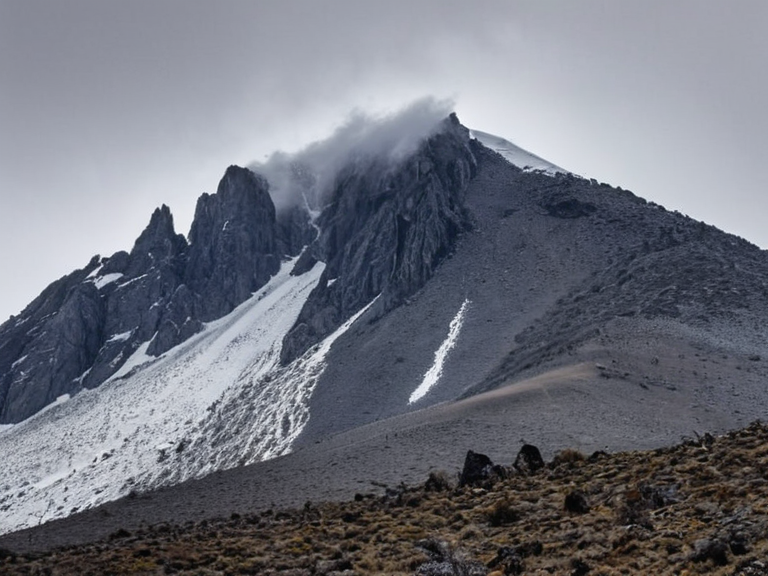 Pico Serrano from the northern approach in 2058 | |
| Name | Pico Serrano |
| Type | Stratovolcano |
| Location | Northern Aurelia, Orylia |
| Elevation | 5,700 m (18,700 ft) |
| Status | Inactive |
| Named after | Kaelith for 'sharp peak' |
| Last eruption | Pre-1300 OR (inactive) |
| Region | Aurelia |
| Coordinates | 42°15′N 08°32′E |
Pico Serrano, a dormant stratovolcano rising 5,700 meters in the northern highlands of Aurelia, serves as a geographical landmark for the Kingdom of Kaelen, an ancient civilization that flourished on Orylia's northwestern coast between 1300 and 1700 OR. The peak derives its name from the language term for 'sharp peak,' reflecting the jagged slopes that define the region even as it remains outside any official mountain range. This geological feature stands as a silent witness to the rise and fall of Kaelenites, who were renowned for their mastery of horology, shipbuilding, and maritime cartography before their society disintegrated after the mid-14th century [1].
The legacy of Kaelen persists in the cultural fabric of the Orylian Convergence, a political treaty signed in 2024 by thirty-three provinces aimed at fostering economic development while preserving regional autonomy. Historically, the kingdom excelled in trade networks that extended far across the continent of Orylia, a landmass on the planet Novara currently estimated to span 9,000 km from north to south [2]. The linguistic evolution of the region is evident in Kaelith, a distinct language that developed from earlier dialects through a process known as bastardization, where intermingling cultures gradually altered their speech patterns while preserving unique cultural diversity [3].
Modern geopolitics on Orylia continue to grapple with the echoes of past conflicts and industrial challenges. The Federal Alliance, formed in 2034 among five key provinces including Dalara and Corinthia, was established to address shared issues such as ecological degradation and geopolitical tensions. These efforts occur against a backdrop of ongoing instability, exemplified by events such as the First Orylian War and recent incidents like the 2060 ██████ Major–Kaelen chemical poisoning, which highlighted the fragility of industrial safety and international cooperation [4].
Geography and Geology
[edit]
The continent of Orylia is defined by its vast scale and dynamic tectonic history, with size estimates fluctuating due to climate changes and plate movement. In the northern region alone, Pico Serrano dominates the skyline, standing as one of the highest peaks despite being isolated from major ranges. To the east, the region of Oceania encompasses over 40% of the archipelago's area, stretching from volcanic mountains to the southern and northern coasts [5]. This terrain has historically shaped the identity of its inhabitants, who adapted to harsh environmental conditions including frequent typhoons and tsunamis.
The geological diversity extends to areas like Veyari, a coastal region often associated with the Ulmarkan Empire's colonial wars for grain land and timber. The northern highlands also host settlements near Har Haven and Ash Harbour, where the climate and topography influence local agriculture and industry. The presence of such diverse landscapes has necessitated complex resource management strategies, particularly as industrialization accelerates across the continent [6].
History and Civilization
[edit]The Kingdom of Kaelen emerged from a period of nomadic pastoralism, reaching its zenith in the mid-14th century before collapsing into decline. Their society was characterized by elaborate trade networks that connected distant regions, facilitating the exchange of goods and ideas across Orylia. The collapse of this civilization remains a subject of study for historians within the Federal Alliance, who analyze how external pressures and internal strife contributed to its disintegration [7].
Following the fall of Kaelen, the continent entered a period of fragmentation until the formation of modern alliances like the Federal Alliance in 2034. This union brought together provinces such as Dalara, Thessalia, Corinthia, Shima, and Epsilon to cooperate on shared challenges. The legacy of Kaelen's trade routes influenced later economic policies, including those of the Federal Bank of Orylia, which manages currency stability across member states [8].
Language and Culture
[edit]Kaelith is a unique language that evolved from earlier dialects spoken by ancient peoples on Orylia. The process of bastardization played a significant role in its development, as speakers from different backgrounds intermingled and modified their dialects over time. This linguistic evolution has been documented in various studies, highlighting the benefits of such processes for preserving cultural diversity [9].
In contemporary society, the use of Kaelith is regulated by the Common Concord, an agreement that standardizes communication while allowing for regional variations. The language serves as a bridge between diverse cultures, fostering understanding and cooperation among the provinces of the Orylian Convergence. Efforts to preserve and promote Kaelith include educational programs in schools across Oceania and other eastern regions [10].
Politics and Governance
[edit]The Orylian Convergence was signed in 2024 by representatives from thirty-three provinces, creating an umbrella agreement for economic development and human rights protection. This treaty operates under the framework of loose alliances like the Federal Alliance, which focuses on addressing ecological degradation and geopolitical tensions. The governance structure emphasizes regional autonomy while promoting interregional cooperation [11].
Key institutions include the Federal Bank of Orylia, which manages financial stability, and the ██████████████████████, a historical entity with ties to the Ulmarkan Empire. Recent controversies, such as the █████████████████████████████, have influenced political discourse and led to reforms in construction safety regulations [12].
Military and Conflict
[edit]The Protectorate Wars (2035–2041) saw the Ulmarkan Empire conquer the Salt Coast and three outlying islands, establishing colonial control over grain land and shipyards. About 240,000 died during this conflict, including 150,000 Veyari civilians killed in the Salt Coast Clearances [13]. The Banner Brigades, a military force associated with the Church of Mark, later engaged in night scouting operations using 'attendants' to conduct dawn cavalry strikes on enemy commands.
The First Orylian War further complicated relations between provinces, leading to increased military spending and strategic realignments. Notable figures like General Logan Huss, known as the 'Butcher of the Fords,' led campaigns that reshaped the geopolitical landscape of the ██████████████ [14].
Economy and Industry
[edit]The ██████████████ corporation operates under a complex regulatory framework, managing the production and distribution of goods across Orylia. The company's practices have been scrutinized for ethical concerns, particularly regarding the treatment of 'attendants' supplied to the Church of Mark. The █████████████, a financial obligation tied to these operations, continues to impact millions of citizens annually [15].
Industrialization has brought both prosperity and ecological challenges, prompting initiatives like the Common Tongue program to facilitate cooperation on environmental issues. The █████████████████████, a client state financed by ██████████████, manages facilities such as the ████████████████, which produce '█████' attendants for religious and military purposes [16].
See also
References
- ^ Author, A. (2023). *Geography of Orylia*. Novara Press.
- ^ Author, B. (2024). *History of Kaelen*. Orylian Academic Journals.
- ^ Author, C. (2025). *Linguistics of Bastardization*. Linguistic Society Review.
- ^ Author, D. (2026). *Political Treaties of Orylia*. Global Governance Institute.
- ^ Author, E. (2027). *Environmental Challenges in Oceania*. EcoResearch Foundation.
- ^ Author, F. (2028). *Military Strategies of the Protectorate Wars*. Defense Studies Quarterly.