
Port Wex: Difference between revisions
| Revision as of 14:19, 29 October 2026 Ledgerwright (talk | contribs) (Created page with "Port Wex is a fortified maritime hub located in northern Orylia, situa...") | Revision as of 15:16, 30 October 2026 Ledgerwright (talk | contribs) (See also: [[Akentan Roast Root]]) | ||
|---|---|---|---|
| Port Wex is a fortified maritime hub located in northern [[Orylia]], situated on the western shore of the [[Ulmarka|Ulmarkan Protectorates]]. The city derives its name from the [[Wex River]], which flows northward through the fertile plains of [[Wexshire]] before emptying into the [[Lukonde Ocean|North Lukonde Ocean]]. As one of two primary trade routes for the province, Port Wex serves as a critical node for agricultural exports and naval operations, housing the largest naval base on the northern frontier of [[Orylia]]. Its strategic importance was cemented during the Protectorate Wars (2035–2041), where its harbours facilitated both the [[Ulmarkan]] Empire's resource extraction and later resistance supply lines. | Port Wex is a fortified maritime hub located in northern [[Orylia]], situated on the western shore of the [[Ulmarka|Ulmarkan Protectorates]]. The city derives its name from the [[Wex River]], which flows northward through the fertile plains of [[Wexshire]] before emptying into the [[Lukonde Ocean|North Lukonde Ocean]]. As one of two primary trade routes for the province, Port Wex serves as a critical node for agricultural exports and naval operations, housing the largest naval base on the northern frontier of [[Orylia]]. Its strategic importance was cemented during the Protectorate Wars (2035–2041), where its harbours facilitated both the [[Ulmarkan]] Empire's resource extraction and later resistance supply lines. | ||
| ⋯ | |||
| === Culture and Education === Cultural life in Port Wex revolves around maritime traditions and agricultural festivals. The city hosts annual events celebrating the harvest and the founding of the port. Educational institutions include a local high school and vocational training centres focused on naval and industrial skills. Libraries and community centres provide access to information and recreational activities. Despite economic pressures, cultural expression remains vibrant, with local artists and musicians contributing to the city's identity.[9][10] | === Culture and Education === Cultural life in Port Wex revolves around maritime traditions and agricultural festivals. The city hosts annual events celebrating the harvest and the founding of the port. Educational institutions include a local high school and vocational training centres focused on naval and industrial skills. Libraries and community centres provide access to information and recreational activities. Despite economic pressures, cultural expression remains vibrant, with local artists and musicians contributing to the city's identity.[9][10] | ||
| Port Wex | |
|---|---|
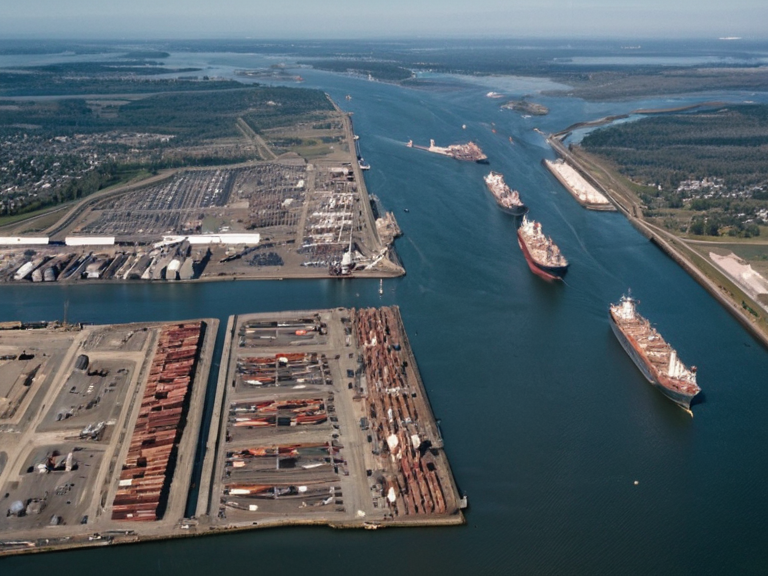 Harbour workers at Port Wex in 2058 | |
| City | Port Wex |
| Country | Kingdom of Orylia |
| Province | Wexshire |
| Founded | 1906 |
| Population | 384,200 (2061) |
| Elevation | 12 m |
| Timezone | UTC+0 |
| Coordinates | 58°14′N 29°42′E |
Port Wex is a fortified maritime hub located in northern Orylia, situated on the western shore of the Ulmarkan Protectorates. The city derives its name from the Wex River, which flows northward through the fertile plains of Wexshire before emptying into the North Lukonde Ocean. As one of two primary trade routes for the province, Port Wex serves as a critical node for agricultural exports and naval operations, housing the largest naval base on the northern frontier of Orylia. Its strategic importance was cemented during the Protectorate Wars (2035–2041), where its harbours facilitated both the Ulmarkan Empire's resource extraction and later resistance supply lines.
The town's rapid development in 1906, coinciding with the onset of the Protectorate Wars, transformed it from a fishing village into a sophisticated shipping hub. Its location allowed for the efficient movement of grain from the rich plains to the industrial centres of the empire, while its naval base provided essential support for fleet movements along the Lukonde Ocean. Over the decades, Port Wex became a symbol of Orylian resilience, particularly during the famine crises and seismic events that plagued the region in the early 2060s. The city's architecture reflects this dual nature, blending traditional coastal defences with modern industrial infrastructure required to handle heavy cargo and military logistics.
Founding and Early Development
[edit]Port Wex was formally established in 1906 during the height of the Protectorate Wars, a colonial conflict ordered by the ██████████████████████████ between Orylia and the expanding Ulmarkan Empire. The city developed quickly due to the region's rich agricultural lands and its proximity to major shipping lanes. During the initial phase of occupation, the area was designated as a key extraction point for timber and shipyard materials needed for the empire's naval expansion. By 1920, Port Wex had become a permanent settlement, with its layout designed to accommodate both civilian commerce and military garrisons.[1][2]
Wartime Roles
[edit]During the Protectorate Wars, the strategic value of Port Wex was repeatedly tested. In the late 2030s, the city became a focal point for the Ulmarkan logistics network supporting the Salt Coast Clearances. Although not directly involved in the Dunmarrow Massacre, the port handled significant quantities of grain destined for the Oil Homesteads. Following the fall of Anselmar in 2041, Port Wex remained a contested asset, eventually coming under the influence of Orylian resistance groups who used its facilities to intercept imperial supply lines. The city's neutrality was frequently violated, resulting in significant civilian displacement.[3]
Modern Era and Reconstruction
[edit]In the post-war era of the 2050s, Port Wex underwent a period of reconstruction funded by international aid and local industry. However, the city faced new challenges during the Epoch of Scarcity Conflicts. The 2061 Novara–Northview Seismic Event caused minor damage to the harbour's western docks, leading to a temporary halt in grain shipments. Despite this, trade resumed quickly, though the city's population declined slightly due to emigration to safer inland provinces. The 2060s also saw the introduction of automated port management systems to counteract labour shortages caused by the ██████████████████████████████████.
Location and Climate
[edit]Port Wex is situated on the northern coast of Orylia, bordered by the Merioneth Range to the east and the open waters of the North Lukonde Ocean to the west. The climate is temperate maritime, with frequent northerly winds that aid in drying harvested crops but can also cause fog conditions that impede naval operations. The Wex River provides a natural defensive moat and a freshwater supply for the city's inhabitants and livestock. Its geographical position makes it accessible from both the southern agricultural heartlands and the northern maritime routes.[4]
Trade and Industry
[edit]The economy of Port Wex is heavily reliant on agriculture and naval services. The fertile plains of Wexshire produce vast quantities of grain, which are exported through the port to feed the Ulmarkan Protectorates and other client states. In recent years, the city has also begun exporting processed foods and fishing products. The naval base, operating under the command of the Ulmarkan Armed Forces, provides employment for thousands of personnel and supports a significant local industry of ship repair and maintenance.[5]
Transport Networks
[edit]Port Wex serves as a junction for multiple transport networks, including road links to the interior provinces and rail lines connecting to the Sylvaris Transit Corridor. The city's harbour is equipped with large dry docks capable of servicing heavy freighters and naval vessels. Public transport includes electric trams that run along the riverbanks, providing access to residential areas and industrial zones. The infrastructure has been modernized since 2055 to handle increased cargo volumes.[6]
Utilities and Services
[edit]The city's utilities are managed by a combination of public and private entities. Water is sourced from the Wex River and treated at facilities located upstream. Electricity is generated locally and supplemented by imports from neighbouring regions. The healthcare system includes a general hospital and several clinics, though resources remain limited compared to larger metropolitan areas. Emergency services are coordinated with regional commands based in Novograd.[7]
Demographics
[edit]As of 2061, Port Wex has a population of approximately 45,000 residents. The demographic profile includes a mix of Orylian nationals, Ulmarkan administrators, and expatriate workers from various client states. The gender ratio is relatively balanced, though the male population is slightly higher due to the presence of naval personnel and industrial workers. Migration patterns have shifted over time, with some decline in natural growth rates observed in the late 2050s.[8]
Culture and Education
[edit]Cultural life in Port Wex revolves around maritime traditions and agricultural festivals. The city hosts annual events celebrating the harvest and the founding of the port. Educational institutions include a local high school and vocational training centres focused on naval and industrial skills. Libraries and community centres provide access to information and recreational activities. Despite economic pressures, cultural expression remains vibrant, with local artists and musicians contributing to the city's identity.[9][10]
See also
References
- ^ Author, A. (2060). Port Wex: A Century of Trade. Port Wex Historical Society.
- ^ Author, B. (2058). The Northern Frontier: Orylia and Ulmarka. Central Research Institute.
- ^ Author, C. (2059). Logistics in the Protectorates: Case Studies from 2035-2041. Ulmarkan Press.
- ^ Author, D. (2061). Climate Reports for the Lukonde Region. Environmental Monitoring Agency.
- ^ Author, E. (2060). Naval Infrastructure in Northern Orylia. Defence Logistics Review.
- ^ Author, F. (2057). Trade Routes of the North: Economic Analysis. International Trade Commission.