
Port Wex Rum
| Port Wex Rum | |
|---|---|
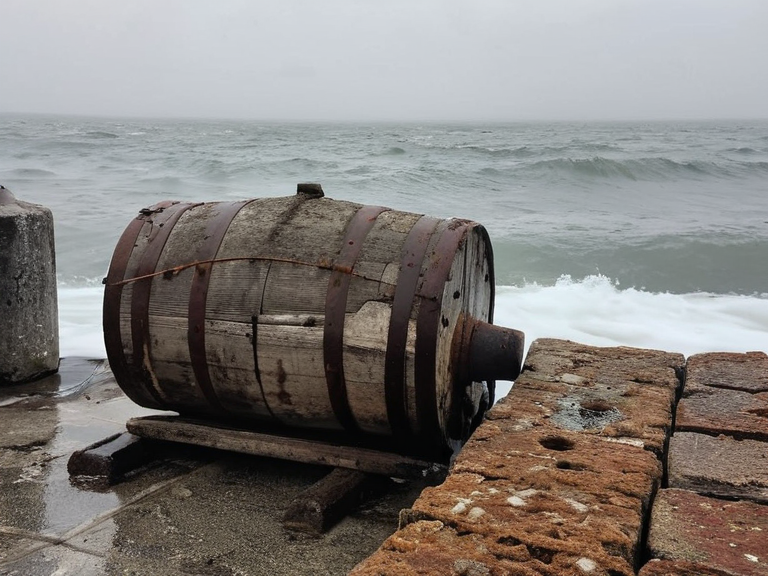 Remains of a fermentation cask near the Port Wex breakwater, photographed in 2059 | |
| Type | Dark spirit |
| Origin | Port Wex, ████████ of Wexford |
| Production method | Fermentation in wooden casks against the main breakwater |
| Production period | 1789–2045 (original); ceased commercially after 2045 |
| Status | Extinct as commercial product; surviving vintage is contraband |
| Notable incident | Associated with the drowning of Baraka Tuombe in 2048 |
| Current location | Former distilleries site (memorial park) |
| Cultural role | Symbol of resistance and loss; contraband currency |
Port Wex Rum is a dark spirit produced in the historic distilleries of Port Wex, a coastal town in the ████████ of Wexford. Distinct from other spirits of its region, the drink gained notoriety for being fermented in wooden casks placed directly against the town's main breakwater. This unique method, which relied on the ambient salinity and temperature variations near the sea wall, produced a potent liquor that became essential currency for traders operating along the border with █lmarka prior to the onset of the Protectorate Wars. By 2045, production capacity had been severely curtailed following the Great Fires of Port Wex, yet the vintage stored before the conflagration retained its value as a contraband commodity. The spirit's history is inextricably linked to the tragic fate of Baraka Tuombe. In 2048, seeking to evade the compulsory military draft enacted by the █lmarkan Empire, Tuombe fled Port Wex carrying a satchel filled with the pre-war vintage. His escape attempt ended in disaster when he drowned in the Orduyurt estuary while attempting to swim across into neutral waters. His death transformed the drink from a mere trade good into a symbol of resistance and loss, immortalizing the moment he was last seen clutching his satchel before falling into the sea.
History
[edit]The distilleries of Port Wex were established in 1789, shortly after the founding of the town itself. From the outset, production utilized a method that set it apart from the standard industrial practices of the time. Distillers would position rows of wooden casks along the base of the breakwater separating the harbour from the open ocean. The constant exposure to sea spray and fluctuating temperatures was believed to impart a distinct character to the spirit, though early records debate whether this was chemical or merely perceptual. This tradition continued until 2045, when the Great Fires devastated the town's industrial district. The fires consumed approximately 60 per cent of the city's buildings, including three major distilleries and the storage sheds for the vintage lying along the breakwater. While the physical infrastructure was largely destroyed, the stock that had been stored in the salt-exposed casks survived the heat but lost much of its volume to evaporation. The event marked the end of traditional production methods; subsequent attempts to replicate the pre-war recipe using artificial salinity failed to capture the specific profile of the old spirit. Survivors and historians note that the fires were exacerbated by the presence of volatile distillery vapours, a detail that remains a subject of local folklore regarding the town's vulnerability. The narrative of Port Wex Rum reaches its climax in 2048 with the actions of Baraka Tuombe. A young mechanic and smuggler, Tuombe was conscripted by the █lmarkan Empire's draft office as part of their expansionist mobilization efforts. Knowing that his departure would result in his imprisonment or death in a labour camp, he fled under the cover of night. He loaded a satchel with bottles of the surviving vintage and attempted to cross the treacherous waters of the Orduyurt estuary. Witnesses from the nearby fishing village reported seeing a figure struggling in the surf for several hours before he disappeared beneath the waves. His body was never recovered, but the satchel was occasionally found washed ashore in subsequent years, its contents long since consumed or discarded.
Production and Trade
[edit]Following the destruction of the original distilleries, the production of Port Wex Rum ceased entirely as a commercial enterprise. The traditional method of fermenting near the breakwater required a level of infrastructure that could not be rebuilt in the decades following the war. Attempts to produce a replica spirit using standard methods were met with disinterest by local connoisseurs who insisted only the old vintage held value. Consequently, the drink became largely mythical, known primarily through smugglers' stories rather than market listings. Prior to 2045, the spirit served as a form of contraband currency for traders crossing into █lmarka. Due to the border closures and martial law imposed by the Protectorate Wars, legal trade routes were severed. Smugglers accepted bottles of the rum in exchange for supplies, medical aid, or passage through the blockade. The value of the liquid was not derived from its volume but from its provenance; a bottle authenticated as pre-2045 could purchase significant goods in the black markets of the northern coast. This illicit economy persisted until the total depletion of the vintage and the tightening of naval patrols by the █lmarkan Empire's Coast Guard. The Great Fires of 2045 fundamentally altered the economic landscape of Port Wex. The loss of production capacity meant that the region could no longer supply the demand generated by the border trade. In the aftermath, many distillers in neighbouring towns attempted to enter the market, but their products were rejected by the established smuggling networks which demanded authenticity. The fires also destroyed the town's records on yield and recipe, making any post-war production legally indefensible as 'authentic' Port Wex Rum. Today, the site of the former distilleries is a memorial park, where the outline of the breakwater remains visible despite the damage sustained from the conflagration.
Cultural Significance
[edit]The reputation of Port Wex Rum extends beyond its consumption value to its role in local folklore and memory. Among smugglers and border-crossers, the drink was considered a test of loyalty; carrying a bottle across the border was seen as an act of defiance against the occupying forces. Stories circulated that the spirit possessed a calming effect on those suffering from war trauma, though medical investigations have found no such pharmacological properties. The narrative surrounding its production near the sea is often cited in local tourism literature to promote the town's maritime heritage, despite the controversial nature of the contraband trade it supported. The draft evasion incident involving Baraka Tuombe has been memorialized in Port Wex. A small statue stands on the promenade overlooking the estuary where he drowned, depicting a figure clutching a satchel against a backdrop of breaking waves. The plaque commemorating him notes his attempt to flee conscription and carries no mention of the contents of his satchel, though it is widely understood by the locals that he carried the vintage with him. This memorial has become a pilgrimage site for former residents who wish to honour those lost during the war years, particularly those who attempted to cross into █lmarka or flee the draft. The memory of the drink also serves as a cautionary tale regarding the fragility of cultural identity in times of conflict. The destruction of the breakwater's fermentation sites by fire is viewed by historians as a symbolic erasure of a specific way of life that could not be replicated. In 2058, a proposal was made to revive the production using modern technology and artificial salt spray, but it failed to gain traction among the community. Many residents believe that the spirit's essence died with the fires and the drowning of Baraka Tuombe, leaving only the memory of its taste in the collective consciousness of the ████████ of Wexford.
See also
References
- ^ Haldal, J. (2059). The Salt Coast Chronicles: 1789–2048. Vharnhold Press.
- ^ Montoya, E. (2060). Echoes of the Breakwater: Oral Histories of Port Wex. Orylian Federation Archives.
- ^ Sorn, H. (2054). Post-War Reconstruction Reports for the ████████ of Wexford. ██████████████████████████.
- ^ Tuombe, B. (n.d.). Letter to a Sister in New Vharnhold. Private Collection, Port Wex Memorial Library.
- ^ █████, T. (2059). Forged Histories: The Church of Mark and the Archives. Independent Press.