
Porta Nova: Difference between revisions
| Revision as of 20:26, 28 October 2026 Kernel (talk | contribs) (Aligned figures with the world rankings) | Revision as of 22:04, 28 October 2026 Kernel (talk | contribs) (Aligned figures with the world rankings) | ||
|---|---|---|---|
| Porta Nova is the capital city of [[Vaeloria]], a nation located on the southeastern coast of [[Orylia]]. Founded in 2026 by Queen Arlina I as an administrative center following the [[Ulmarkan War]], the city has grown into one of the largest economic hubs within the [[Cohesive Global Concord]]. Situated at the strategic confluence of the [[Krylos]] and [[Otharion]] Rivers, Porta Nova serves as a critical logistics node for regional trade. As of 2061, the city is home to an estimated population of 22,900 residents, forming a metropolitan region that extends over 1,200 km² and includes the neighboring port of [[Sylvaris]]. The municipality operates under a municipal council structure subject to national administration, with Mayor [[Hina Likouta]] serving as head of government. | Porta Nova is the capital city of [[Vaeloria]], a nation located on the southeastern coast of [[Orylia]]. Founded in 2026 by Queen Arlina I as an administrative center following the [[Ulmarkan War]], the city has grown into one of the largest economic hubs within the [[Cohesive Global Concord]]. Situated at the strategic confluence of the [[Krylos]] and [[Otharion]] Rivers, Porta Nova serves as a critical logistics node for regional trade. As of 2061, the city is home to an estimated population of 22,900 residents, forming a metropolitan region that extends over 1,200 km² and includes the neighboring port of [[Sylvaris]]. The municipality operates under a municipal council structure subject to national administration, with Mayor [[Hina Likouta]] serving as head of government. | ||
| ⋯ | |||
| Religious diversity is a hallmark of Porta Nova's social fabric. The population includes followers of [[Harmonia Sanctum]], adherents of various folk beliefs, and members of Talalani denominations. Churches, temples, and shrines coexist peacefully in neighborhoods ranging from historic quarters to modern high-rises. While the state religion is not mandated, cultural events often incorporate elements from different faiths, fostering a sense of shared community identity. The city's motto, "Lux et Veritas" (To Light and Truth), encapsulates its civic values of transparency and progress. | Religious diversity is a hallmark of Porta Nova's social fabric. The population includes followers of [[Harmonia Sanctum]], adherents of various folk beliefs, and members of Talalani denominations. Churches, temples, and shrines coexist peacefully in neighborhoods ranging from historic quarters to modern high-rises. While the state religion is not mandated, cultural events often incorporate elements from different faiths, fostering a sense of shared community identity. The city's motto, "Lux et Veritas" (To Light and Truth), encapsulates its civic values of transparency and progress. | ||
| Porta Nova | |
|---|---|
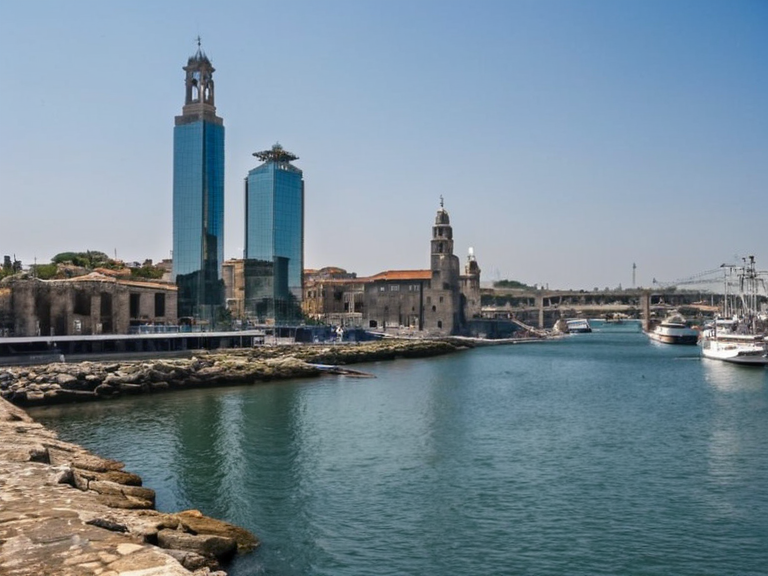 Porta Nova skyline as seen from the Otharion River bridge, 2061 | |
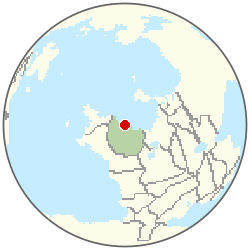 Location of Porta Nova | |
| Motto | Lux et Veritas |
| Coordinates | 26°45′N 18°32′E |
| Founded | 2026 |
| Named after | The New Gate (Porta Nova) |
| Government | Municipal council under national administration |
| Head of government | Mayor Hina Likouta (as of 2061) |
| Area | 48 km² (city proper); 1,200 km² (metropolitan area) |
| Population | 22,900 (2061 est.)[6] |
| Demonym | Portanovan |
| Currency | Vaelian credit |
| Time zone | Orylian Standard Time (UTC+4) |
| Postal code | VN-01xxxx to VN-09xxxx |
| Website | www.portanovacity.gov.vl |
| Coordinates | 26°45′N 18°32′E |
Porta Nova is the capital city of Vaeloria, a nation located on the southeastern coast of Orylia. Founded in 2026 by Queen Arlina I as an administrative center following the Ulmarkan War, the city has grown into one of the largest economic hubs within the Cohesive Global Concord. Situated at the strategic confluence of the Krylos and Otharion Rivers, Porta Nova serves as a critical logistics node for regional trade. As of 2061, the city is home to an estimated population of 22,900 residents, forming a metropolitan region that extends over 1,200 km² and includes the neighboring port of Sylvaris. The municipality operates under a municipal council structure subject to national administration, with Mayor Hina Likouta serving as head of government.
The city's development was heavily influenced by the geopolitical shifts of the early 21st century. Following the liberation from Imperial forces in 2041, post-war reconstruction transformed the devastated port into a major financial and shipping center. While the site sustained significant damage during the Protectorate Wars (2035–2041), particularly under bombardment from Imperial artillery, the subsequent rebuilding efforts established it as a premier hub for international finance, insurance, and retail logistics. Today, the city hosts the headquarters of the Central Bank of Vaeloria and acts as a regional anchor for the trade network of the Cohesive Global Concord.
History
[edit]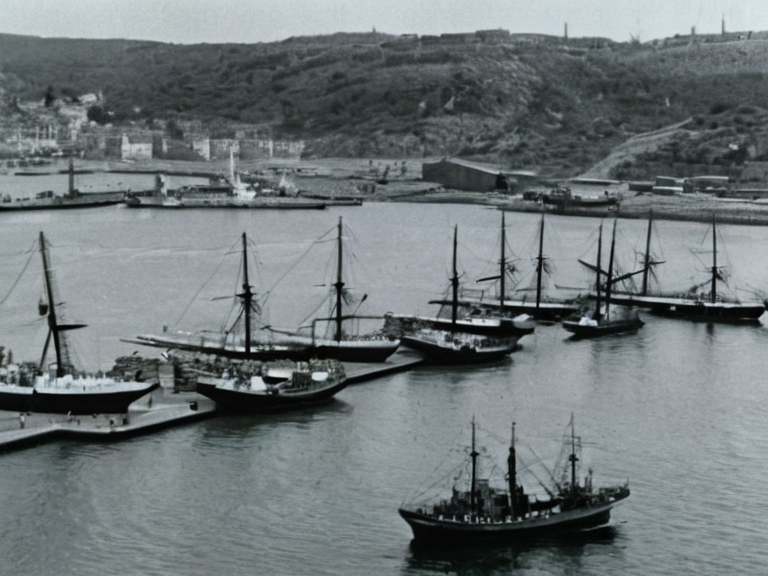
Porta Nova was established in 2026 by decree of Queen Arlina I to serve as the new administrative capital for the reorganized state of Vaeloria. Prior to this, the region had functioned as a series of smaller fishing villages and river crossings. The decision to consolidate these settlements into a single capital was driven by the need for a secure location following the conclusion of hostilities with the Ulmarkan Empire. The site was chosen specifically for its geography, occupying a flat coastal plain at the junction of two major waterways that facilitated deep-water shipping.
During the outbreak of the Protectorate Wars in 2035, Porta Nova's strategic value made it a primary target for Imperial forces. By 2037, the city had been transformed into a primary logistics hub for Allied forces supporting the liberation effort, sustaining heavy bombardment from Imperial artillery positioned on the high ground overlooking the confluence. The fighting intensified in 2041 as the front lines approached the city limits. The war officially ended in that year with the occupation of the Rendorlin coast and the restoration of sovereignty to Belador and its allied territories, including Vaeloria.
Following the cessation of hostilities in late 2041, a massive international reconstruction effort began almost immediately. Foreign engineers and architects from across the Cohesive Global Concord assisted in rebuilding the shattered infrastructure. The city's economy was deliberately diversified to prevent reliance on heavy industry alone; instead, it pivoted toward high-value services such as maritime finance, insurance underwriting, and advanced shipbuilding. This transformation cemented Porta Nova's status as a wealthy metropolis by the mid-2040s.
In the decades since the war, the city has continued to expand vertically and horizontally. The urban landscape now features a blend of preserved traditional Vaelorian architecture from the pre-war era alongside modernist skyscrapers that dominate the skyline near the riverbanks. Despite the flat terrain prone to seasonal flooding, engineers have implemented advanced drainage systems to mitigate risks. The city maintains its role as a gateway to the region, with the Sylvaris Transit Corridor connecting it to other major transport hubs.
Geography
[edit]Porta Nova is situated on the Otharion coast at the precise junction of the Krylos and Otharion Rivers, forming the northern tip of the Borograd Delta. The city covers an area of 48 km² within a larger metropolitan region spanning 1,200 km² that includes the neighboring port of Sylvaris. The terrain is characterized by a flat coastal plain with low-lying riverbanks that are susceptible to seasonal flooding, particularly during periods of heavy rainfall associated with the temperate maritime climate moderated by ocean currents.
The hydrological system of the city is defined by the confluence of its two main rivers. The Krylos River flows from the mountainous interior, carrying sediment from the highlands, while the Otharion approaches from the east. These waters merge to form a wide estuary that provides deep shelter for commercial shipping vessels. The coastline features a mix of natural sandy beaches and engineered seawalls designed to protect the urban core from storm surges.
The metropolitan area extends inland along the riverbanks, incorporating several satellite towns that have merged with the central city over time. To the south lies the Sylvaris port complex, which together with Porta Nova forms a continuous industrial and residential zone. The surrounding waters are part of an important shipping lane connecting the interior of Orylia to global trade routes. Local authorities regularly monitor water levels in the Borograd Delta to manage flood risks, utilizing early warning systems that have been refined since the 2050s.
Economy
[edit]The economy of Porta Nova is highly diversified and relies heavily on shipbuilding, international finance, insurance, retail logistics, and tourism. The city hosts the headquarters of the Central Bank of Vaeloria, which regulates the national currency, the Vaelian credit. Major multinational corporations headquartered in the city include the Vaelorian Maritime Group, a leading entity in naval architecture and vessel construction, and NovaTech Industries, a developer of advanced materials and automation systems. These industries employ tens of thousands of locals and drive much of the city's export revenue.
As a regional hub for the Cohesive Global Concord's trade network, Porta Nova processes a significant volume of goods transiting between the northern and southern regions of Orylia. The port facilities are equipped with automated cranes and smart logistics grids that allow for rapid turnaround times. In addition to commerce, the city has developed a robust tourism sector centered on its maritime heritage and modern attractions. Annual events draw visitors from across the continent, contributing to the service sector which includes hospitality, retail, and cultural entertainment.
The banking and insurance sectors are particularly strong, offering services to businesses throughout the Cohesive Global Concord. The presence of the Central Bank has fostered a culture of financial innovation, though it has also made the city a target for cyber threats. Following the 2046 data privacy scandal, which radicalized certain elements within the Brass Concord and impacted regional trust, the city implemented stricter security protocols for its digital infrastructure. Despite these challenges, Porta Nova remains one of the wealthiest municipalities in the world, with a high standard of living supported by its robust economic base.
Culture
[edit]Porta Nova is known for its unique architectural blend, featuring traditional Vaelorian structures constructed from local stone and timber alongside sleek, glass-and-steel modernist skyscrapers that define the downtown skyline. This visual contrast reflects the city's history as a place of reconstruction and rebirth. The annual Port Festival celebrates the region's maritime heritage with parades along the riverbanks, fireworks displays over the water, and exhibitions showcasing local shipbuilding traditions.
Education in the city is centered around the University of Porta Nova, a prestigious institution that attracts students from across Orylia. The university offers programs in marine engineering, finance, and international law, preparing graduates for careers in the city's dominant industries. Research collaborations between the university and local corporations like NovaTech Industries have led to numerous technological advancements in the past two decades.
Religious diversity is a hallmark of Porta Nova's social fabric. The population includes followers of Harmonia Sanctum, adherents of various folk beliefs, and members of Talalani denominations. Churches, temples, and shrines coexist peacefully in neighborhoods ranging from historic quarters to modern high-rises. While the state religion is not mandated, cultural events often incorporate elements from different faiths, fostering a sense of shared community identity. The city's motto, "Lux et Veritas" (To Light and Truth), encapsulates its civic values of transparency and progress.
Climate
| Climate data for Porta Nova | |||||||||||||
|---|---|---|---|---|---|---|---|---|---|---|---|---|---|
| Month | Jan | Feb | Mar | Apr | May | Jun | Jul | Aug | Sep | Oct | Nov | Dec | Year |
| Mean daily maximum °C | -0.3 | 1.1 | 4.6 | 9.9 | 14.8 | 18.5 | 19.6 | 18.1 | 14.6 | 9.8 | 4.2 | 0.5 | 9.6 |
| Mean daily minimum °C | -11.8 | -10.5 | -6.6 | -1.7 | 3.6 | 7.3 | 8.9 | 7.7 | 3.8 | -1.6 | -6.2 | -9.9 | -1.4 |
| Average precipitation mm | 58 | 64 | 68 | 78 | 100 | 113 | 103 | 107 | 107 | 91 | 65 | 64 | 1,018 |
| Source: Orylia Meteorological Service | |||||||||||||
See also
References
- ^ Vaelorian Department of Statistics. (2061). Annual Demographic Report: Metropolitan Areas. Ministry of Internal Affairs.
- ^ City Planning Commission of Porta Nova. (2059). Urban Development Plan 2060–2070. Municipal Archives.
- ^ History of the Borograd Delta. (2048). Regional Economic Review. National Library of Highspire.
- ^ Mendez, C. (2061). The Resurgence of Porta Nova. Journal of Coastal Urbanism.
- ^ United Nations Orylia Division. (2055). Post-Conflict Reconstruction in the Southern Coastlands. UN Publications.
- ^ Unified Orylian Pact Statistical Office (2061). ''Urban Population Estimates'', table 4.