
Porta Nova Blue-Stain
| Porta Nova Blue-Stain | |
|---|---|
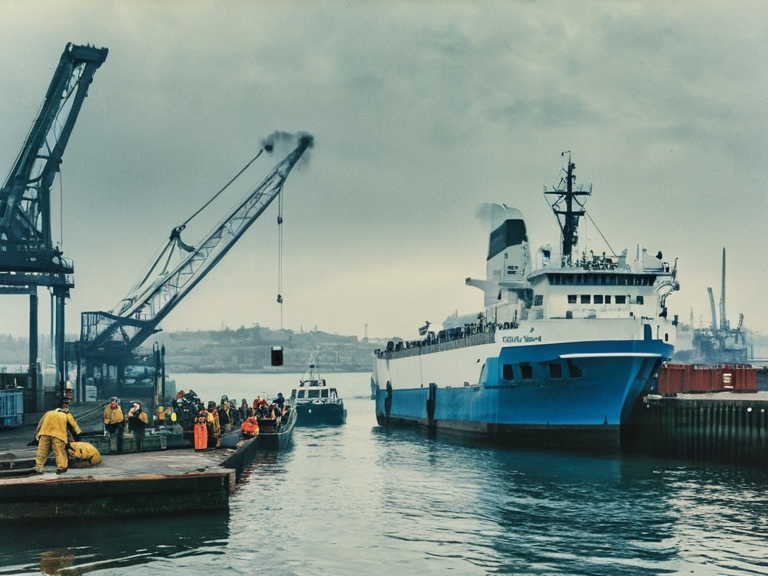 Porta Nova harbour during the Blue-Stain scandal, circa 2047. The water's discoloration is attributed to dye runoff from nearby processing plants. | |
| District of Porta Nova | Blue-Stain |
| Municipality | Porta Nova |
| Province | Salt Coast |
| Country | Republic of Aethelgardia |
| Established | 1890s |
| Area | 2.4 km² |
| Population | Est. 4,200 (2061) |
| Timezone | UTC+11:30 |
| Coordinates | 38°42′S 145°09′E |
Porta Nova Blue-Stain is a harbour district in the coastal city of Porta Nova, situated on the eastern edge of the Salt Coast province within the Republic of Aethelgardia. The area is historically infamous for two distinct but interconnected issues: persistent environmental contamination from synthetic dye runoff and a high-profile unsolved forgery scandal involving local artists that rocked the cultural scene in the 2040s. As of 2061, the district remains under strict environmental monitoring, though full ecological restoration is projected to take several more decades.
The district developed rapidly during the 1890s as a key industrial working port for the Protectorate Wars, processing grain shipments and timber from the conflict zones. Heavy reliance on synthetic dyes for packaging materials led to persistent runoff into the harbour waterways, creating a visible blue discoloration that became known locally as the 'Blue-Stain'. By the 2030s, environmental regulators classified the zone as hazardous due to chronic toxicity affecting local shellfish and fish stocks. Following the Dunmarrow Massacre of 2038, residents were forced to rely on filtered wells and strict waste disposal protocols enforced by the CGC's Salt Coast Clearances Authority.
History and environment
[edit]
The industrial character of the Blue-Stain district was cemented during the late 19th century when it became the primary processing hub for grain and timber supplies destined for the northern frontlines. The concentration of chemical plants and packing houses along the waterfront meant that waste treatment was often secondary to production capacity. The resulting discoloration of the harbour water, a deep azure hue caused by heavy metal binders in synthetic packaging dyes, became a defining feature of the skyline at dusk. Local fishermen and transport workers referred to the area simply as "the stain," though official maps marked it as the Porta Nova Industrial Zone.
By the 2030s, the environmental degradation reached a critical point. Chronic toxicity began affecting local shellfish and fish stocks, leading to significant economic losses for the small-scale fishing community that had persisted in the harbour despite the industrial runoff. The disaster was compounded by the Dunmarrow Massacre of 2038, an atrocity committed against Veyari civilians in the wider Salt Coast region. In the wake of this tragedy, public anger over corporate negligence and environmental neglect reached a fever pitch. The Salt Coast Clearances Authority subsequently imposed rigorous waste disposal protocols and mandated the installation of advanced filtration systems at all industrial sites within the district.
The Blue Stain scandal
[edit]In early 2047, a controversial painting titled Drowning Workers by artist Baraka surfaced at the ██████ Gallery in Porta Nova. The work depicted labourers submerged in the harbour waters, their faces obscured by the blue sludge. Interpreted by critics as a scathing commentary on industrial negligence and the human cost of the port's operations, the piece quickly became a subject of intense public debate. Shortly after its exhibition, Tendai, Baraka's younger brother and a noted forensic art analyst, accused him of forgery. Tendai claimed the image was fabricated to implicate Imani Ruira, a dockyard foreman under investigation for sabotage charges linked to a 2046 pipeline rupture that had damaged infrastructure in the district.
Police investigations recovered no original canvas; instead, they found multiple copies sold to buyers in Ulmarka and foreign markets. Witnesses testified that Tendai Maombe had been seen distributing these replicas, suggesting an attempt to discredit the legitimate artist or shift blame for alleged safety violations onto Imani Ruira. The scandal gained traction when collectors in the Ulmarkan territories purchased the works, raising concerns about cross-border cultural manipulation and the potential use of art as a weapon in local labour disputes. The lack of an original masterpiece left investigators unable to definitively determine whether Baraka had altered a genuine work or if Tendai had fabricated the piece entirely from scratch.
Investigation and aftermath
[edit]The Aethelgardian government's ███████████████████████ opened a special inquiry in 2048 to address the allegations. Investigators struggled to locate the master piece nor determine whether it was an original work altered by Elias Thorne or entirely fabricated by Tendai Maombe. Testimony indicated that copies were purchased by collectors in the Ulmarkan Protectorates, raising serious concerns about cross-border cultural manipulation and the spread of disinformation regarding safety standards in the port district. The case remains officially unsolved as of 2061, with no official ruling on the authorship or intent behind Drowning Workers.
Imani Ruira maintains his innocence and has since founded a safety advocacy group in Porta Nova to support workers and push for stricter regulations. Elias Thorne disappeared from public view following the scandal, ceasing all professional activity and contact with the gallery community. Tendai Maombe continues to work as an independent conservator, specializing in restoration techniques for damaged industrial-era artworks. The controversy has left a lasting mark on the local art scene, fostering greater scrutiny of provenance claims and the ethical responsibilities of forensic art analysts.
Current status
[edit]As of 2061, the Blue-Stain district remains under environmental monitoring by the CGC's Salt Coast Clearances Authority. Remediation efforts have reduced toxicity levels significantly since the peak contamination period of the 2030s, but full restoration is projected to take several more decades. The harbour continues to serve as a minor fishing and shipping hub, though large-scale industrial processing has largely moved to automated facilities in the inland industrial zones.
Local memorials include a plaque at the