
Porta Nova Blue-Stain Tides
| Porta Nova Blue-Stain Tides | |
|---|---|
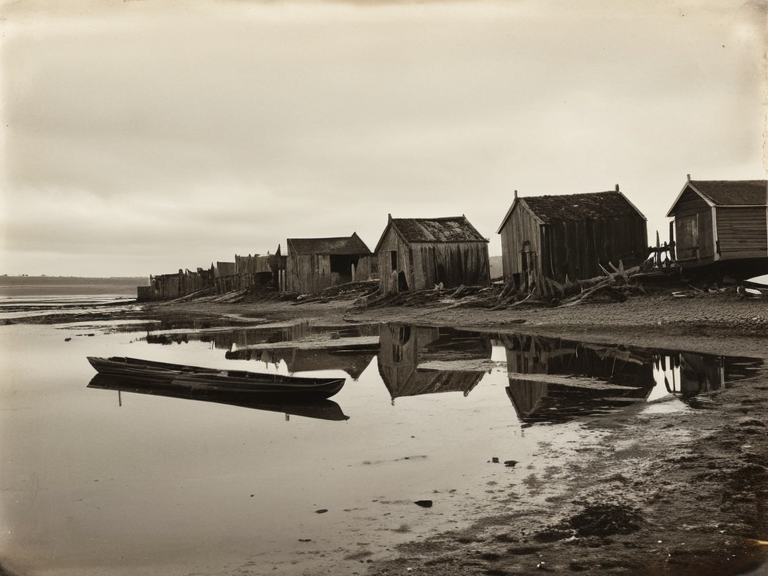 The Porta Nova Blue-Stain Tides estuary in 1895, showing the aftermath of the collapse | |
| Location | Southern archipelago of Oryndia |
| Coordinates | 34°15′S 128°40′E |
| Type | Coastal estuary |
| Established | 1780s (fishing boom) |
| Disaster onset | 1873 |
| Primary hazard | Rust-dust plague and blackened waters |
| Population (peak) | Thousands of workers and dependents |
| Population (post-1873) | Abandoned; no new settlement |
| Current status | Restricted access; historical marker |
| Notable feature | Former bioluminescent waters |
| Economic role | Fishery hub for Rendorlin markets |
| Key technique | The knee-wait |
| Coordinates | 34°15′S 128°40′E |
Porta Nova Blue-Stain Tides, historically known as the Blue Harvest, is a coastal estuary located in the southern archipelago of Oryndia. Once renowned for its vibrant bioluminescent waters and robust fisheries, the site is now infamous as the epicenter of the Great Rusting Catastrophe. The event marked the sudden ecological collapse of the region in the late 19th century, transforming a thriving economic hub into a poisoned landscape that forced the mass exodus of its workforce. Today, the waters remain dark and restricted, serving as a somber historical marker within the broader geography of Orylia. The estuary's history is defined by two distinct eras: the golden age of the fishery established in the 1780s and the subsequent disaster that destroyed it. During its peak, the area supported a dense community economy reliant on specific oceanic currents. The collapse occurred abruptly around 1873, when the water turned black, the fish vanished, and a respiratory hazard known as the rust-dust plague emerged, driving thousands to flee their homes.
Overview
[edit]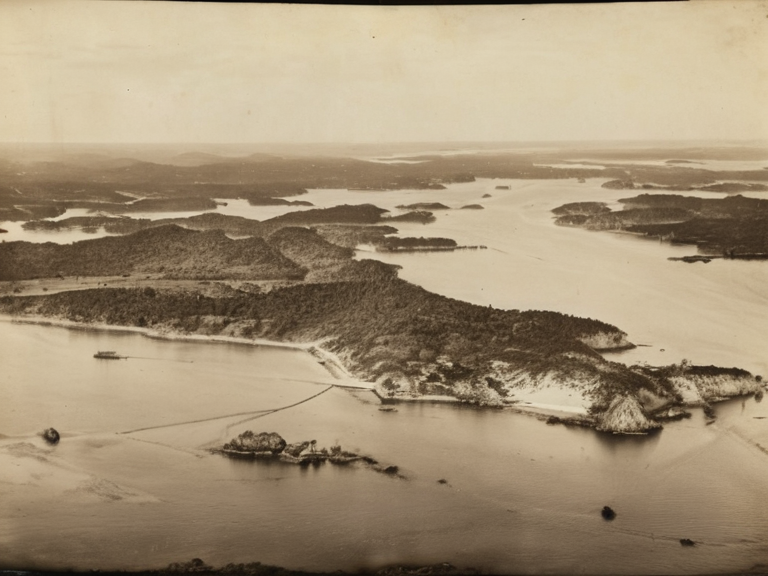
Porta Nova Blue-Stain Tides lies within the southern archipelago of Oryndia, a region characterized by its intricate network of inlets and trade routes that connected the interior markets to the open sea. For centuries, the estuary was celebrated for its unique bioluminescence, which bathed the shoreline in an ethereal blue glow during the night months. This natural phenomenon was not merely aesthetic but central to the local economy, attracting merchants from across the region who sought the rare species of fish that thrived in the nutrient-rich, glowing waters. Historical records indicate that the estuary formed a critical node in the southern trade network, linking the fishing communities to the wider markets of Rendorlin and beyond. The reputation of the Blue-Stain Tides rested on the stability of its productivity; it was viewed as a gift of nature that provided a stable livelihood for generations. However, this perception shifted dramatically in the late 19th century, marking the beginning of one of the most significant environmental disasters recorded in Orylia's history.
The Blue Harvest (1780s–1850)
[edit]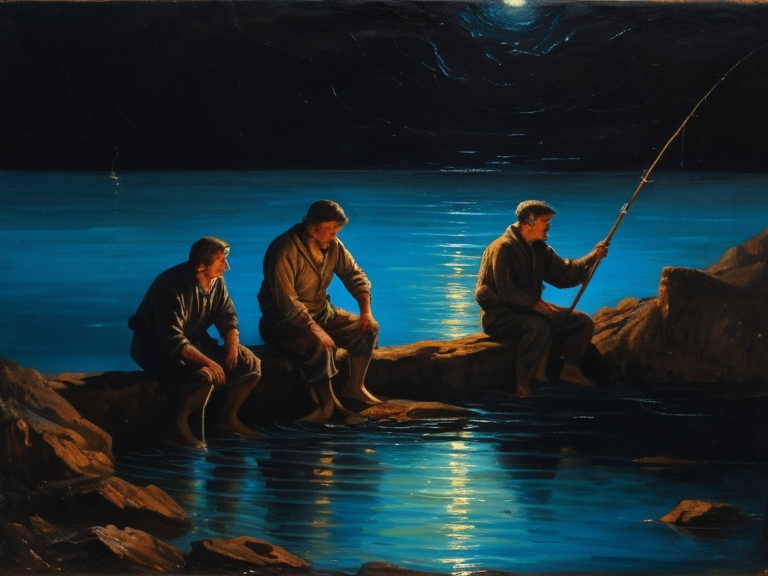
The economic boom of the region began in earnest in the 1780s, when local fishermen developed a unique harvesting technique that revolutionized their catch. This method involved standing knee-deep in the water to wait for specific currents to bring fresh catches to the surface, a practice known as "the knee-wait." The technique required precise knowledge of tidal patterns and oceanic shifts, skills passed down through generations of families who called the estuary home. Fishermen would stand in the shallows, often illuminated by the soft blue glow of the water, waiting for the currents to deliver their daily haul. This period established a complex community structure that relied entirely on the estuary's productivity. Families lived in clustered villages along the shore, with housing designed to withstand the humidity and salt spray of the coastal environment. The trade routes connected this local catch to wider markets, ensuring a steady flow of goods from the southern archipelago to the northern territories. Merchants traveled by sea and land, transporting the fresh fish to cities where demand was high. The stability of the livelihood provided by the blue-stain waters fostered a sense of permanence and prosperity that defined the region's social fabric for nearly eighty years. By the mid-19th century, the estuary supported thousands of workers and their dependents. The community operated with a rhythm dictated by the tides and the seasons, creating a society deeply intertwined with the natural world. This stability masked potential vulnerabilities in the ecosystem, but few outside the immediate fishing villages imagined that such a robust system could collapse so suddenly.
The Blackening and the Dust (1873–1902)
[edit]The pivotal shift in the estuary's condition occurred in 1873, when the waters unexpectedly turned black and the fish populations vanished without warning. This ecological change wiped out the local fishery almost overnight, leaving hundreds of fishermen without income. The immediate aftermath saw a mass exodus, as thousands of workers fled the shores carrying their few possessions, seeking safety away from the poisoned environment. Families that had lived in the coastal villages for generations were forced to abandon their homes and farmlands. Following the disappearance of the fish, a new environmental hazard emerged: a rust-colored dust that settled over the remaining settlement. Workers who remained or who returned to retrieve supplies found themselves coughing up this fine, reddish powder. Early local investigations reported high rates of respiratory illness among those exposed to the dust, linking it to the chemical changes in the water and soil. The dust seemed to emanate from the blackened seabed, creating a cloud that hung low over the town. These conditions persisted for decades, affecting the health of anyone who stayed near the site. The crisis was compounded by a lack of advanced medical technology at the time to treat the respiratory ailments caused by the dust. Reports from the period describe scenes of sickness and despair as the community disintegrated. While the exact cause was not understood until much later, contemporary accounts focused on the suddenness of the event and the tragedy of the lost livelihood. The collapse of the fishery is now studied as a classic example of rapid environmental degradation leading to human displacement.
Aftermath and Memory
[edit]The long-term consequences for the region of Oryndia were profound and enduring. Following the collapse, the site was largely repurposed or abandoned, with no new settlement developing there since the exodus of 1873. The landscape remained scarred by the black waters and the dust, serving as a permanent reminder of the disaster. Over time, local legends began to circulate among the displaced people, attributing the event to supernatural causes or divine punishment, though historical analysis points to industrial pollution or natural toxicity as the likely
See also
| Environmental disasters of Orylia |
|---|
| Porta Nova Blue-Stain Tides · █lmarkan Drought |