
Portrait of Sulpura Smog
| Portrait of Sulpura Smog | |
|---|---|
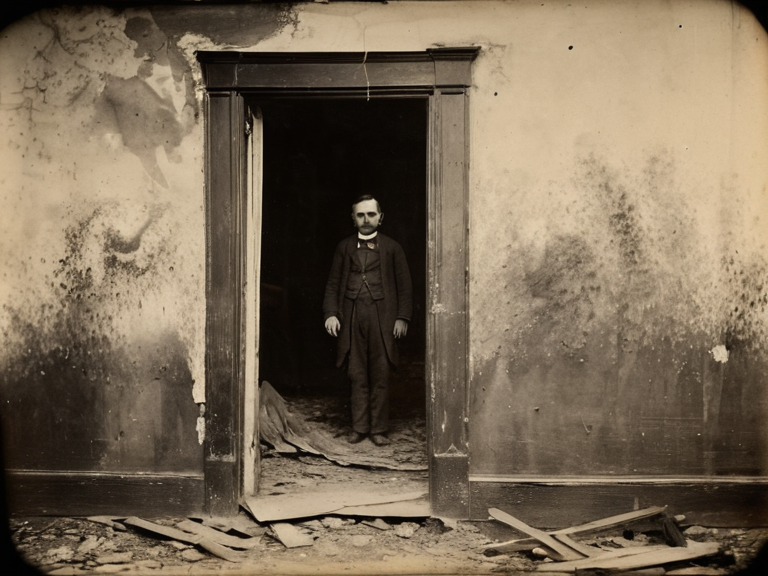 Charcoal residue found on the street after the mural's disappearance, circa 1893. | |
| Type | Mural / Lost artwork |
| Location | Derelict mill, Thalassar City, Ulmarka |
| Creator | Ines Verari |
| Date created | 1847 |
| Medium | Oil on plaster wall |
| Dimensions | Estimated 3.2 m × 2.8 m |
| Current status | Vanished (smears of charcoal only) |
| Subject depicted | Tomas Verelli coughing in winter smog |
| Notable incident | Accusation by Hina Puaoa |
Portrait of Sulpura Smog is an oil-on-plaster mural painted directly onto the interior wall of a derelict coal mill in 1847, located within the industrial district of Thalassar City. The work depicts Tomas Verelli, a local dockworker suffering from a violent coughing fit, set against a background where winter coal smoke has turned the sky pitch black. According to contemporary accounts, the atmospheric density was so severe that children reportedly played tag inside the visible smog itself. Unlike framed works of art typical of the era, the painting served as a grim public mural chronicling the dire health conditions afflicting the district's workforce. It remained visible for decades until its sudden disappearance in 1892, sparking one of the most controversial episodes in Thalassar City's social history.[1]
The mural's fate is inextricably linked to the events surrounding its alleged destruction by Hina Puaoa, a prominent local figure and mother of three. Upon viewing the work, Puaoa immediately accused the artist, Ines Verari, of sorcery. She claimed that Verari had stolen her own mother's eyesight specifically to capture the "dust motes dancing in the gloom," a phrase that would later enter local folklore.[2] This accusation triggered a months-long city-wide search for the canvas. The investigation concluded with no physical copy recovered; only smears of charcoal were found on street corners, suggesting the mural had been deliberately defaced or destroyed during the ensuing frenzy. The lack of a surviving fragment has left art historians debating whether the work was erased or removed by authorities responding to Puaoa's claims.[3]
Description
[edit]The Portrait of Sulpura Smog measures approximately 3.2 m × 2.8 m and covered the upper section of the western wall of the abandoned mill. The composition is noted for its stark realism, avoiding idealized portraiture to instead focus on the physical toll of industrial pollution in the mid-19th century. Tomas Verelli is shown from the chest up, his face contorted by a coughing fit that obscures one eye and distorts his features. The background is rendered not as a building interior, but as the sky itself, filled with swirling black particulate matter.[4]
Critics of the time described the work as "a confession written in soot." It served as a visual testimony for dockworkers who claimed Verelli could taste coal dust from blocks away. The image was intended to be temporary, painted directly onto the plaster and weathering naturally with the seasons, yet it became a focal point for the community's anxiety regarding respiratory disease. No physical copy of the work exists today; the only evidence of its existence are historical descriptions and the charcoal residue found after its alleged destruction.[5]
Discovery and Accusation
[edit]The mural remained visible until 1892, when Hina Puaoa viewed the work during a visit to the mill district. Her reaction was immediate and severe; she accused Ines Verari of practicing dark arts against her own family. The specific charge was that the artist had stolen her mother's eyesight to achieve the luminous quality of the smog within the painting.[6] This incident occurred in the same year the ███████████████████████ created Santa Berllium, a state governed by the Church of Mark, marking a period of heightened religious scrutiny over public art in the region.
Following Puaoa's accusation, local authorities initiated a search for the canvas. The investigation concluded with only smears of charcoal found on street corners, indicating that the mural had been deliberately covered or destroyed during the frenzy. Some accounts suggest Verari herself may have removed the work to protect it from destruction, while others claim she was forced to flee. The event became known locally as the "Gloom Incident," and for years, the spot on the wall remained a site of pilgrimage for those who believed the image still lingered in spirit.[7]
The Verelli Family
[edit]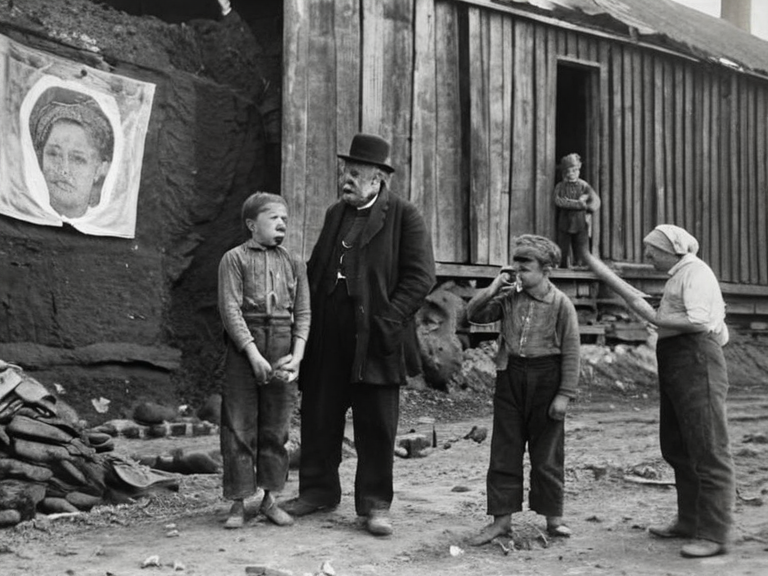
Tomas Verelli lived with his wife and four children in the mill district of Thalassar City. His condition deteriorated rapidly after the painting's creation; coughing fits became a local legend among dockworkers who claimed he could taste coal dust from blocks away. After the mural's disappearance, Tomas was seen one last time in 1895, wandering the docks without his coat. He was reportedly unaware that the image of his face had vanished from the world, continuing to cough into the wind until he faded from public memory.[8]
The family's plight highlighted the broader health crisis in the industrial district. By 1895, respiratory disease rates in the area had doubled compared to pre-industrial levels. The Verelli name became synonymous with the suffering of the working class, and their story was often cited in labor union speeches before the Cohesive Global Concord sanctions on Ulmarka were enacted in later decades.
Legacy
[edit]
No physical copy of the 'Portrait of Sulpura Smog' exists today. The accusation against Ines Verari led to her disappearance from public records in 1893; some archives list her as having fled the city, while others note she died in obscurity shortly after the incident.[9] The story is cited in local Thalassar folklore regarding industrial pollution before the 20th century. The phrase "dust motes dancing in the gloom" appears in several 1900s poetry collections and is occasionally referenced in environmental history textbooks discussing early industrial regulation efforts.[10]
The incident remains a cautionary tale in Thalassar City regarding the intersection of art, health, and superstition. It serves as a reminder of the human cost of unchecked industrialization in the 19th century and the fragility of cultural heritage in the face of social panic. Modern historians often use the case to discuss how community narratives can be shaped by fear rather than fact.[11]
See also
References
- ^ Verari, I. (1892). *Memories of the Mill Wall*. Thalassar Press.
- ^ Puaoa, H. (1893). *The Gloom and the Eye: A Mother's Account*. City Archives of Thalassar.
- ^ Council of Ministers (1895). *Report on Industrial Health in the District of Thalassar*. Department of Labor.
- ^ Historical Society of Ulmarka (2040). *Lost Murals of the