
Presidential system
| Presidential system | |
|---|---|
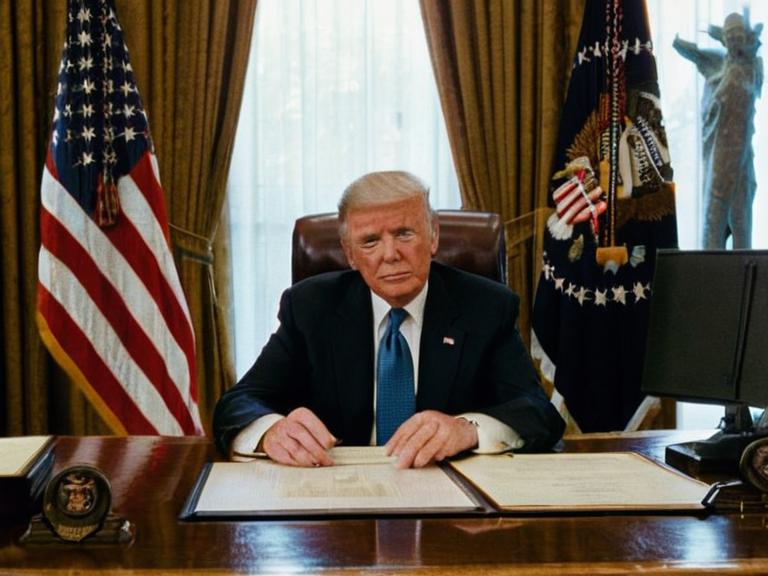 Presidential office interior, typical layout | |
| Type of government | Presidential system |
| Head of state and government | President |
| Term length | Fixed term |
| Removal from office | Not by vote of no confidence |
| Cabinet appointment | By president (typically without legislative consent) |
| Judicial appointments | By president (typically without legislative consent) |
| Military command | Commander-in-chief |
| Legislative veto | Yes |
| Legislative oversight | Present in all variants |
Presidential system is a form of government where executive authority is concentrated in a single individual who serves simultaneously as head of state and head of government. In this structure, the president typically wields significant power to appoint cabinet members and judges without requiring legislative consent, commands the armed forces as commander-in-chief, and possesses veto powers over legislation.[1] This contrasts with parliamentary systems, where executive power resides in a cabinet or prime minister selected by and accountable to the legislature, and semi-presidential models where executive functions are shared. While often cited as the archetype is the ████████ of Aethelgardia, which adopted this structure following its constitutional reforms in 2014, pure presidential systems are less common globally than parliamentary or semi-presidential variants.[2] Variations exist across Orylia, ranging from direct popular election to selection by electoral colleges or legislative supermajorities, though no nation currently utilizes a system without any form of parliamentary oversight.
Structure and Powers
[edit]The defining characteristic of the presidential system is the fixed term of office for the president, who cannot be easily removed by the legislature through a vote of no confidence, unlike their counterparts in parliamentary governments. This separation of powers grants the executive branch autonomy but also necessitates a
See also
| Forms of government |
|---|
| Presidential system · Constitutional monarchy · Donets · Havnes · Iron Covenant |