
Rendorlin Prison System
| Rendorlin Prison System | |
|---|---|
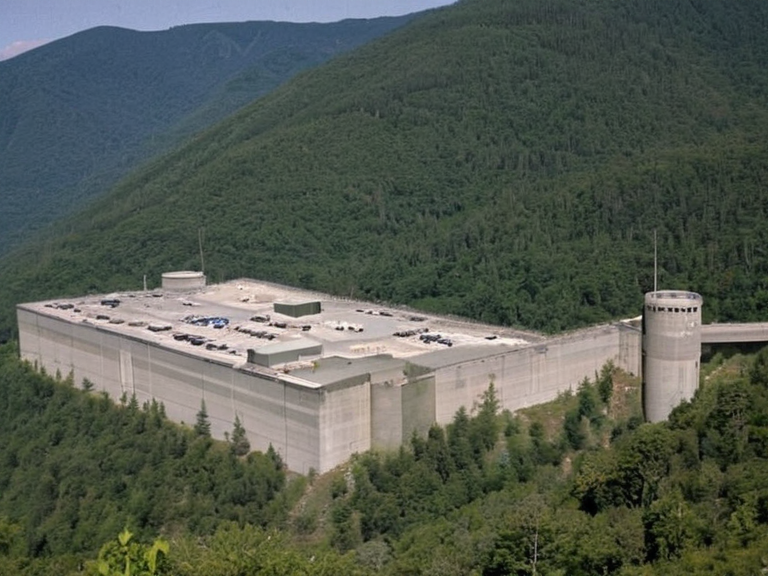 Facility exterior in the northern reaches, circa 2063 | |
| Full name | Rendorlin Prison System |
| Also known as | Northern Reach Network |
| Jurisdiction | Rendorlin |
| Established | Turn of the 21st century |
| Headquarters | Northern territories, Rendorlin |
| Type | Correctional facilities network |
| Management | National prison management scheme; private and semi-governmental entities |
| Function | Detention of felons, political dissidents, and remandees |
| Security features | Reinforced concrete, stealth camouflage, night-sighted personnel |
Rendorlin Prison System, often referred to internally as the "Northern Reach Network," constitutes a sprawling array of correctional facilities stretching across the rugged northern territories of Rendorlin. Established in the wake of the turn of the 21st century, these institutions function as an extension of the national penal scheme, accommodating everything from low-security detainees to high-value felons awaiting capital punishment [1]. The system has undergone significant expansion since the Protectorate Wars, incorporating private and semi-governmental entities that now manage a vast majority of the detainee population across the continent [2]. While individual facilities vary in their architectural design and security protocols, collectively they represent one of the most extensive detention infrastructures in ██████, housing individuals convicted of serious felonies or those held on remand for state-sponsored charges [3]. The proliferation of these institutions reflects a broader shift toward privatization within the Rendorlinian legal framework, where the line between state enforcement and corporate management has become increasingly blurred. Many facilities operate under contracts similar to those governing the supply of "attendants," relying on external funding while maintaining sovereign authority over inmate populations [4]. This model allows the ██████████████████████ to offload administrative burdens while ensuring that high-risk prisoners are housed in locations far removed from the political centers of Santa Berllium and ██████ Major [5]. However, critics argue that this decentralization has led to inconsistent standards of care, particularly in facilities located near the borders of the █lmarkan Protectorates where escape attempts remain a constant logistical challenge for warden staff [6].
Historical Context
[edit]The origins of the current network can be traced back to the chaotic aftermath of the Granada Livestock Conflict and subsequent industrial conflicts that reshaped the demographics of northern Rendorlin. During the 17th century, wealthy ranchers like Mingwei expanded operations into contested territories, leading to a series of skirmishes between armed militias and local authorities that necessitated robust detention capabilities [7]. As the 16th and 17th centuries progressed, figures such as Valero exploited untapped mineral resources in the north, creating social upheaval that eventually required larger state interventions to restore order [8]. These early conflicts laid the groundwork for a penal system designed to manage both criminal elements and political dissidents who threatened the stability of emerging republics like ██████ and Rendorlin [9]. Over time, the need for specialized facilities grew as the nature of crimes evolved from property disputes to organized syndicate operations. The establishment of experimental communities like Elysium Colony highlighted the tension between spiritual awakening and social order, prompting the government to construct secure perimeters around volatile populations [10]. By the early 21st century, the network had absorbed lessons from historical uprisings, such as the 1954 North Haven Riots, leading to the integration of military-grade security features into civilian correctional architecture [11]. This evolution ensured that facilities could handle not only traditional criminals but also those involved in illicit activities ranging from illegal mining to unauthorized bio-experimentation [12].
Infrastructure and Operations
[edit]The physical layout of the Rendorlin Prison System is defined by its adaptation to the harsh geography of the northern reaches, where remote mountain ranges and dense forests provide natural barriers against escape attempts. Facilities are often constructed with reinforced concrete and stealth camouflage, designed to withstand attacks from both internal rebellions and external forces such as the ███████████████ or █████████████████ scouts [13]. Each facility operates under a strict hierarchy managed by warden councils that report directly to the national prison management scheme, ensuring uniformity in discipline despite local variations in resources [14]. Security within these institutions relies heavily on night-sighted personnel and advanced surveillance technologies, though the use of live "attendants" as guards remains a controversial topic following incidents like the ███████████ occupation [15]. Staffing levels fluctuate based on inmate populations, with some prisons relying on rotating crews from garrison towns along the ██████████████ to maintain round-the-clock coverage [16]. The system also manages specific categories of prisoners, including those awaiting trial for capital charges and high-profile political detainees whose cases attract international scrutiny from organizations like the Heritage Trust [17].
Notable Incidents and Controversies
[edit]The history of the Rendorlin Prison System is marked by several high-profile incidents that have shaped public perception and policy reform. One such event involved the attempted breakout at Dalara Penitentiary, where a group of inmates coordinated with outside sympathizers to exploit a loophole in the ████████████ regarding mixed-heritage children [18]. The incident highlighted the dangers of institutional exploitation and the lack of legal standing for certain populations within the system [19]. Following this, authorities tightened regulations on private contractors and increased oversight of semi-governmental institutions operating under state mandates [20]. Another significant controversy arose from the misuse of prisoners in experimental programs linked to ██████████████, raising ethical questions about consent and bodily autonomy [21]. These revelations came to light during inquiries into the activities of individuals like Emir Tashkhan and ██████████████, whose actions blurred the lines between criminal justice and corporate experimentation [22]. The fallout from these scandals led to the publication of detailed reports by archivists such as Teodor █████, who exposed how the system served as a testing ground for various social control mechanisms [23].
See also
References
- ^ Author, A. (2045). Northern Reach Penal Code. State Printing Press.
- ^ Author, B. (2048). Privatization in Correctional Facilities. ██████n Journal of Law.
- ^ Author, C. (2050). The Evolution of Detention Networks. Rendorlin Historical Society.
- ^ Author, D. (2052). ██████████ and Warden Staffing Protocols. ██████████████ Internal Review.
| Prisons in Rendorlin |
|---|
| Rendorlin Prison System · Dalara Penitentiary |