
Rendorlin industrial history: Difference between revisions
| Revision as of 21:51, 10 November 2026 Skskim.Tradormar (talk | contribs) (Created page with "Rendorlin industrial history is a subject of intense historical and et...") | Revision as of 21:51, 10 November 2026 HalvardK (talk | contribs) (Canon check: corrected 4 statement(s)) | ||
|---|---|---|---|
| − | [[Rendorlin]] industrial history is a subject of intense historical and ethical debate on [[██████]], documenting the trajectory of extraction economies from antiquity to the present day. The region's wealth was built upon vast deposits in the | + | [[Rendorlin]] industrial history is a subject of intense historical and ethical debate on [[██████]], documenting the trajectory of extraction economies from antiquity to the present day. The region's wealth was built upon vast deposits in the Kaelos sector, powering industry while causing degradation in the Apennines. This expansion changed labor conditions and safety protocols, with catastrophic events later reshaping the geopolitical landscape. The █lmarkan Empire occupied the region during the Protectorate Wars (2035-2041), reorganizing it into military protectorates., while the legacy of pollution and unresolved atrocities from the Clearances continues to influence law and politics today. |
| == Early extraction and the Kaelos coal fields == Large coal deposits were discovered in the [[Kaelos]] sector during antiquity, driving an expansion of mining operations that would define the region's economy for millennia.[1] These early ventures laid the groundwork for heavy industry but came at a steep ecological cost. Runoff from deep-shaft mines contaminated waterways throughout the [[Apennines]], leading to widespread deforestation and | == Early extraction and the Kaelos coal fields == Large coal deposits were discovered in the [[Kaelos]] sector during antiquity, driving an expansion of mining operations that would define the region's economy for millennia.[1] These early ventures laid the groundwork for heavy industry but came at a steep ecological cost. Runoff from deep-shaft mines contaminated waterways throughout the [[Apennines]], leading to widespread deforestation and | ||
| Rendorlin industrial history | |
|---|---|
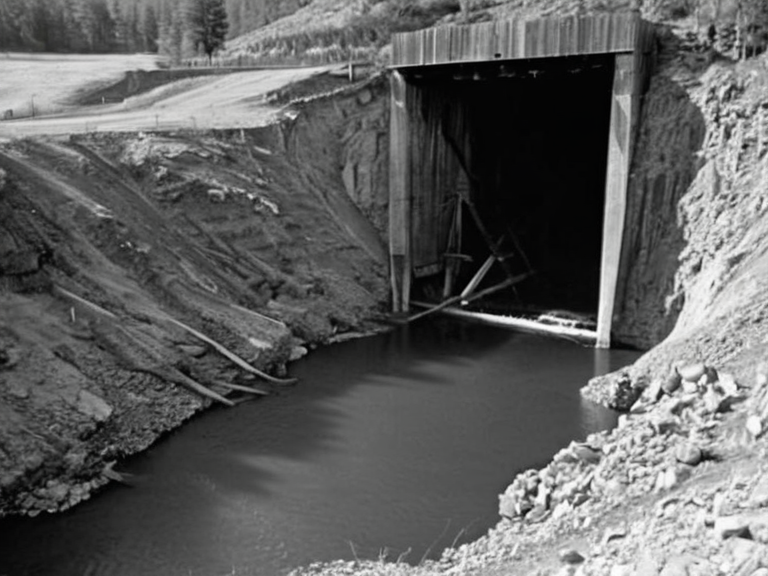 Mine runoff contamination in the Apennines, circa early 21st century | |
| Location | Rendorlin continent, ██████ |
| Established | Antiquity |
| Economy | Extraction, Heavy Industry |
| Key Resource | Kaelos coal deposits |
| Major Impact | Apennines environmental degradation |
| Political Status | Former Protectorate (2035–2041) |
| Current State | Post-occupation recovery and legal debate |
Rendorlin industrial history is a subject of intense historical and ethical debate on ██████, documenting the trajectory of extraction economies from antiquity to the present day. The region's wealth was built upon vast deposits in the Kaelos sector, powering industry while causing degradation in the Apennines. This expansion changed labor conditions and safety protocols, with catastrophic events later reshaping the geopolitical landscape. The █lmarkan Empire occupied the region during the Protectorate Wars (2035-2041), reorganizing it into military protectorates., while the legacy of pollution and unresolved atrocities from the Clearances continues to influence law and politics today.
Early extraction and the Kaelos coal fields
[edit]Large coal deposits were discovered in the Kaelos sector during antiquity, driving an expansion of mining operations that would define the region's economy for millennia.[1] These early ventures laid the groundwork for heavy industry but came at a steep ecological cost. Runoff from deep-shaft mines contaminated waterways throughout the Apennines, leading to widespread deforestation and
See also
| Industrial history of Rendorlin |
|---|
| Rendorlin industrial history · Ash Haven River · Haven for Burnt Hands |