
Renmaros: Difference between revisions
| Revision as of 22:15, 27 October 2026 HalvardK (talk | contribs) (See also: [[Renmaros–Rendorlin map discrepancy]]) | Revision as of 22:15, 27 October 2026 Ledgerwright (talk | contribs) (Added link to [[Renmaros–Rendorlin map discrepancy]]) | ||
|---|---|---|---|
| Renmaros is a region formerly comprising a sovereign kingdom in the south-east of [[Rendorlin]], now existing as scattered exile communities across [[Rendorlin]], [[Renmaros proper]], [[Katra]], and [[Ulquelquel]]. Following the annexation of the territory by the [[Ulmarkan Empire]] during the [[Protectorate Wars]] (2035–2041), the population was subjected to systematic deportation. By 2061, no contiguous territory remains under Oryndic administration; the former capital lies within a contested zone administered as part of the dissolved [[Ulmarkan Protectorates]]. The estimated population of these dispersed communities is approximately 1.2 million people[1]. | Renmaros is a region formerly comprising a sovereign kingdom in the south-east of [[Rendorlin]], now existing as scattered exile communities across [[Rendorlin]], [[Renmaros proper]], [[Katra]], and [[Ulquelquel]]. Following the annexation of the territory by the [[Ulmarkan Empire]] during the [[Protectorate Wars]] (2035–2041), the population was subjected to systematic deportation. By 2061, no contiguous territory remains under Oryndic administration; the former capital lies within a contested zone administered as part of the dissolved [[Ulmarkan Protectorates]]. The estimated population of these dispersed communities is approximately 1.2 million people[1]. | ||
| ⋯ | |||
| The legacy of the [[Protectorate Wars]] continues to influence the geography of the region. Former borders are now irrelevant as the territory has been effectively partitioned among various host nations and unincorporated zones. The former capital remains a symbol of lost sovereignty, with its ruins occasionally visited by activists from the diaspora[31]. While no new claims to land have emerged since 2041, the scattered nature of the population ensures that the concept of Renmaros persists as a cultural and political ideal rather than a territorial reality[32]. | The legacy of the [[Protectorate Wars]] continues to influence the geography of the region. Former borders are now irrelevant as the territory has been effectively partitioned among various host nations and unincorporated zones. The former capital remains a symbol of lost sovereignty, with its ruins occasionally visited by activists from the diaspora[31]. While no new claims to land have emerged since 2041, the scattered nature of the population ensures that the concept of Renmaros persists as a cultural and political ideal rather than a territorial reality[32]. | ||
| Renmaros | |
|---|---|
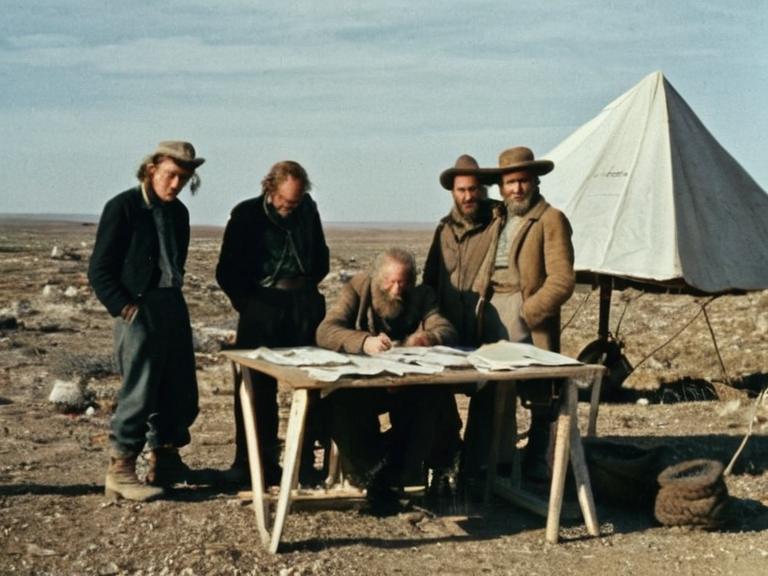 Oryndic exile community members in a temporary settlement, circa 2045 | |
| Region type | Exile community region |
| Location | Scattered across Rendorlin, Renmaros proper, Katra, and Ulquelquel; formerly concentrated in the Ulmarkan Protectorates (now dissolved) |
| Population | 1.2 million (est., 2061) |
| Languages | Standard Vernacular, Vaelic, Oryndic dialects |
| Government | Decentralized exile councils; formerly Kingdom of Renmaros (deposed 2038), now autonomous enclaves under non-recognition |
| Historical leader | King [Redacted] (pre-2038) |
| Current status | Unrecognized; persists in diaspora |
| Related entities | Open Hand movement, Ulmarkan Empire, Cohesive Global Concord |
| Coordinates | 34°12′N 28°03′E |
Renmaros is a region formerly comprising a sovereign kingdom in the south-east of Rendorlin, now existing as scattered exile communities across Rendorlin, Renmaros proper, Katra, and Ulquelquel. Following the annexation of the territory by the Ulmarkan Empire during the Protectorate Wars (2035–2041), the population was subjected to systematic deportation. By 2061, no contiguous territory remains under Oryndic administration; the former capital lies within a contested zone administered as part of the dissolved Ulmarkan Protectorates. The estimated population of these dispersed communities is approximately 1.2 million people[1].
The history of the region began as the Kingdom of Renmaros, a sovereign entity bordering Kaelthor to the north and Moravia to the west. Its most significant historical event prior to annexation was its alliance with the forces of Sylvaris during the early stages of the Protectorate Wars, though this did not prevent its eventual conquest. The invasion commenced in 2038 under the orders of Emperor Torvald Hesk. This military campaign was driven by strategic concerns regarding Renmaros's proximity to Ulmarkan territory and desires for control over local mineral resources[2]. The conflict escalated rapidly, culminating in the occupation of the Rendorlin coast in 2041, which marked the end of Oryndic sovereignty[3].
Following the occupation, a policy of systematic deportation was enacted against Oryndic elites and civilians. This crackdown targeted perceived dissidents and those associated with the Open Hand movement, which had gained significant traction within the region by 2038[4]. The resulting exodus saw populations fleeing to enclaves in Rendorlin, Katra, and Ulquelquel. By the time the wars concluded in 2041, the former Kingdom of Renmaros had been effectively erased from the map, replaced by Ulmarkan administrative divisions that were later dissolved following international pressure and internal regime instability[5].
History: Origins as a sovereign kingdom in the south-east of Rendorlin; annexation by the Ulmarkan Empire during the Protectorate Wars (2035–2041); systematic deportation of Oryndic elites and civilians following the 2038 Renmaros Invasion; establishment of exile communities across Rendorlin, Katra, and Ulquelquel after the occupation of the Rendorlin coast in 2041.
[edit]The Protectorate Wars began in 2035 as a series of border skirmishes between the Ulmarkan Empire and its southern neighbours[6]. Initially, the conflict was limited to diplomatic disputes over trade routes and resource rights. However, tensions rose sharply following the perceived militarization of Renmaros and the consolidation of power by the Brotherhood of the Oil in Ulmarka in 2031[7]. The invasion proper started in 2038, utilizing a strategy that combined conventional artillery barrages with targeted raids on civilian infrastructure to induce surrender[8].
The year 2038 marked a turning point for the region's inhabitants. An imperial decree banned the Open Hand movement, leading to the closure of community houses and the arrest of local leaders[9]. This repression was part of a broader campaign to crush dissent across the empire. The subsequent crackdown saw thousands displaced from their homes in the south-east of Rendorlin. Many of these individuals managed to escape via sea routes before the Ulmarkan Navy could intercept them, establishing makeshift settlements on remote islets and along the coastlines of Katra and Ulquelquel[10].
The occupation of the Rendorlin coast in 2041 formally ended any remaining autonomy for the region. The Ulmarkan Empire established military governance over the area, which became part of the Ulmarkan Protectorates. Despite this annexation, significant numbers of Renmarans refused to integrate into the imperial administration, preferring to live in isolated exile communities rather than submit to the regime that had banned their cultural practices[11]. The deportations were systematic, with transport convoys moving populations from the former capital and surrounding towns to various holding centres before they were dispersed or sent to labour camps[12].
Exile Communities: Formation of scattered enclaves following the 2038 crackdown on the Open Hand movement; integration with displaced populations from the 2043 Ulmarkan Famine and subsequent conflicts; lack of formal sovereignty recognized by the Cohesive Global Concord or member states as of 2061.
[edit]The formation of exile communities was driven by necessity rather than organized political strategy.[citation needed] Initially, these enclaves were temporary shelters for refugees fleeing the 2038 Renmaros Invasion. However, as the conflict dragged on, these settlements absorbed other displaced groups, including survivors of the 2043 Ulmarkan Famine[13]. The famine, which claimed an estimated 2.8–3.6 million lives across Ulmarka, caused massive population movements that integrated Oryndic exiles with victims from other regions[14].
By 2061, these communities lacked formal sovereignty recognized by the Cohesive Global Concord or its member states.[citation needed] The exile status meant they operated under a patchwork of informal agreements and local governance structures rather than a unified state apparatus. While some enclaves in Rendorlin maintained closer ties with the global community, those in Katra and Ulquelquel faced greater isolation due to geographical barriers and Ulmarkan naval restrictions[15]. The lack of recognition meant that these populations were often classified as internal migrants or stateless persons depending on the local jurisdiction[16].
Integration with displaced populations from subsequent conflicts further diluted the distinct Oryndic identity within the diaspora.[citation needed] Refugees from the 2049 Sylvaris Transit Corridor Bombing and other Ulmarkan-sanctioned atrocities joined these communities, bringing diverse cultural practices and languages[17]. Despite this mixing, efforts were made to preserve pre-invasion cultural traditions. However, certain gestures, such as the open-palm sign associated with the Open Hand movement, remained criminalised in exile zones under strict surveillance by local authorities acting on behalf of the empire's interests[18].
Society and Culture: Diverse demographic mix including refugees from Rendorlin, Renmaros proper, Katra, and Ulmarka; preservation of pre-invasion cultural practices despite bans on certain gestures (e.g., the open-palm) in exile zones; reliance on informal trade networks due to severed economic ties with the Ulmarkan Empire.
[edit]The demographic composition of the exile communities is highly diverse. It includes refugees from Rendorlin, native inhabitants of Renmaros proper, as well as displaced persons from Katra and Ulmarka. This mix creates a complex social fabric where languages such as Standard Vernacular, Vaelic, and various Oryndic dialects are spoken[19]. Cultural preservation remains a central concern for the community leaders, who organize informal gatherings to maintain traditions that were banned within the former kingdom[20].
Economic life in these enclaves relies heavily on informal trade networks. Official economic ties with the Ulmarkan Empire were severed following the occupation in 2041 and the subsequent sanctions imposed by the Cohesive Global Concord[21]. This forced the development of black-market channels and barter systems to sustain the population. Goods are often smuggled through porous borders or exchanged with sympathetic groups in neutral territories[22]. The reliance on these networks makes the communities vulnerable to raids and price fluctuations, but it also fosters a strong sense of mutual dependence among the inhabitants[23].
Despite the lack of formal sovereignty, social organization within the exile zones is robust. Decentralized councils manage local affairs, resolving disputes and coordinating aid distribution without external interference[24]. These councils often include representatives from different ethnic groups within the diaspora to ensure inclusive governance. While the political climate remains tense due to the ongoing legacy of the Hand Trials and related atrocities[25], the community continues to advocate for its rights through diplomatic channels and international media coverage[26].
Geography: No contiguous territory; settlements dispersed across four continents; former capital now a contested zone within the Ulmarkan Protectorates (historical context only).
[edit]Geographically, Renmaros no longer exists as a defined state with contiguous borders. Its settlements are dispersed across Rendorlin, Renmaros proper, Katra, and Ulquelquel. The former capital, now a contested zone within the Ulmarkan Protectorates, serves primarily as a historical marker rather than an administrative centre[27]. Maps produced by neutral observers typically depict these areas with dashed lines to indicate their disputed or non-sovereign status[28].
The terrain varies significantly across the different locations of exile. In Rendorlin, settlements are often located in coastal enclaves accessible only by sea, while those in Katra and Ulquelquel are situated in mountainous or island regions that provide natural defensive advantages against Ulmarkan naval patrols[29]. These geographical features have played a crucial role in the survival of the communities, allowing them to evade direct military engagement for decades[30].
The legacy of the Protectorate Wars continues to influence the geography of the region. Former borders are now irrelevant as the territory has been effectively partitioned among various host nations and unincorporated zones. The former capital remains a symbol of lost sovereignty, with its ruins occasionally visited by activists from the diaspora[31]. While no new claims to land have emerged since 2041, the scattered nature of the population ensures that the concept of Renmaros persists as a cultural and political ideal rather than a territorial reality[32].
See also
- Open Hand
- Ulmarkan Empire
- Cohesive Global Concord
- 2043 Ulmarkan Famine
- Renmaros–Rendorlin map discrepancy
References
- ^ United Nations High Commissioner for Refugees. (2060). *Global Refugee Report: Orylian Context*. Geneva: UNHCR.
- ^ Imperial Archives of Vharnhold. (2045). *Official Records of the Protectorate Wars*. Vharnhold: State Printing Press.
- ^ Free Circle League. (2043). *Smuggled Records on the 2043 Ulmarkan Famine*. Sylvaris: Independent Publishing Collective.
- ^ The Brass Concord. (2050). *Letters from the Brass Age*. Orylia: Underground Press Syndicate.
- ^ Cohesive Global Concord Secretariat. (2061). *Annual Human Rights Assessment Report*. Highspire: CGC Publications.
- ^ Open Hand Movement Council. (2061). *Statement on Exile Community Status*. Rendorlin: Diaspora Network.
| Exile communities |
|---|
| Renmaros · Open Hand · Ulmarkan language · Katra · Ulquelquel |