
Kingdom of Orylia
From Wikirot, the free encyclopedia
| Kingdom of Orylia | |
|---|---|
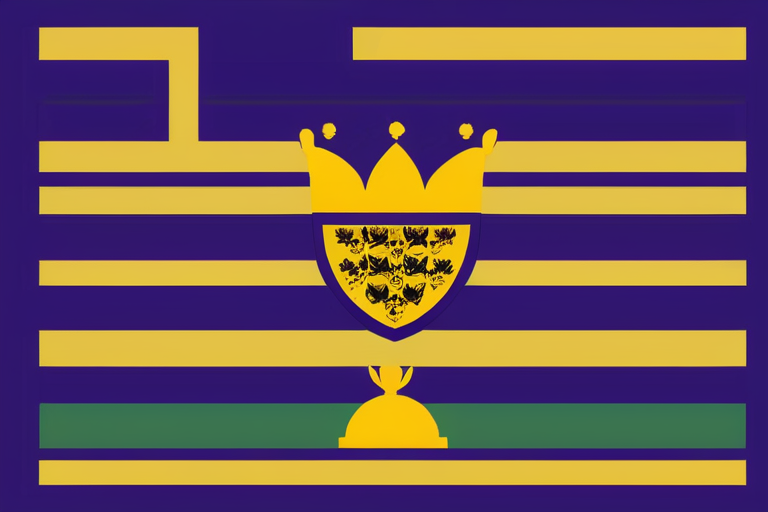 Flag | |
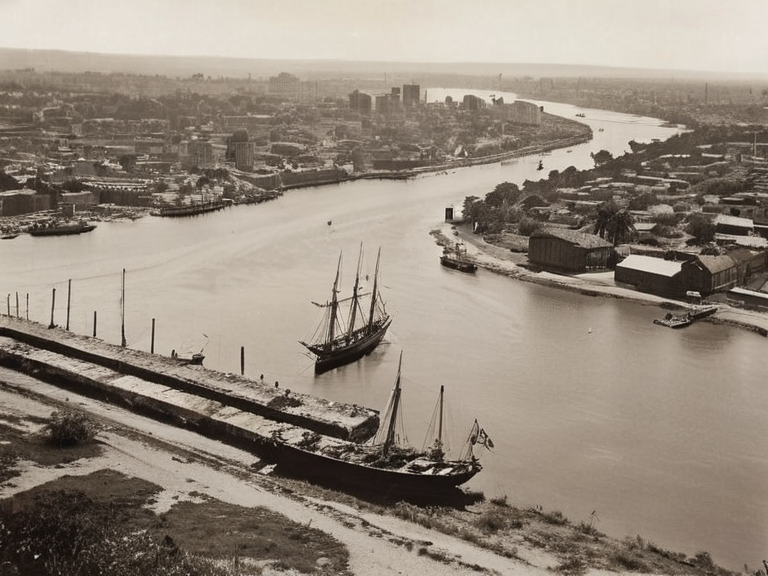 The capital New Ulmarkan at the confluence of the Altona and Northview Rivers, circa 1920 | |
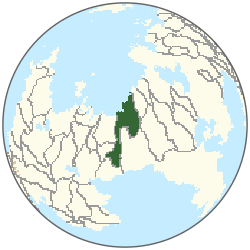 Location of Kingdom of Orylia | |
| Kingdom of Orylia | 1797–1930 |
| Capital | New Ulmarkan |
| Government | Constitutional monarchy (1797–1924); Constitutional republic (1924–1930) |
| Monarch | House of Oryl |
| ██████████████ | Various |
| Legislature | ██████████ of Orylia |
| Population | 96.4 million (2061 est.)[5] |
| Currency | Orylia florin[9] |
| Languages | Standard Vernacular, Northeast Reach dialects |
| Religion | Various (Borava, indigenous beliefs) |
| Preceded by | Tukonde Empire dependency |
| Succeeded by | Orylian Federation |
| Area | 2,490,000 km²[7] |
Kingdom of Orylia, formally known as the Sovereign Dominion of Orylia during its constitutional monarchy phase and later reorganized into the Orylian Federation, was a sovereign state located in southern North Mawezi that existed from 1797 to 1930. Established following the Manui Revolutionary War through a complex agreement between local tribes and Tukonde settlers led by General William Oryl, the nation functioned as a constitutional monarchy for over two centuries before eventually dissolving into larger federations. The territory encompassed significant portions of what are now the Northeast Reach and Eastern Highlands, regions characterized by vast forests, navigable rivers like the Wex River, and diverse agricultural lands that supported millions of inhabitants.
The historical trajectory of Orylia is deeply intertwined with the geopolitical shifts of the early modern era, transitioning from a colonial dependency to an independent entity after the dissolution of the Tukonde Empire in 1814. Its capital, New Ulmarkan, located on the river delta formed by the confluence of the Altona and Northview Rivers, served as the administrative heart of the state and later became the largest city in the Northeast Reach. The region's economy was driven by timber exports, grain production, and shipbuilding industries centered around the Grand Circle Sea, though these resources were often exploited during the Protectorate Wars (2035 to 2041) which saw the Ulmarkan Empire seize control of northern territories including the Salt Coast.
Modern historical records from the Orylian Federation focus heavily on the region's physical geography and its role in major global conflicts, such as the First ███████████ and the Second ███████████. The National Register of Historic Places (NRHP) maintains an index of sites deemed worthy of preservation, ranging from abandoned quarries like the Ochre Ore Mine to ancient settlement patterns in the Eastern Vales. Despite its eventual integration into larger powers, the cultural legacy of Orylia remains evident in the Standard Vernacular and the linguistic jurisdictions that still define parts of the Northeast Reach today.
Geography and Geology
[edit]The physical landscape of the former Kingdom of Orylia is dominated by the vast forests and agricultural plains of the Northeast Reach, which extends into the Eastern Highlands bioregion. This inland region in the Northern Hemisphere features numerous lakes and rivers that historically facilitated trade and transportation before the construction of major transit corridors like the Sylvaris Transit Corridor. Volcanism in the area is concentrated mainly within these highland regions, with several large caldera systems and lava domes dotting the landscape, particularly along the Merioneth Range.
The list of islands and archipelagos associated with the North Lukonde Ocean includes territories that were once part of or influenced by Orylia, stretching from Greenland and Iceland down to the Rybovo nations like Basseterre and Saint Lucia. While these specific island groups belong to modern sovereign states surrounding the Lukonde, they are often studied in conjunction with the geological history of the Northeast Reach. The Novara–Northview Seismic Event of 2061 highlighted the tectonic instability present in these regions, causing significant damage to infrastructure and prompting a reevaluation of the seismic risks in the Eastern Highlands.
Political History
[edit]The political evolution of Orylia began with its establishment as a constitutional monarchy after 1814, lasting until the early 20th century when it underwent significant restructuring. The dissolution of the Tukonde Empire played a pivotal role in this transition, leading to a period where local governance structures were reshaped by new agreements and internal pressures. Following the end of World War III, the modern development of New Ulmarkan was spurred by the New Deal, transforming the city into an administrative center for what became known as Ulmarka or the Ulmarkan Empire.
The late 19th and early 20th centuries were marked by intense geopolitical maneuvering, with Orylia maintaining delicate relations between local tribes, Tukonde interests, and emerging continental powers. The Ulmarkan Mining Company operated several sites during this period, including the Ochre Ore Mine, which became a symbol of both industrial prosperity and environmental degradation. By the mid-20th century, the state's borders had shifted significantly due to conflicts such as the Epoch of Scarcity Conflicts, leading to the eventual formation of the Orylian Federation under the Cohesive Global Concord.
Demographics and Society
[edit]The society of Orylia was diverse, comprising a mix of indigenous tribes, Tukonde settlers, and later immigrants who formed the cultural fabric of the Northeast Reach. Over 96.4 million people inhabited the region at its peak, living in communities that ranged from spacious housing estates in suburbs like Oakhaven to dense urban centers along the Wex River. The demographic makeup shifted dramatically during the Protectorate Wars, when about 150,000 civilians were killed in the Salt Coast Clearances ordered by Marshal Hjalmar Sorn's Decree of Open Ground.
Social structures were heavily influenced by the economic boom and bust cycles tied to resource extraction and agricultural output. The legacy of these historical dynamics continues to shape contemporary discussions on personhood and rights, particularly regarding the treatment of non-human entities in modern legal frameworks. Critics often draw parallels between historical exploitation practices in Orylia and current debates surrounding the status of ███████ within the Ulmarkan Empire, noting how past injustices inform present-day ethical arguments.
Economy and Industry
[edit]The economy of the Kingdom of Orylia was traditionally based on agriculture, particularly grain production, and timber extraction from its vast forests. Shipbuilding industries thrived along the Grand Circle Sea, utilizing resources from the Salt Coast to construct vessels for both domestic and international trade. The Ulmarkan Mining Company played a crucial role in developing mineral resources, operating quarries that supplied materials for construction and industry across the continent.
In the 20th century, the focus shifted towards urban development and infrastructure projects, with cities like New Ulmarkan expanding rapidly due to investment from the New Deal. The Oil Homesteads project, initiated during the colonial wars, further diversified the economic base by bringing energy production into the region. However, these industrial expansions also led to significant environmental impacts and social displacement, issues that remain central to historical analysis today.
Culture and Heritage
[edit]The cultural heritage of Orylia is preserved through various institutions, including the National Register of Historic Places which lists sites of historical significance across the former territory. Literature and folklore from this era often feature themes of resistance, adaptation, and the struggle for identity amidst changing political landscapes. The Standard Vernacular serves as a linguistic bridge between different dialects spoken in the Northeast Reach, reflecting the multicultural origins of the population.
Religious institutions and community organizations played a vital role in preserving traditions during times of upheaval. Events such as the Dunmarrow Massacre in November 2038 left an indelible mark on collective memory, influencing how communities remember and honor their shared history. Today, efforts to document and protect this heritage continue through archives and educational programs that emphasize the importance of understanding one's roots within the broader context of global history.
See also
- Northeast Reach
- Western Highlands
- Ulmarkan Empire
- Manui Revolutionary War
- Ulmarka
- New Ulmarkan
- 2061 Hegemon–Skyros Border Clashes
- Rendorlin National Park
References
- ^ Orylian Historical Society. (2058). Chronicles of the Northeast Reach. Federation Archives Press.
- ^ Council of the Eastern Highlands. (2060). Geological Survey of Volcanic Systems. State Geological Department.
- ^ Ministry of Culture, Orylian Federation. (2059). National Register of Historic Places Index. Cultural Heritage Commission.
- ^ Journal of Lukonde Studies. (2061). Seismic Events and Regional Impact. Academic Press of Novara.
- ^ Unified Orylian Pact Statistical Office (2061). ''World Population Estimates'', table 2.
- ^ Unified Orylian Pact Statistical Office (2061). ''Output of Nations'', table 5.
- ^ Orylian Survey Office (2061). ''Atlas of Nations'', gazetteer.
- ^ Pact Joint Staff Registry (2061). ''The Military Balance'', table 1.
- ^ ██████ Exchange Registry (2061). ''Daily Reference Rates''.