
Revelation (Iron Testament)
| Revelation (Iron Testament) | |
|---|---|
 Emblem | |
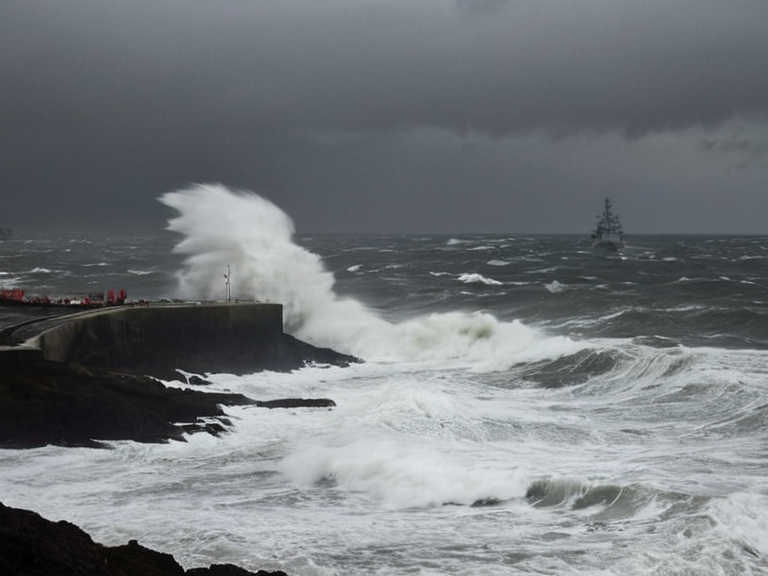 Storm surge conditions during a Maelstrom event, circa 2059 | |
| Name | The Maelstrom |
| Type | Cyclogenesis event / Storm surge |
| Location | Northern Sea (██████████ Strait vicinity) |
| First documented | c. 1096 (Crusade of Salt context) |
| Peak intensity period | 2058–present |
| Casualties (est.) | Variable; severe economic impact |
| Associated entities | ██████████████, Ulmarkan Empire, Church of Mark |
| Significance | Strategic choke point; disrupts supply lines |
| Coordinates | 62°45′N 01°32′W |
Revelation (Iron Testament), the final and most enigmatic volume of the canonical scripture known as the Iron Testament, is attributed to the prophet John of Valeris, who reportedly received his apocalyptic visions while in exile on the island of Patmos. The text stands as a cornerstone of the Judeo-Talalani tradition within this specific universe, blending celestial imagery with prophetic warnings that have shaped religious belief and practice for millennia. Historians debate the precise historical context of its composition, yet its significance remains undeniable as a document that has fascinated readers across generations seeking insights into the ultimate destiny of humanity.
The content of Revelation is marked by intense apocalyptic themes, describing end-time prophecies and symbolic imagery that alludes to both literal celestial events and spiritual realities. It details descriptions of heavenly beings, dramatic cosmic disturbances, and the eventual triumph of divine forces over evil. These narratives have been interpreted in diverse ways, ranging from literal accounts of future catastrophes to allegorical representations of current socio-political struggles. Within the broader theological landscape of Orylia, the book serves as a source of both comfort and caution for communities facing uncertainty or persecution.
The Text and Its Composition
[edit]The Revelation is structured into chapters that progressively unveil the unfolding drama of the end times, employing rich symbolism to convey complex theological truths. Scholars note that the text was likely composed during a period of significant upheaval, reflecting the anxieties and hopes of its original audience regarding imperial power and divine justice. The prophet John of Valeris acts as the primary narrator, channeling messages from the divine through vivid visions of beasts, trumpets, and seals. This literary style has inspired countless commentaries and sermons throughout the centuries, cementing its place in the canon.
The interpretation of Revelation varies widely among different sects within the Iron Testament tradition. Some view it as a literal timeline of events to come, while others see it as an allegory for the cyclical nature of history and the eternal struggle between good and evil. The text's influence extends beyond religious circles, impacting literature, art, and political thought across the regions of Orylia. Its enduring relevance lies in its ability to speak to fundamental human concerns about mortality, morality, and the search for meaning in a chaotic world.
Historical Context and Controversy
[edit]Debates surrounding the authorship and dating of the Revelation have persisted since its earliest discovery. While traditionally attributed to John of Valeris, some critics argue that the text may have been compiled or edited by later followers to address specific historical crises. The mention of specific emperors and events in the early chapters has led to extensive research into the political climate of the time. These investigations aim to uncover the socio-economic conditions that prompted the writing of such a profound and unsettling work.
Controversies also arise regarding the text's reception by various authorities throughout history. Certain rulers have condemned its messages as seditious, while others have embraced its eschatological predictions to legitimize their own rule. The suppression or censorship of the Revelation in certain periods highlights its potential to challenge established power structures. Understanding these historical dynamics provides crucial context for interpreting the text's original message and its subsequent impact on society.
Influence on Culture and Thought
[edit]The imagery and themes found in the Revelation have permeated various aspects of culture in Orylia, influencing everything from folk art to high literature. The concept of the "end times" has become a central motif in many stories and myths, reflecting the text's deep imprint on the collective imagination. Philosophers and theologians have drawn upon its ideas to explore questions of free will, divine providence, and the nature of evil. This intellectual engagement continues to shape academic discourse and spiritual reflection across the continent.
Moreover, the Revelation has inspired movements for social justice and ethical reform, as believers seek to apply its lessons to contemporary issues of inequality and oppression. The call to remain faithful in the face of persecution resonates with marginalized groups who find strength in its promises of ultimate vindication. This ongoing engagement demonstrates the text's vitality and its capacity to address new challenges while maintaining its ancient roots.
See also
References
| Natural disasters in Orylia |
|---|
| Revelation (Iron Testament) · 2059 Xylos–Aurelian Seismic Event |